DW Opinion
The Post-Election Supermajority Threatening The American Right
It will take longer than two years to fix this.
 Grayson Quay Listen Listen 5 min
The midterms were worse than anyone feared. As of this writing, Democrats have 54 Senate seats, a number that could rise to 56 if they win uncalled races in Mississippi and Alaska.
Who's to blame is an important question, and there's already no shortage of excuses, accusations, and outright cope floating around right-of-center media. But as we look back at what the hell just happened, we should also look forward to 2028.
First, the nightmare scenario. Last time a Republican president suffered a massive defeat midway through his second term, the following election went even worse.
In 2006, Democrats gained five Senate seats thanks to voter frustration with President Bush's Iraq War and entitlement reform efforts. In 2008, they gained eight more, plus the White House. When moderate Pennsylvania Senator Arlen Specter switched parties a few months later, Democrats briefly gained a filibuster-proof, 60-vote majority in the Senate (though in practice Senator Robert Byrd's failing health stopped them from taking full advantage of it before a Republican victory in a Massachusetts special election knocked Democrats back down to 59 seats).
If 2028 is anywhere near as good for Democrats as 2008 was, a more durable supermajority is well within reach. Imagine that the Iran blockade drags on, gas prices stay high, inflation ticks up, and committee hearings prove highly embarrassing for the Trump administration. In that case, a Democrat will almost certainly capture the White House and could have some pretty broad coattails.
GOP Sens. Ron Johnson of Wisconsin and Ted Budd of North Carolina would be particularly vulnerable, and that might be all Democrats need to hit 60 Senators. Republican-held seats in Iowa, South Carolina, Kansas, and Mississippi will also be up for grabs, and Democrats have just proven they can win in all four (with the possible exception of Mississippi).
Winning those six races would give Democrats between 64 and 66 seats, depending on how the uncalled races from this cycle shake out. That means Roe v. Wade is codified, statehood for Puerto Rico and Washington, D.C., amnesty for illegals, a packed Supreme Court, and a federal takeover of elections that skews them permanently toward Democrats. The GOP wouldn't recover for a generation or more. America might never.
But the best-case scenario is also sobering. Let's say Iran sues for peace on relatively favorable terms, gas prices return to pre-war levels, Trump pulls off another Venezuela-style foreign policy triumph (bloodlessly dismantling Cuban communism, perhaps?), and another impeachment trial backfires.
The 2028 Senate map offers Republicans pick-up opportunities in Nevada, Arizona, Ohio, Pennsylvania, Georgia, and maybe New Hampshire. But even if Alaska and Mississippi hold, sweeping all six states would only get the GOP the slimmest majority. If either of the uncalled states goes blue, Republicans would need at least one truly incredible upset in a state like Maryland, New York, Colorado, or Illinois — and maybe two. It wouldn't be impossible. Cory Gardner captured one of Colorado's Senate seats in 2014, and Mark Kirk won a 2010 special election in Illinois (neither won a second term). But it would be pretty unlikely for the national environment to change that drastically in just two years.
All is not lost yet. It took Republicans two very good cycles (2010 and 2014) to reclaim the Senate after the disasters of '06 and '08. But they pulled it off, and by 2018 had a solid shot at securing their own supermajority.
Still, the drubbing the party suffered this week means that even if a Republican can win the presidency in 2028, he (or she) will almost certainly take office with a Democrat-majority Senate — becoming the first chief executive since George H.W. Bush to begin his first term without a trifecta (and in a far more polarized environment than Bush Sr. faced). Passing legislation will be virtually impossible, as will confirming appointees, including potential replacements for Justices Clarence Thomas or Samuel Alito.
The unappealing prospect of fighting an uphill battle to keep the White House red and then being unable to govern may even dissuade some prospective candidates from running. We might end up with a repeat of 2012, when serious contenders like Chris Christie and Jeb Bush sat it out and stuck Republicans with second-stringer Mitt Romney.
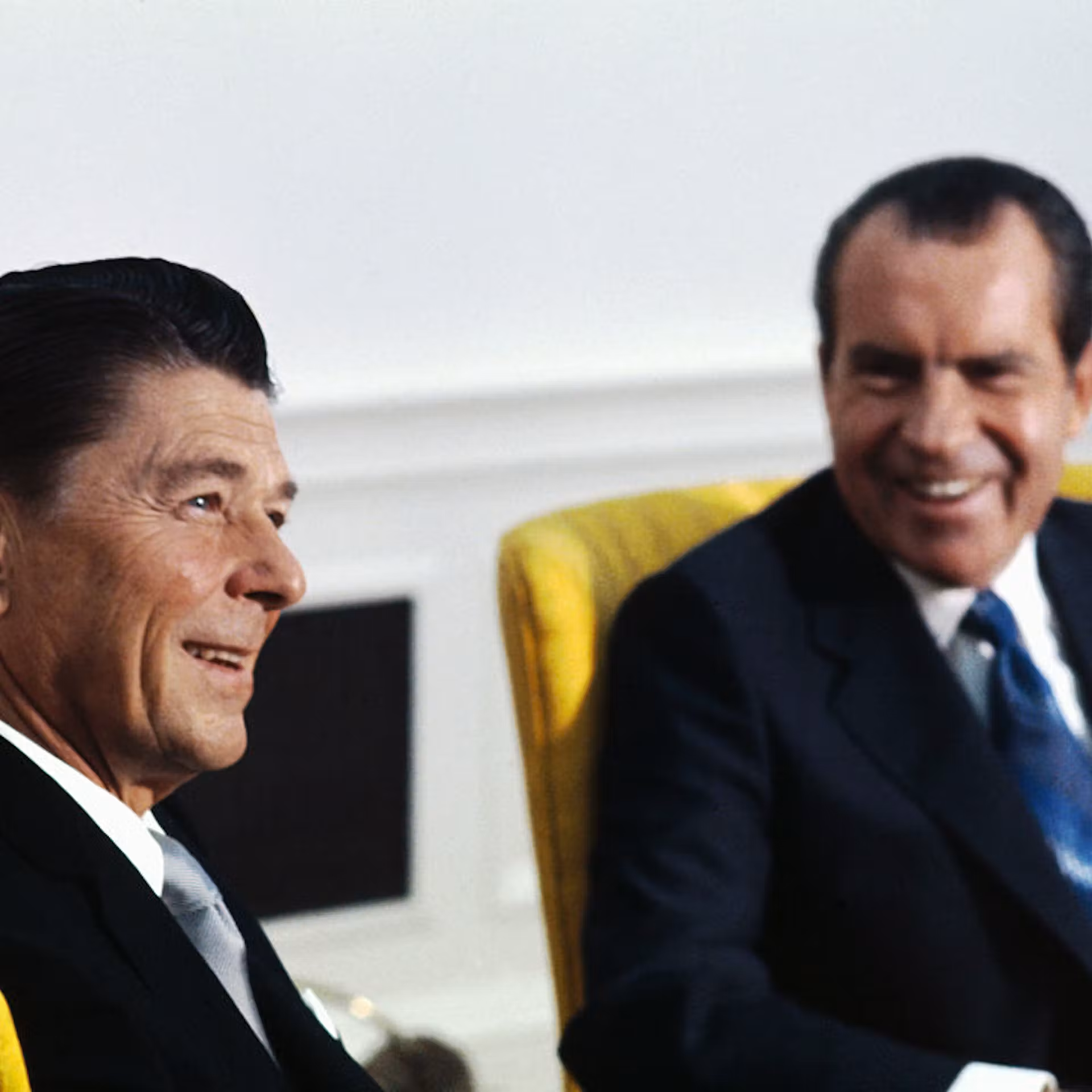
Or maybe the better parallel is to the 1960s. If 2028 ends up being another Goldwater debacle, perhaps that means we've already met our Nixon — or our Reagan.
***
Grayson Quay is the author of "The Transhumanist Temptation" and a former editor at the Daily Caller.
Create a free account to join the conversation!
Already have an account?
Log inSource link