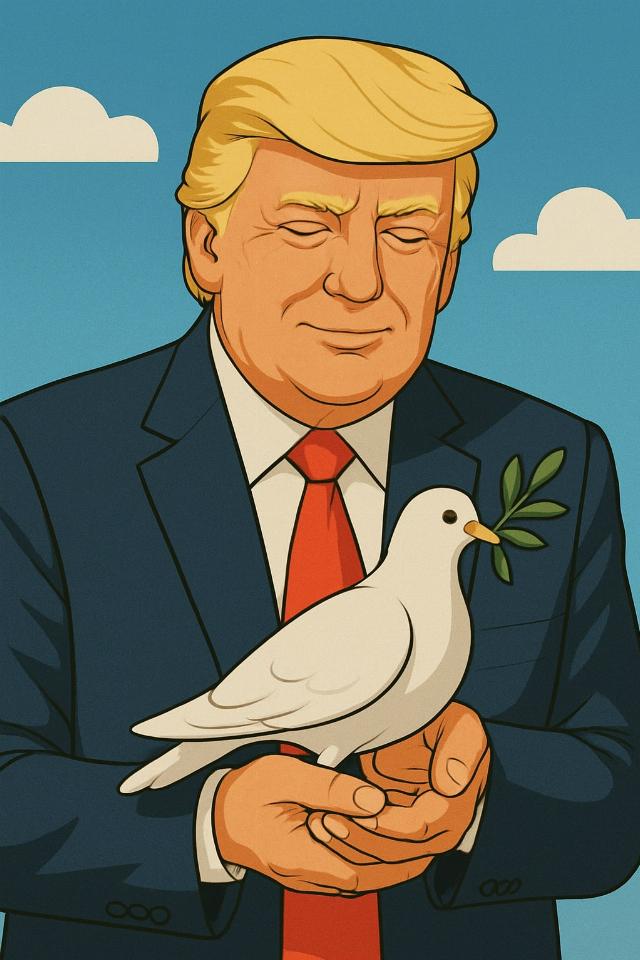
As I write these words, it is the morning after the election. I have been watching social media go full-tilt wacko from many of my Democratic friends who have been swooning about "the blue tsunami" that swept over the Republicans.
Some of them have asked me, with as much a modicum of politeness as they can muster, how much it hurts to watch MAGA go down in flames.
Do these queries evoke a frown? More like a smirk, and not the sort that many liberals might appreciate.
I already believed that Darline Graham would not win the United States Senate race in my adopted home state of South Carolina. The people here are not ones to want a political dynasty, and when Darline was tapped to continue the term made vacant by the death of her brother Lindsay Graham, that is exactly what she became.
Many conscientious conservatives chose to not vote for anyone at all for South Carolina senator. But it's possible that many more voted for Annie Andrews as a rage-vote against the Republican machine which had been controlled by Lindsay Graham and his loyalists for much too long. It had become a thing ridden with stagnancy. It was time to shake out the tired old blood. Maybe something better will come about now that the Graham faction has been effectively ended.
The race I was more curious about happened across the border in North Carolina, where I lived for most of my life. Roy Cooper was quite arguably the very worst governor in that state's history. From the time he was in law school when he was tapped by then-governor Jim Hunt, Cooper has been a fixture in North Carolina politics. That became the defining element of his career: being a partisan hack who worked his way through the system into high office without really producing anything but policies. And too many of those policies were disastrous if not downright evil… like closing down churches and small businesses during COVID but keeping Walmart stores wide open, his abandonment of western North Carolina following Hurricane Helene, and his being so soft on crime that he was practically an enabler.
Yet despite all of that and more, Roy Cooper won the race for senator from North Carolina. I can tell you why. Two reasons: Michael Whately is a good man, but he's also been too much a leadership figure in the Republican Party. And people didn't want that. The second reason certainly didn't help matters for Whately: that the U.S. Senate's Republican leadership basically abandoned him, just as it did Ken Paxton in Texas (the Bush Family's "for hate's sake, I spit my last breath at thee" for being toppled from power).
Had the Republican leadership from the Senate opened up its $1 billion war chest more to Whately and Paxton, who knows: they and other GOP candidates might have won their races. But that's academic at this point.
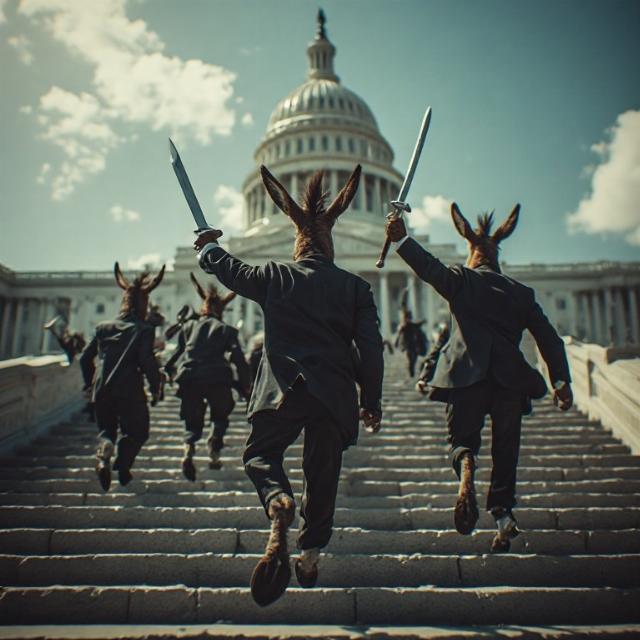 In a sane world, Cooper's political career would have finally ended this week. However, that didn't happen. And he will be North Carolina's senator for the next six years or even longer (do term limits sound especially sweet now? How about outright repealing the Seventeenth Amendment?).
But what is Roy Cooper going to actually do now that he's been elected?
Indeed, what is it that the Democratic victors as a whole believe that they are going to accomplish?
For ten years and more, the Democrats have in vast part been fixated upon one thing: destroying Donald Trump. Theirs has been a seething hatred of the man and of all who dare profess admiration of him. "Trump Derangement Syndrome" has proven to be quite real.
The Democrats have finally achieved the wins they lusted so much to have. Now they have to produce something of substance. But hatred of political enemies is not the basis of a successful political agenda. Yet hate for Trump and conservatives in general is what the Democrats absolutely must abandon now. If they again persist in mounting ridiculous impeachment proceedings against Trump, they are going to quickly blow the political capital that they gained from this election.
What possible good can come from a party driven by ten years of raw hatred? One person consumed by hate will sooner or later self-destruct into something pathetic. How much more so might a collective of souls, filled with empty wrath, also descend into madness? Yet that is what we have witnessed these past ten years, are watching it still, and will be beholding for at least the next two years. The Democrats have their victories this week. But in the grander scheme of things, that is all that they possess.
It is one thing to win an election. It is quite another to act upon a victory and make something good and noble of it.
It's a movie that isn't seen as much anymore as it used to be, but those who have watched it may think back to 1972's The Candidate. Across its nearly two-hour run we witness idealistic Bill McKay (played by Robert Redford) morph from being recruited to be a fill-in candidate on the ballot (for which party? C'mon, this is Hollywood and Redford we're talking about) to someone who must win decisively or be destroyed in the court of public opinion. We witness McKay (led along by slick operative Marvin Lucas, wonderfully played by Peter Boyle) become increasingly involved in campaigning, in chicanery, and then compromise of personal principles.
In the final scene, having won the Senate race, and at the end of all the scheming, McKay has a question for Lucas: "What do we do now?"
What, also, will the real-life Democrats do now, with the power that they have won?
Christopher Knight is the author of Keeping the Tryst: A Generation Xer's Tale of Pop Culture, Faith, Madness, and Love. Find him on the web at theknightshift.com
Source link