Iran just issued a threat that no serious country can shrug off.
As President Trump weighs whether to hit the regime again, Iranian Foreign Minister Abbas Araghchi warned that Tehran would deliver an "earth-shattering blow" against
anyone who harms Iran. He added an even more ominous line: "Red lines are a thing of the past."
A government searching for a graceful exit does not talk this way. Tehran is testing whether the United States still means what it says.
Araghchi put the threat in writing Saturday:
When Israel-US bombings of Iran began last year, Mr. Merz hailed them.
— Seyed Abbas Araghchi (@araghchi) October 31, 2026
"Doing Europe's dirty work"
100bn Euro is nothing compared to the Earth-shattering blow Iran's Powerful Armed Forces will deal against those who dare harm our people.
Red lines are a thing of the past. https://t.co/HIclTatGiO
The timing matters. President Trump has been keeping the military option open while American pressure continues to squeeze Tehran at sea and through its oil lifeline.
Breitbart News reports that Iranian military leaders have been told to prepare a broader response if the United States or Israel strikes again. Iranian state media described preparations that could expand the regime's target list and remove geographic limits from retaliation, potentially reaching American and Israeli military sites and other strategic assets beyond Iran's borders.
Iran's armed forces chief, Gen. Ali Abdollahi, also suggested Tehran may not wait to absorb the first blow if its commanders decide an attack is imminent.
The report says Washington has reinforced regional defenses, replenished munitions and reviewed options for another campaign.
United States Central Command chief Admiral Brad Cooper briefed President Trump alongside War Secretary Pete Hegseth and Joint Chiefs Chairman General Dan Caine.
Secretary of State Marco Rubio said no final decision has been made. Washington prefers a diplomatic result, while American forces remain ready to achieve the administration's objectives if ordered to act.
President Trump told reporters that talks were moving, although he warned that Tehran is not reliable. He also identified the fortified Pickaxe Mountain site as one of the remaining locations the United States could deal with quickly.
Mediators are still working on nuclear restrictions, verification and reopening the Strait of Hormuz. No agreement has been announced.
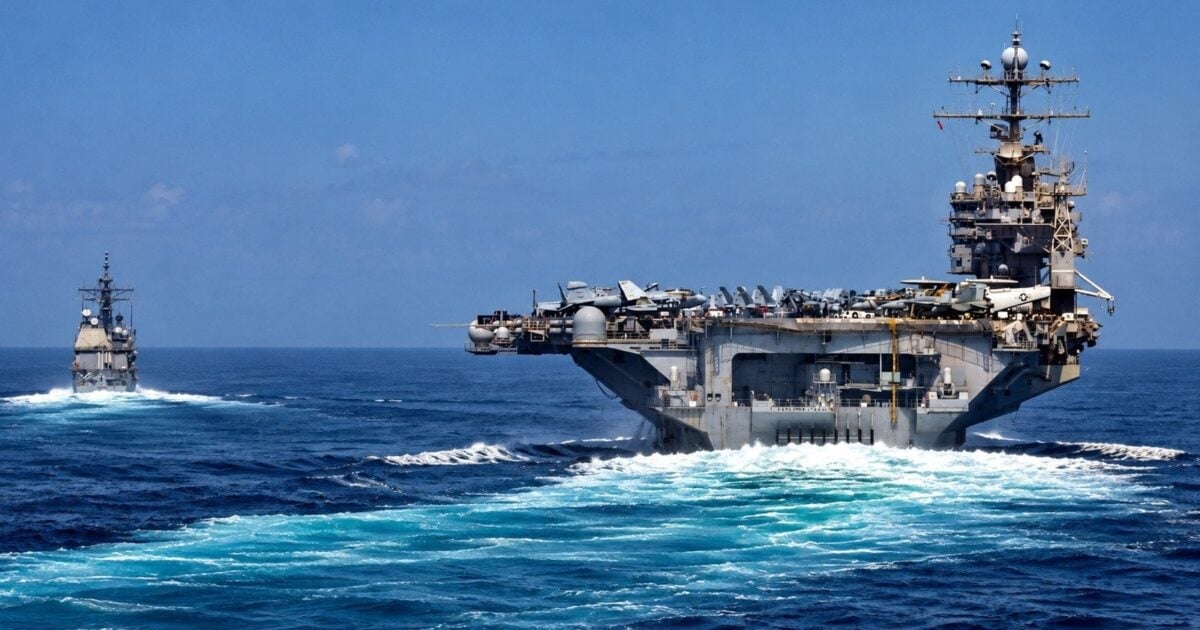
Meanwhile, the pressure is not theoretical. U.S. Central Command says American forces have redirected 144 commercial vessels while enforcing the blockade against Iran.
This is what real leverage looks like:
A U.S. Navy MH-60R Sea Hawk takes off from the flight deck of USS George Washington (CVN 73) as the aircraft carrier supports enforcement of America’s ironclad blockade against Iran. As of Oct. 31, U.S. forces have redirected 144 commercial vessels to ensure compliance. pic.twitter.com/6o9LmIOaT4
— U.S. Central Command (@CENTCOM) October 31, 2026
The regime is trying to answer military and economic pressure with terroristic language. That may impress hardliners in Tehran, but it does not erase the balance of power.
Iran's navy and air defenses have already taken enormous damage. Its oil exports are being strangled.
Treasury Secretary Scott Bessent said traffic through the Strait of Hormuz has returned to pre-conflict levels without Iranian barrels, a brutal reminder that the world can keep moving while the regime loses the revenue it needs to survive.
That gives President Trump options. He can continue letting the blockade grind down the regime, authorize a short strike against the remaining nuclear infrastructure, or use the threat of force to demand terms Tehran cannot wriggle out of later.
Any agreement worth signing would have to be enforceable. Empty promises from a government now boasting that "red lines are a thing of the past" are not a peace plan.
The president was blunt about how quickly the final military piece could be handled:
.@POTUS: "We've knocked out their nuclear. We still have to take care of, I would say, one or two sites, but we can do that in ten minutes." https://t.co/8hKBzQaOFs pic.twitter.com/VtH9B7ExZs
— Rapid Response 47 (@RapidResponse47) November 1, 2026
Tehran can step back, accept real limits and stop threatening American forces and regional energy infrastructure.
Or it can discover that shouting about an "earth-shattering blow" is much easier than surviving one more confrontation with the United States.
President Trump has not announced his decision. Iran should not mistake deliberation for hesitation.
This is a Guest Post from our friends over at 100 Percent Fed Up. View the original article here.
Source link