The Culture Loop
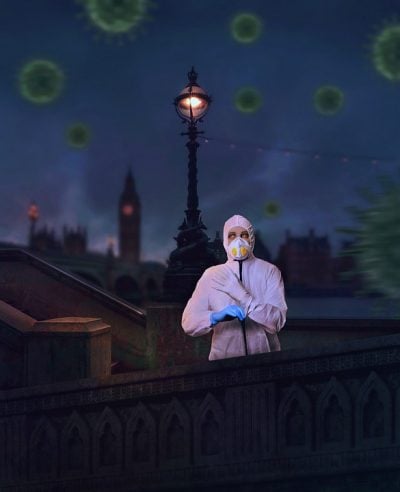
"'Strong possibility of attack' on EU events in Dublin" howled the Irish Independent newspaper's bold headlines today.
The police assessed the threat level surrounding two major upcoming events [European Political Community (EPC) summits] in Dublin as "substantial". Furthermore, 'Hybrid threats and attacks' from Russia in European territory are 'sparking' investigations by Irish security agencies. [Irish Independent, October 29, 2026] In August 2026, Germany accused Russia of being responsible for a drone attack targeting Leipzig airport, and then "announced a slew of new measures against Moscow." According to Germany's interior minister Alexander Dobrindt:
"We are not at war, but we are a daily target of hybrid attacks," and "raised the country's threat level assessment from "general" to "high"."
This gradual increase in potential or actual micro false flag attacks in Europe is only one aspect of the mass media culture loop. Russophobia has long been a major part of Western mass culture and originated in fears of a Russian attack on British-colonized India. Today Russophobia portends an elite agenda of war with diversionary or military/economic objectives. Unsubstantiated claims about Russian drones and hybrid threats are the basis of a whispering campaign to try and manipulate the European populace into a disastrous war with a country which also has the world's third-largest military force.
This culture loop maintains the conservative cultural values of order and authority, support for private property rights, constitutional governance, free markets, and limited government. Other values not necessarily supported by the political right are absorbed once they don't contain any fundamental threat to the political system itself. The loop covers most cultural outlets, e.g. TV and radio, as well as institutions and sites receiving funding or grants from the state.
Everything is sucked into this mass media and cultural black hole. It is voracious and nothing can escape its event horizon. Once inside the loop even resistance itself is affected and changed dramatically in its image. For example, not long after the singer Sinéad O'Connor tore up a picture of the pope, she had herself ordained a Catholic priest in 1999 by Michael Cox, bishop of an Independent Catholic church. She believed she was subverting church ideas and hierarchies by becoming a 'female priest', Mother Bernadette Mary, yet ultimately, she stayed within, implicitly supporting the church's fundamentally patriarchal nature. Even she could not escape the loop, that is until she left it completely and became a Muslim.
.
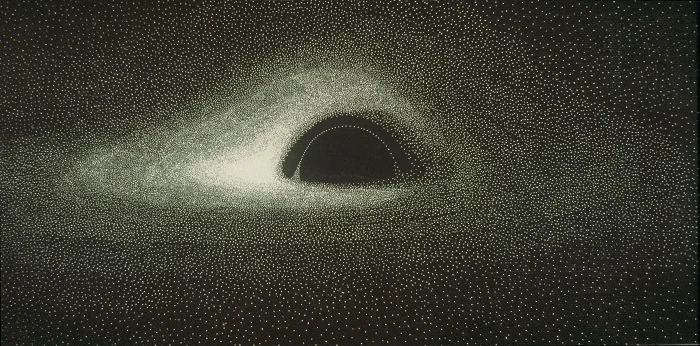
The first simulated image of a black hole, published by Jean-Pierre Luminet in 1979 and featuring the characteristic shadow, photon sphere, and lensed accretion disk. The disk is brighter on one side due to Doppler beaming.
.
For decades now, Russophobia, in the form of negative stereotypes, has dominated the cinema of the Western world, especially action movies. Every cinema genre within the conservative culture loop, like action, fantasy, horror, terror, etc., serves the status quo. Movie sequels are easier to produce than trying something radical that might go outside the ideological loop. Politicians, presenters, and analysts on TV and radio all keep within the loop and rely on ad captandum vulgus ("appealing to the masses") or self-censorship to maintain the status quo.
The immediate and emotional absorption of culture loop mass media in society provides social catharsis and dims any desire for culture that questions the status quo. This dominance by the mass media makes new ideas or any radical perspectives seem alien and uncomfortable. Familiar ideas and confirmation bias cement our existing beliefs, and we fear anything that challenges our deep-rooted mental frameworks.
So, is it possible to break out of this loop?
The Planeta Effect
Ancient astronomers noticed that while most bright objects stayed in fixed positions some moving lights constantly shifted their position and wandered around the sky in strange patterns. They called them asteres planetai ("wandering stars"). It was only with the shift from a geocentric (Earth-centered) model to a heliocentric (Sun-centered) model, that the strange behaviour of the planets could be understood and everything fell into place. Their movements had seemed strange because we were watching them orbit the Sun, and not Earth, and from the perspective of a planet which was also orbiting the sun.
.
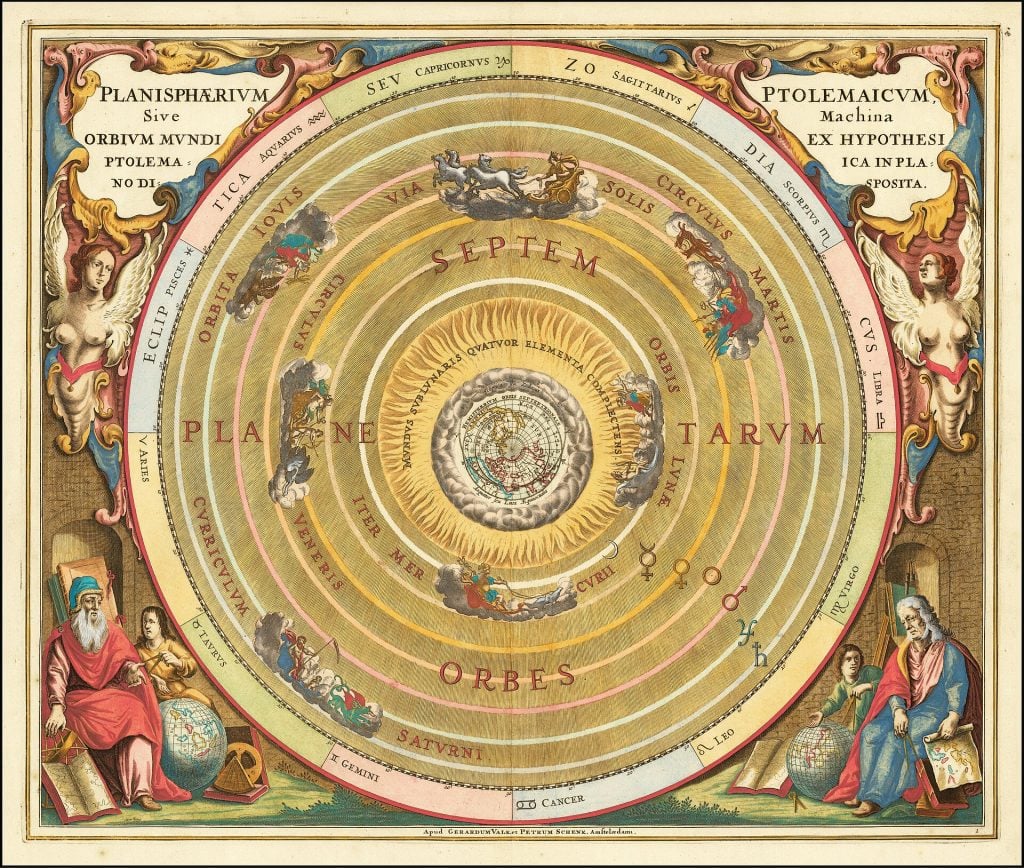
1660 illustration of Claudius Ptolemy's geocentric model
.
The idea of things suddenly falling into place with a new understanding is a kind of revelation whereby logic and facts replace popular emotion and prejudice. However, to get to this point of change can be a long and difficult process. One process has been described as the three stages of: Ridicule, then Violent Opposition, and eventually Acceptance. Sometimes pressure exerted on the loop from the outside can cause the mass media to gradually integrate new ideas into the current understanding. This then becomes a dialectical process as the latest accepted ideas force a synthesis with the old ideas, until eventually the most 'unacceptable' 'ridiculous' 'outrageous' aspects of the new ideas becoming integrated into the popular consciousness and normalised.
This often involves the old ideas being turned on their head, creating a shockwave for the solid structure of the previous worldview. However, what sustains this new perspective is the realisation that the old worldview now seems ridiculous, like the idea that the universe is revolving around planet Earth. An idea which once endured violent opposition becomes the norm.
.
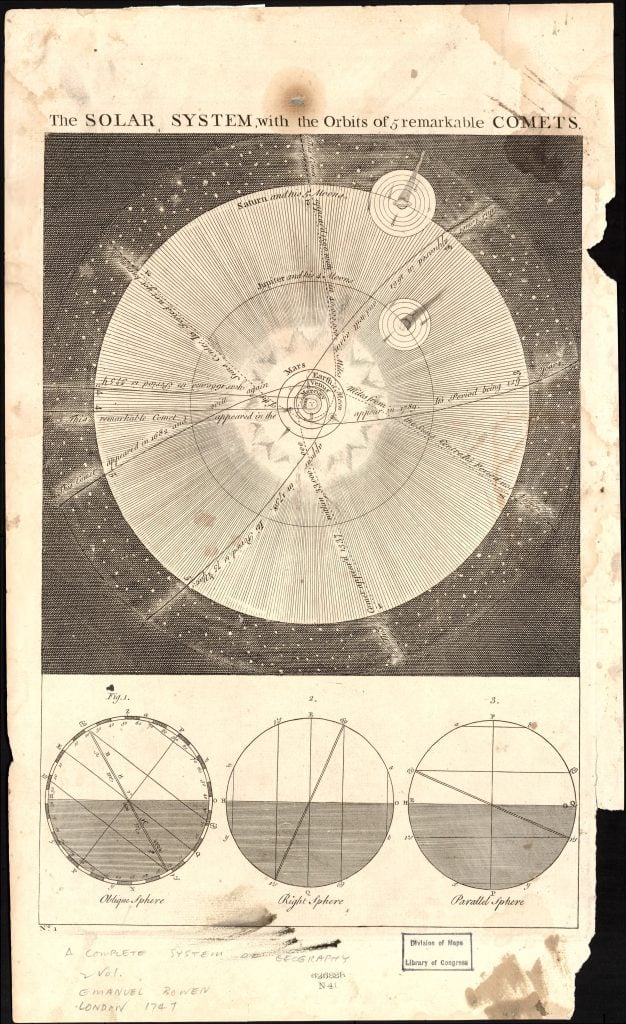
True-scale Solar System poster made by Emanuel Bowen in 1747. At that time, Uranus, Neptune, and the asteroid belts had all not yet been discovered.
.
Strangely enough despite the difficulty of accepting new ideas or new perspectives, we are familiar with this concept from childhood with myths and fairy stories, for example, Hans Christian Andersen's The Ugly Duckling. The 'ugly duckling' was never a duck in the first place, it was a cygnet, so it was never ugly and in its new context as a swan it was easy to see that the negative emotional reaction and ridicule was misplaced.
What forces the change in ideas? Like the cygnet, situations mature and become obviously increasingly unsustainable. What seemed perfectly acceptable at the time comes under question as modern developments in science, technology, new documentaries, death-bed confessions etc., expose contradictions. Anomalies pile up with new evidence (such as opened archives, leaked documents, and declassified files) which put pressure on the old narrative. Eventually many small quantitative changes force a qualitive change and its legitimacy collapses.
Alternative Information
There seems to be no doubt that the accessibility to alternative information is provided by the internet so that the only needs for understanding are an open mind and one's own ability to research relevant topics. However, monopolisation of the internet has led to a few major platforms acting as gatekeepers through algorithmic consolidation downranking or demonetizing alternative views or sites. Global laws, government banning, and AI are all adding to the narrowing of past freedoms of the web. In response to these issues many have moved to paid email newsletters and websites, encrypted apps, and decentralized networks.
Another force for change is actual experience on the ground which comes into contradiction with the ideology of the state, mass media, and institutions etc. The practical application of alternative theories, ideas, or skills, i.e. praxis, exposes the status quo which itself is not static as it has its own agendas and objectives which are constantly changing. Indeed, the constant expansion of elite agendas can be the catalyst for change as more and more exploitative or oppressive pressure on people eventually produces resistance.
Those who are outside the loop are reminded very quickly when they try to promote work that is alternative or radical. Film producers, documentary makers, writers, artists, composers, musicians, activists who try to present something different to the public struggle against monopoly control of the media, theatres, TV, radio, cinemas etc. Cultural resistance that challenges, criticizes, or subverts dominant power structures faces reaction from dominant forms and groups, unless a way has already been cracked open for it to squeeze into the loop by a growing alternative force in society, e.g. a revelatory documentary.
However, the process of struggle against a dominant hegemony with alternative forms and contents is a difficult but enlightening process for those involved in it, enabling them to see the operation of society more clearly.
Perspicacity
To be perspicacious is to have a keen insight and a sharp ability to understand things. It comes from the Latin perspicax, meaning discerning or keen-sighted and is related to perspicere, "to look through" or "to see clearly". It means to have the ability to see through deception and notice hidden motives.
.
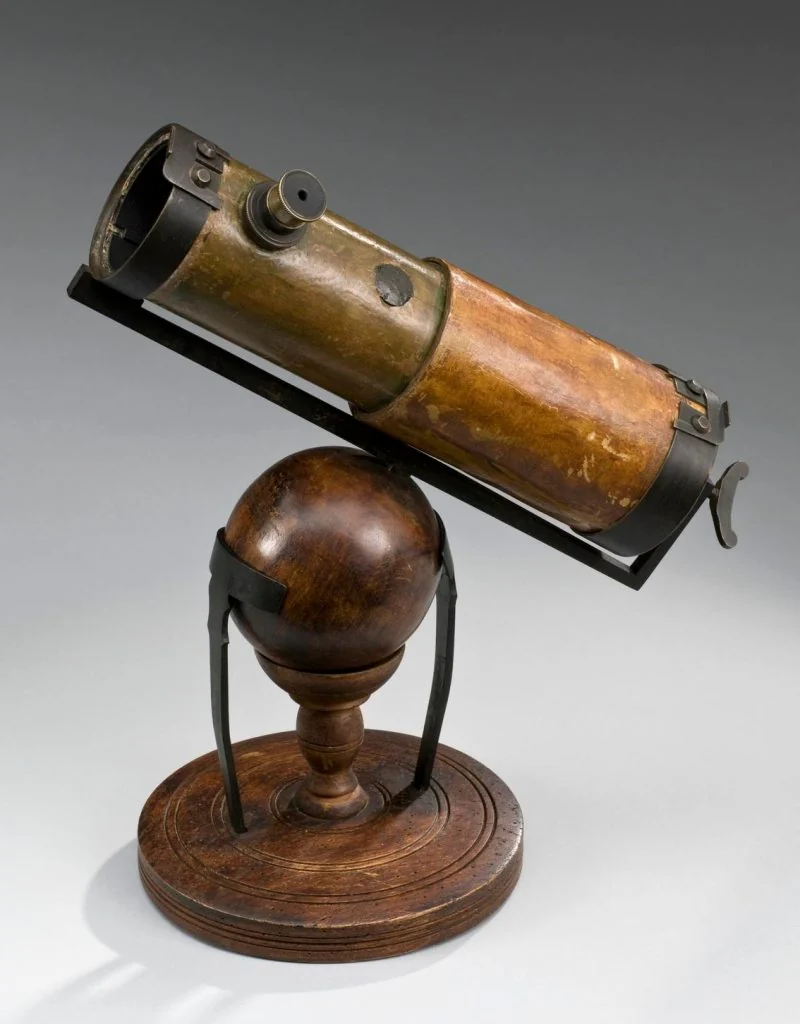
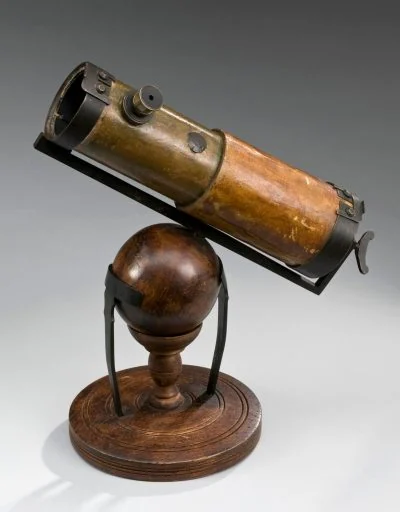
A replica of a second reflecting telescope Isaac Newton presented to the Royal Society in London in 1672
.
Perspicacity is the position whereby the culture loop has lost its ability to keep one diverted and entertained in an escapist sense, especially after the shock of clarity has woken one up to a new understanding of how elite agendas manipulate our perception of the world for their ends. Awareness needs constant practice. It means never to be convinced but to do one's own research. Perspicacity is a position from which it is difficult to reverse out of, as the process of becoming conscious emerges gradually and cannot be undone.
For cultural producers it means creating a culture that enlightens the producers as much as those who engage with it. It invites all those participating to use their own reason publicly (as Kant wrote in his 1784 essay 'What is Enlightenment?'), rather than letting the authorities decide what they can or cannot do or know. Kant said "Sapere aude (dare to know)! Have courage to make use of your own understanding! is thus the motto of enlightenment." Kant took the Latin phrase from the Roman poet Horace (65BCE–8BCE) who used it in a story to encourage a fool who was waiting for a stream to stop before crossing it, saying "He who begins is half done. Dare to know, begin!"
*
Click the share button below to email/forward this article. Follow us on Instagram and X and subscribe to our Telegram Channel. Feel free to repost Global Research articles with proper attribution.
Caoimhghin Ó Croidheáin is an Irish artist, lecturer and writer. His artwork consists of paintings based on contemporary geopolitical themes as well as Irish history and cityscapes of Dublin. His blog of critical writing based on cinema, art and politics along with research on a database of Realist and Social Realist art from around the world can be viewed country by country here. Caoimhghin has just published his new book – Against Romanticism: From Enlightenment to Enfrightenment and the Culture of Slavery, which looks at philosophy, politics and the history of 10 different art forms arguing that Romanticism is dominating modern culture to the detriment of Enlightenment ideals. It is available on Amazon (amazon.co.uk) and the info page is here.
He is a Research Associate of the Centre for Research on Globalization (CRG).
All images in this article are from the author unless otherwise noted.
Global Research is a reader-funded media. We do not accept any funding from corporations or governments. Help us stay afloat. Click the image below to make a one-time or recurring donation.
Comment on Global Research Articles on our Facebook page Become a Member of Global Research
Source link