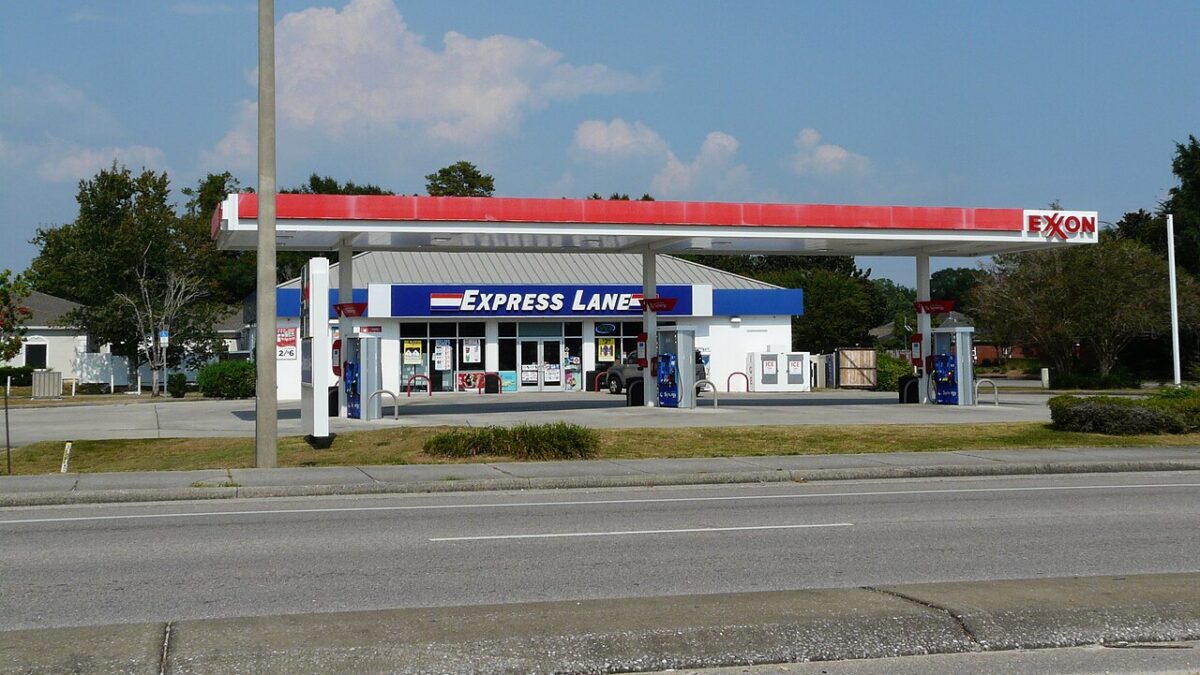
Boulder officials claimed that these oil companies’ ‘fossil fuel activities contributed to climate change, causing harm to Boulder’s property and residents.’
The U.S. Supreme Court agreed to take up a major case on Monday involving the left’s ongoing climate lawfare against fossil fuel companies.
In its newest order list, the high court announced that it will be hearing oral arguments in Suncor Energy, Inc. v. County Commissioners of Boulder County, which centers around a lawsuit originally brought by the city of Boulder and Boulder County commissioners against the Exxon Mobil Corporation and three Suncor Energy businesses.
As summarized by Justia, Boulder officials alleged that these entities’ “fossil fuel activities contributed to climate change, causing harm to Boulder’s property and residents.” They additionally “sought damages for public and private nuisance, trespass, unjust enrichment, and civil conspiracy, claiming that the [companies] knowingly contributed to climate change while misleading the public about its impacts.”
The oil giants’ repeated attempts to have the case moved to federal court were rejected by a federal district court and the 10th Circuit Court of Appeals. The Boulder County District Court also dismissed the companies’ request to dismiss the case, “rejecting their arguments that Boulder’s claims were preempted by federal law, including the Clean Air Act (CAA) and federal common law,” according to Justia.
While declining to address the merits of Boulder’s claims, the Colorado Supreme Court sided with the city in May 2025 by agreeing that its claims “were not preempted by federal law.” The court also permitted Boulder’s lawsuit against the energy companies to move forward.
In an October 2025 Fox News column, law professor and American Enterprise Institute nonresident senior fellow John Yoo noted that the Suncor Energy case is an example of how “environmental extremists have now allied with bankrupt cities and trial lawyers to use the courts to shake down the energy industry.” Under this strategy, Yoo described, “Blue cities and states have filed tort suits in state courts to extract money for allegedly causing weather-related costs in their jurisdictions.”
“Notwithstanding some recent wins, climate lawfare is like Hydra — new cases are constantly being brought. Even if higher courts ultimately overturn them, simply forcing the industry to defend against these suits imposes enormous litigation costs,” Yoo wrote. “That alone is a victory for environmental radicals. At this stage, the Supreme Court must act to reaffirm federal authority over national energy and environmental policy.”
The Colorado Supreme Court’s decision to allow Boulder’s lawfare to continue prompted the oil giants to file a petition asking SCOTUS to take up the case in August 2025. Exxon and the Suncor companies specifically requested the justices to address the question of whether “federal law precludes state-law claims seeking relief for injuries allegedly caused by the effects of interstate and international greenhouse-gas emissions on the global climate.”
“Energy companies that produce and sell fossil fuels are facing numerous lawsuits in state courts across the Nation seeking billions of dollars in damages for injuries allegedly caused by the contribution of greenhouse-gas emissions to global climate change. But as the Court has recognized for over a century, the structure of our constitutional system does not permit a State to provide relief under state law for injuries allegedly caused by pollution emanating from outside the State,” the companies’ petition reads. “This case presents the question whether that longstanding principle precludes the state-law claims in the nationwide climate-change litigation. The answer to that question is surely yes.”
In their response brief, Boulder officials urged the high court to permit their lawsuit to move forward. They argued that “granting interlocutory review would require the Court to wade into a thicket of preliminary questions that promise nothing but rabbit holes and dead ends.”
While agreeing to address the question presented by the oil companies in its Monday order, the Supreme Court also asked both parties to file briefs answering the question of whether it “has statutory and Article III jurisdiction to hear this case.”
A date for oral arguments in the case has not been announced.