
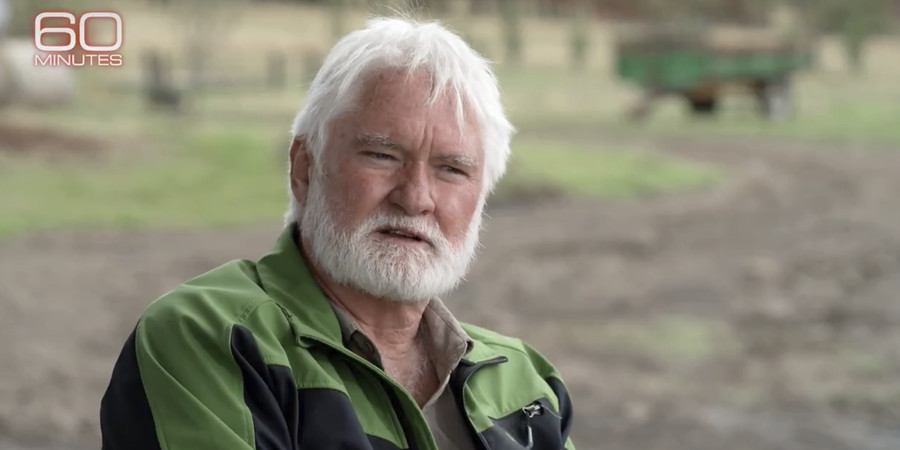
The segment featured Daryl Brown, a seventh-generation rancher, who described the dangers faced by his family and community. Brown recounted how his 82-year-old father was attacked in a robbery a decade ago, and how friends Glenn and Vida Rafferty were murdered on their farm in 2020. Brown also described burying his friend Tully Nell, who was killed during a burglary in which Nell’s son was tied up while cash and weapons were stolen.
“I live cautiously,” Brown said, “always aware of potentially getting killed.”
In May, Pres. Trump said “over a thousand” White farmers have been murdered in South Africa. He showed a video of what he said were crosses marking their burial sites. But when 60 Minutes traveled to the site, the crosses were gone. Anderson Cooper tracked down the farmer who… pic.twitter.com/ZAxZMamss0
— 60 Minutes (@60Minutes) February 23, 2026
The program had taken issue with Trump previously citing the burial sites of over a thousand farmers, displaying a video showing crosses marking these locations.
60 Minutes found that the crosses were temporary memorials Brown had planted for friends who had died in farm attacks, rather than actual graves, and were removed within 48 hours. Brown keeps the crosses in a shed and has reused them for subsequent funerals. Correspondent Anderson Cooper located Brown and documented the circumstances surrounding the memorials.
The issue has also surfaced in diplomatic discussions. During an Oval Office meeting in May, Trump raised concerns with President Cyril Ramaphosa about the chant “kill the Boer, kill the farmer,” used by political figures at rallies. Ramaphosa said, “It’s not meant to be a message that elicits or calls upon anyone to be killed. We are a country where freedom of expression is in the bedrock of our constitutional arrangements.”
Trump referenced a video of Julius Malema, leader of the Economic Freedom Fighters, using the chant before crowds. Malema also said, “We are going to occupy land, we require no permission.” Ramaphosa clarified that South Africa’s revised expropriation law allows for “nil compensation” only under specific conditions, such as when landowners are untraceable or the land is needed for public purposes, and that court oversight is included to ensure outcomes are “just and equitable.”