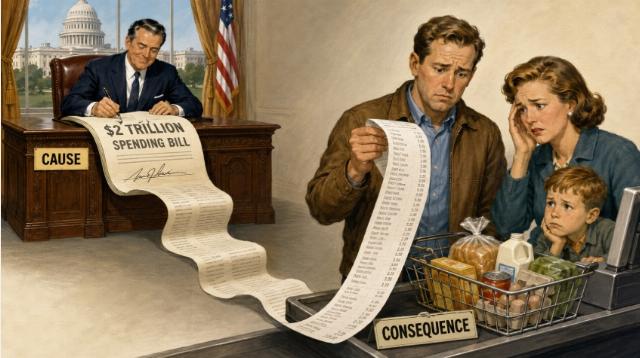
The grocery receipt is where inflation arrives. It is not where inflation begins, and any politician who tells you otherwise is either innumerate or lying.
For millions of Americans, the economic debate has been reduced to terms even Washington cannot obfuscate: the price of food, the mortgage nobody can qualify for, the insurance premium that arrives like a subpoena. The distance between a paycheck and the obligations waiting for it has been shrinking for four straight years while the people responsible insisted everything was fine.
It was not fine. The reason has a name, a date, and a price tag, all of which the last administration would prefer you forget.
Political discourse begins its analysis now the public feels the pain, never at the moment the decision that caused it was signed into law. By the time the receipt lands on the counter, the men who wrote the check are gone, replaced by successors who inherit the bill and get blamed for it.
This is the first battle of the coming elections: consequences versus causes. It is a battle the left is desperate to fight on any ground except the historical record.
The Receipt Arrives After The Purchase
Inflation is the most politically