George Washington University law professor Jonathan Turley said Friday that the Supreme Court’s ruling against the Trump administration and its use of the International Emergency Economic Powers Act (IEEPA) to impose tariffs was hardly shocking.
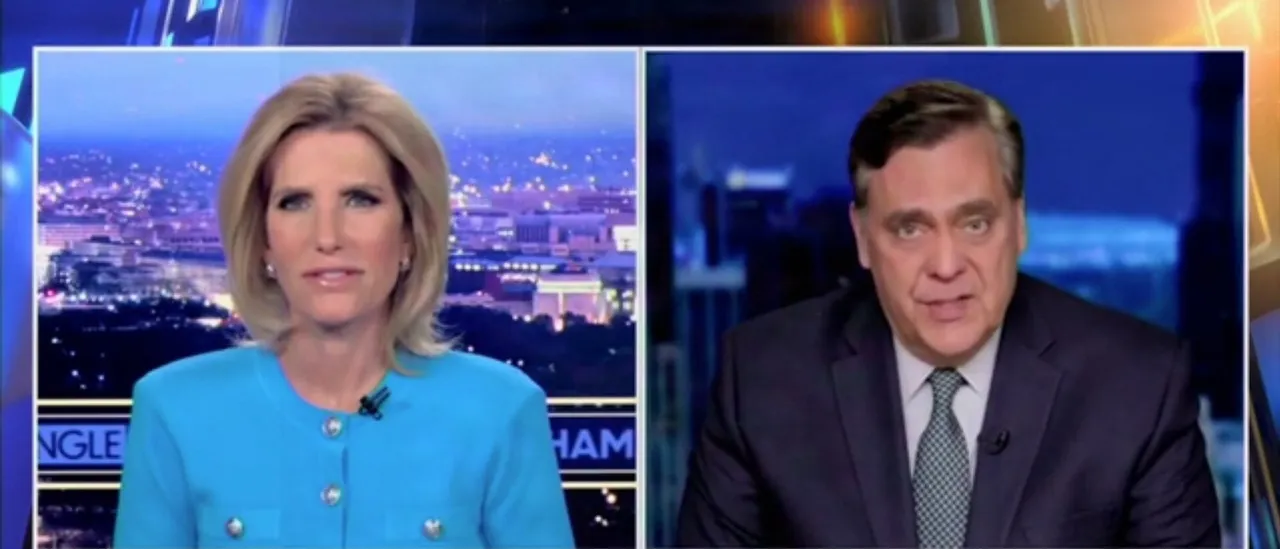
The Supreme Court ruled 6–3 on Friday that the IEEPA does not authorize President Donald Trump to impose tariffs, holding that the statute’s phrase “regulate importation” does not include the distinct and extraordinary power to levy tariffs absent explicit congressional approval. Turley said on “The Ingraham Angle” that even a “marvelous” defense from the solicitor general could not overcome the Supreme Court’s textual reading of IEEPA.
“The odds were against the president in this appeal. Some of these conservative justices historically take a more textual approach to statutes. They did not see the clear authority under IEEPA, and there were good faith arguments on both sides,” Turley said. “I actually thought the solicitor general of the United States did an extraordinary job in oral argument. I thought that he was marvelous and it ultimately didn’t carry the day, but that’s what most of us thought would be the outcome.”
Turley said the ruling does not spell the end of Trump’s broader tariff strategy. He said the administration anticipated the result and prepared accordingly.
WATCH:
“I expect the administration was well prepared for this. It’s not a welcomed result, but it’s not an unanticipated result. The key is that this doesn’t mean the checks in the mail, as you noted for refunds,” Turley said. “It also does not mean that these tariffs are going to fall away. The president has used tariffs as part of his foreign policy.”
Turley said that the President’s approach will continue regardless of the Court’s limitation.
“He’s also used it to secure a series of favorable trade deals, including one just in the last 24 hours with Indonesia, and I don’t think that is going to change either. And so there are aspects of the result here that the president can take some solace in,” Turley added. “The court clearly recognizes he has tariff authority under other laws. What he does not have is the easier route of IEEPA, but that’s not, I think, going to materially change his policies.”
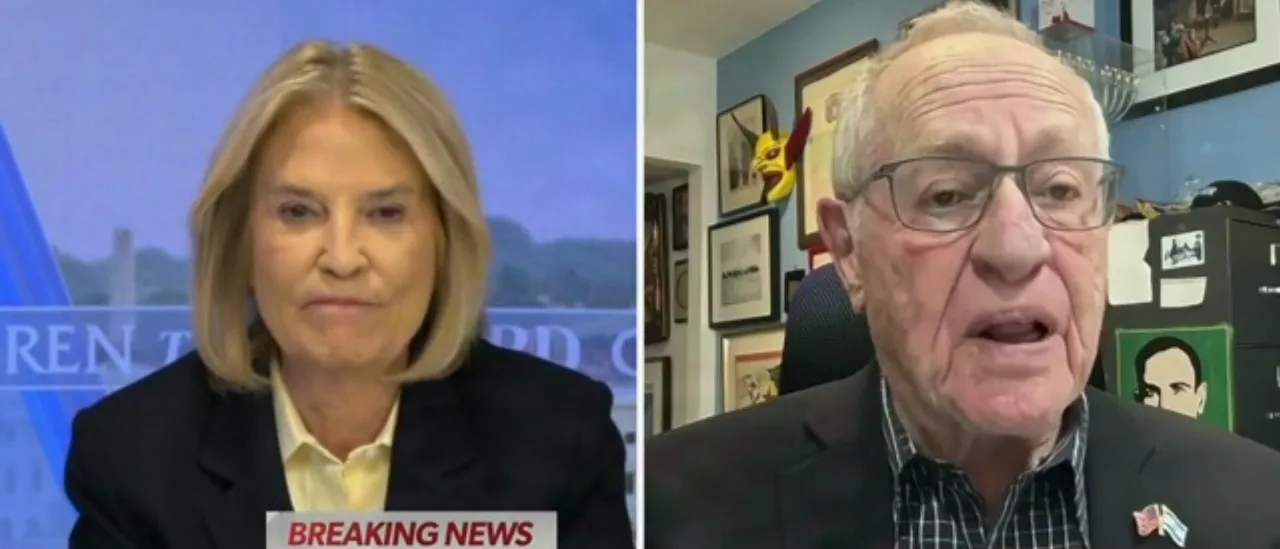
Indonesia and the United States finalized a trade agreement Thursday that reduces U.S. tariffs on Indonesian goods to 19% from 32% after nearly a year of negotiations. Trump imposed the reciprocal tariffs last year, arguing they were necessary to counter non-tariff barriers that disadvantaged American exports. (RELATED: Alan Dershowitz Says Trump Team Made ‘Wrong Argument’ In Tariff Case)
Trump rolled out tariffs on Canada, China and Mexico in February, tying the move to the fentanyl crisis, then expanded the effort in April with a new round of trade measures that imposed a 10% baseline duty on imports and increased rates depending on each country’s trade posture with the United States.
In August, the U.S. Court of Appeals for the Federal Circuit upheld a lower court decision blocking the policy. The Supreme Court later agreed to review the case, hearing oral arguments in November.
All content created by the Daily Caller News Foundation, an independent and nonpartisan newswire service, is available without charge to any legitimate news publisher that can provide a large audience. All republished articles must include our logo, our reporter’s byline and their DCNF affiliation. For any questions about our guidelines or partnering with us, please contact