
This content was produced via a partnership with KCPAC. The views and opinions expressed in this commentary are those of the authors and do not reflect the official position of the Daily Caller.
Japan’s latest national election on Feb. 8 may prove to be one of the most consequential political events in Northeast Asia in a generation.
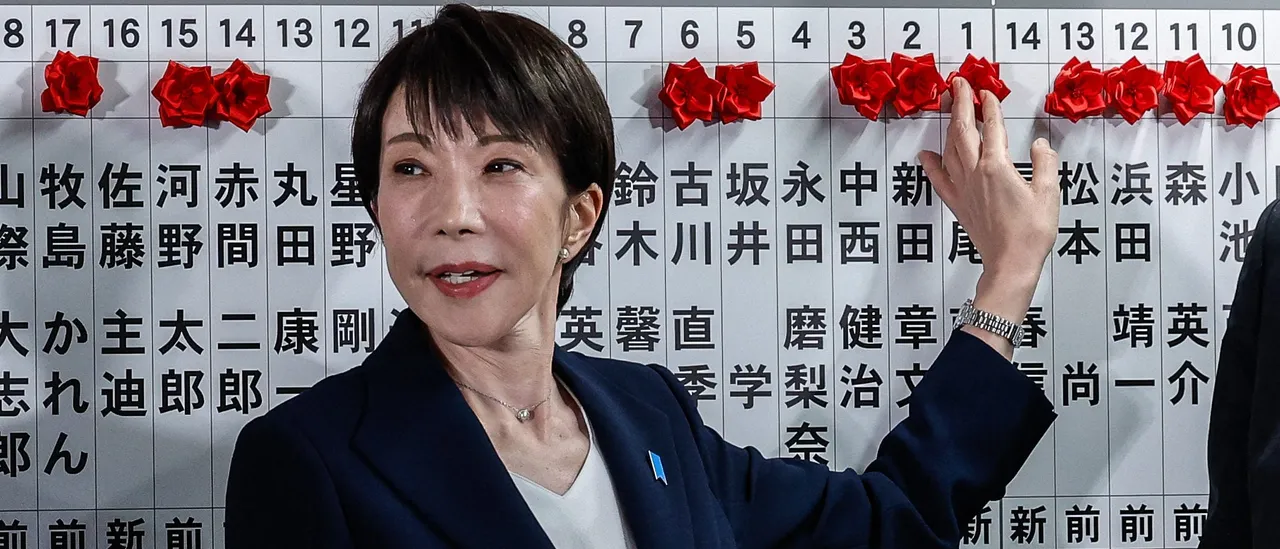
Prime Minister Sanae Takaichi didn’t just win; she delivered a historic beatdown to the opposition, securing a supermajority that signals the rebirth of a strong, assertive Japan. For the first time, Tokyo has a leader who isn’t afraid to look the Chinese Communist Party (CCP) in the eye and say, “No more.”
The result consolidates Takaichi’s control over Japanese politics at a time when regional security tensions are rising and the balance of power in the Indo-Pacific is under strain. (RELATED: China’s New ‘Trojan Horse’ In London: A Warning Shot For The West)
For American policymakers, the implications are significant.
A Political Reset in Tokyo
The LDP had struggled since the departure of the late former Prime Minister Shinzo Abe. It lost Lower House control in 2024 and then ceded the Upper House in 2025. Many analysts questioned whether the party could regain its footing.
Takaichi reversed that trajectory decisively.
Unlike previous LDP leaders who relied heavily on internal party factions to mobilize support, Takaichi’s victory was powered by personal popularity and a reform-oriented image. She presented herself as forward-looking, independent of the old guard and unapologetic about strengthening Japan’s strategic posture.
Her win reshapes internal party dynamics. With fewer factional constraints, authority is more centralized. That gives her latitude — but also greater responsibility — as she navigates both domestic reform and foreign policy pressures.
Defense, Industry and Constitutional Debate
Takaichi has made clear that her priorities include expanded defense capabilities, growth in strategic industrial sectors and deeper technological resilience. She supports higher defense spending, modernization of Japan’s military posture and loosening restrictions on defense exports.
These are not abstract ambitions.
For too long, the CCP has bullied its neighbors, betting that Japan would remain paralyzed by pacifist guilt. That bet just failed. Japanese voters have woken up to the Chinese threat and chosen a leader who prioritizes tanks and missiles over diplomatic niceties. Takaichi’s earlier statement that a Taiwan contingency could constitute a national emergency for Japan was once controversial. Her electoral mandate suggests voters are no longer intimidated by such realism. (RELATED: Establishing Japan’s Priorities In Alignment With The USA)
With a supermajority, constitutional reform — long a conservative objective — is now politically conceivable. Whether she pursues it aggressively remains to be seen, but the numbers are now in place for serious discussion.
For Washington, this matters. Japan appears prepared to assume a more assertive security role in the region.
The Trump Factor
Takaichi’s relationship with former President Donald Trump — who publicly congratulated her on the victory — adds another layer of strategic relevance. Trump has historically favored strong, decisive leaders and has emphasized allied burden-sharing.
Here, potential friction may emerge.
The United States has pointed to South Korea’s 3.5% defense-spending pledge when discussing allied commitments. Japan is currently working toward doubling its defense budget to 2% of GDP. Comparisons are inevitable, and pressure may increase.
Additionally, trade and investment questions remain unresolved. Reports suggest that planned Japanese investments in the United States — totaling hundreds of billions — are still under negotiation. Those discussions are likely to surface in any bilateral summit.
Takaichi must therefore manage two delicate relationships simultaneously: sustaining U.S. confidence while navigating intensifying pressure from Beijing.
The Strategic Triangle
Japan’s foreign policy challenge now sits squarely within a triangle: Tokyo, Washington and Beijing.
China has criticized Takaichi as destabilizing. Beijing will likely press the United States to temper its support for Japan’s more forward-leaning defense posture. If Washington appears ambiguous, alarm bells will ring in Tokyo.
For the United States, clarity is essential.
Japan is not drifting toward extremism — it is responding to a harsher security environment. Its voters have endorsed a leader who promises strategic seriousness rather than rhetorical caution.
That choice reflects broader regional dynamics. Democracies across Northeast Asia are recalibrating as authoritarian pressure increases.
Why This Matters for America
The Indo-Pacific is central to U.S. economic security, technological supply chains and military deterrence. Japan sits at the heart of that architecture. (RELATED: Now It Is Japan Warning The West China Is Conducting A ‘Shadow War’ Against Us)
A politically consolidated Tokyo, prepared to expand defense capabilities and strengthen industrial resilience, can enhance allied deterrence. But misalignment — whether on trade, defense spending or China strategy — could introduce instability at a critical moment.
Takaichi’s landslide does not guarantee smooth sailing. It guarantees momentum.
The question now is whether Washington and Tokyo can translate that momentum into coherent alliance strategy.
Japan’s voters have made their choice clear. The United States would be wise to respond with equal clarity.
Brad Glosserman is director of research and senior advisor at Pacific Forum.