President Donald Trump's decision to cut funding to Israel has now put a spotlight on Congress's defense industry integration plan.
Trump's decision came as an unexpected election-day surprise for many and contrasts with the administration's prior posture. (RELATED: Trump Announces End To $4 Billion In Annual Aid To Israel)
In an interview Tuesday with Fox News' "Fox and Friends", Trump disclosed for his last media appearance, as midterm election voting begins across the country.
.@POTUS on aid to Israel: "It gets cut off at the end of the year… They don’t need it... Israel is a very thriving country." pic.twitter.com/iIJbOv2kgU
— Rapid Response 47 (@RapidResponse47) November 3, 2026
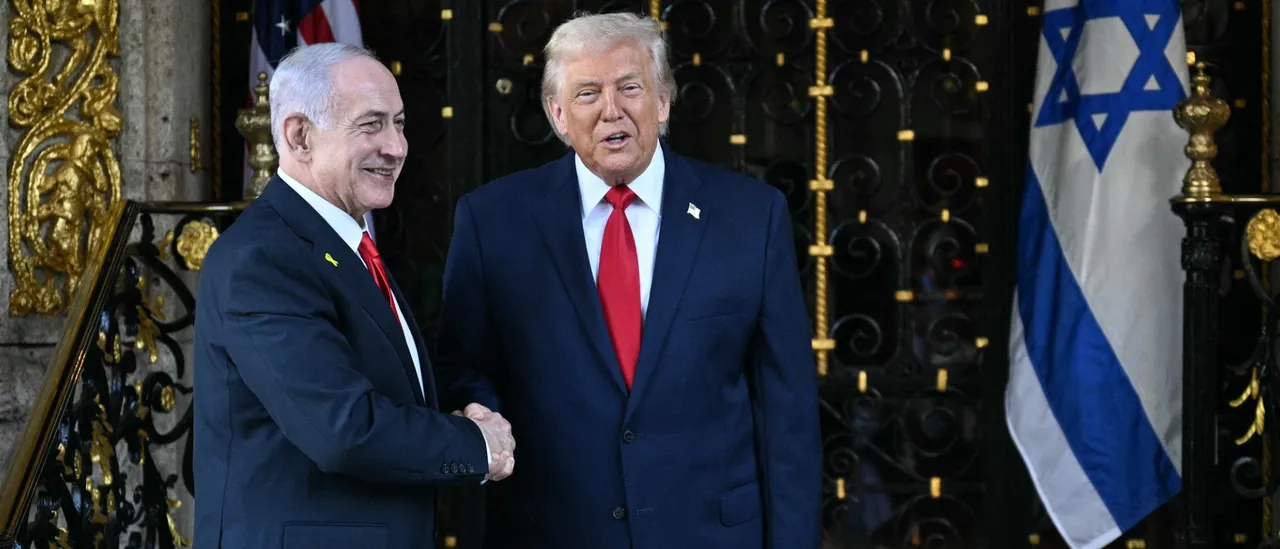
During the interview, Trump discussed ending the annual U.S. assistance to Israel, which is primarily allocated for military and security purposes, saying he and Netanyahu had discussed phasing it out for several years before reaching an agreement.
Trump said he and Israeli Prime Minister Benjamin Netanyahu had agreed months ago to end the $4 billion in annual U.S. assistance by the end of this year, arguing that Israel has become a "very successful country" and "don't need it." He characterized the funding as "a wasted thing" but said the U.S. would still help Israel if necessary, calling the country "a great ally."
Kilmeade followed up by asking the president why the administration was ending the assistance.
"Why? They don't need it, Brian," Trump said, adding that he had raised the issue with Israeli officials and questioned why the U.S. should continue facing criticism from "lunatics like El-Sayed" over financial assistance Israel no longer needs. He further characterized the funding as a "bad talking point."
Questions remain about the timing of the president's announcement and whether the roughly $4 billion in annual U.S. assistance to Israel will ultimately be discontinued as he suggested.
Congress has yet to pass the fiscal year 2027 National Defense Authorization Act (NDAA), the annual defense policy bill that authorizes funding levels and establishes programs for the Department of Defense. Meanwhile, the existing U.S. aid agreement with Israel remains in effect through 2028.
The roughly $3.8 billion minimum in annual military assistance is provided under a separate 10-year memorandum of understanding (MOU) signed under the Obama administration in September 2016, according to a White House press release. The agreement covers fiscal years 2019 through 2028 and provides Israel with Foreign Military Financing (FMF) through a State Department program, which allows the country to purchase U.S. weapons and military equipment.
The NDAA, by contrast, authorizes funding for additional U.S.-Israel defense cooperation, including missile defense, anti-tunnel technology, counter-drone capabilities and other joint defense initiatives, according to an American Israel Public Affairs Committee (AIPAC) press release. Those programs typically receive several hundred million dollars in annual authorizations.
Congress has continued to support and expand these cooperative programs in recent defense legislation. The FY2026 NDAA authorized nearly $700 million for U.S.-Israel initiatives, while the House-passed 2027 version included $750 million and established a new Defense Technology Cooperation Initiative.
Trump's Tuesday announcement that the U.S. would end roughly $4 billion in annual assistance by the end of 2026 could prompt lawmakers to revisit Israel-related provisions when Congress returns following the midterm elections. However, changing existing authorized programs would require congressional action, and the current MOU remains in effect through 2028.
Even if the administration follows through on ending direct military assistance, other forms of U.S.-Israel defense cooperation could continue, including weapons sales, case-by-case security assistance and joint technology development and weapons co-production initiatives authorized through the NDAA. (RELATED: Huckabee Accused Of Ignoring American Beaten By Israeli Settlers Who Sought His Help)
The scale of U.S. assistance to Israel has also increased substantially since the October 7, 2023, Hamas attack.
The Biden administration and Congress approved billions of dollars in additional military aid following the attack. Congressional Research Service (CRS) figures put total U.S. military and missile defense assistance to Israel at approximately $12.5 billion in fiscal year 2024.
Just a reminder: billion is not the amount the US gives to Israel. That's merely the absolute minimum the US is required to give each year under the Obama/Netanyauh agreement of 2016.
— Glenn Greenwald (@ggreenwald) November 3, 2026
In 2024 alone, Biden gave Israel another billion directly beyond the minimum guarantee.… https://t.co/ezyWuWZDDg pic.twitter.com/nnP2vMEEKT
Other estimates place direct military aid and arms transfers during the first year of the war at roughly $17.9 billion or more, according to research from Brown University's Costs of War Project and the Quincy Institute.
That assistance marked a significant increase over the roughly $3.8 billion provided annually under the existing MOU.
In April 2024, Congress also passed a major supplemental spending package under Public Law 118-50 that provided billions of dollars in additional Israel-related military funding.
The package included support for missile defense systems such as Iron Dome and David's Sling, development of the Iron Beam laser defense system, FMF, and replenishment of U.S. weapons stockpiles, among other defense initiatives, according to a 2025 congressional report.
The supplemental funding came on top of the regular annual assistance.
Against that backdrop, the future of U.S.-Israel defense cooperation has also brought renewed attention to Section 219, a proposed NDAA provision designed to expand the two countries' defense technology partnership.
The provision would expand U.S.-Israel defense cooperation through technology sharing, weapons co-production and joint research and development in fields such as biotechnology, autonomous systems, artificial intelligence and cyberwarfare.
The proposed agreement could also change how the two countries manage their defense relationship, moving some cooperation beyond the existing MOU and into Pentagon-administered contracts and joint development programs.
Under the proposed framework, a designated executive agent would oversee the partnership, potentially centralizing decisions on joint projects and technology transfers while raising questions about the level of congressional oversight.
The initiative could also provide a separate avenue for continued U.S.-Israel defense cooperation even if the Trump administration follows through on ending the existing annual military aid arrangement.
At the same time, the expanded partnership raises questions about Israeli access to U.S. defense research, the transfer of sensitive technologies and the degree of integration between the two countries' defense industries.
The proposal drew a response from Joe Kent, the former director of the National Counterterrorism Center, who resigned from the Trump administration in March over the Iran war and concerns about Israel's influence on U.S. policy.
In publicly stating that he’s cutting off aid to Israel, President Trump is attempting to set a narrative: whatever action Israel takes against Iran has nothing to do with the U.S. It gives us a political “out” if Israel targets civilian infrastructure or uses a nuclear weapon on… https://t.co/9JqXvZjrCF
— Joe Kent (@joekent16jan19) November 3, 2026
"If POTUS is genuinely serious about cutting off aid to Israel, he must demand that Congress remove all proposed programs that will give the Israeli defense & intelligence apparatuses unfettered access to our own defense & intelligence R&D," Kent wrote.
In publicly stating that he's cutting off aid to Israel, President Trump is attempting to set a narrative: whatever action Israel takes against Iran has nothing to do with the U.S. It gives us a political "out" if Israel targets civilian infrastructure or uses a nuclear weapon on Iran. Unfortunately, Iran will not see it this way. Just as they've hit us when Israel has initiated attacks in the past, Iran will retaliate against us & our gulf partners if Israel engages in further acts of aggression. The reality is that it's going take more than a public statement to meaningfully restrain Israel, especially when that statement highlights the still-heavy influence Netanyahu has on these decisions. Bibi, Israeli officials, & their American surrogates have known for some time now that the days of unconditional support from the U.S. are reaching an end, and have resorted to misdirection: get everyone focused on Trump ending the cash funding & weaponry provisions, while in the background shifting their own efforts to push the far more lucrative— but harder to detect— "partnership" that's on the cusp of being codified into law within the NDAA. If POTUS is genuinely serious about cutting off aid to Israel, he must demand that Congress remove all proposed programs that will give the Israeli defense & intelligence apparatuses unfettered access to our own defense & intelligence R&D. Protect American interests, put Americans first.
— Joe Kent (@joekent16jan19) November 3, 2026
The debate over Section 219 could become a significant part of the broader congressional discussion over the future of U.S.-Israel relations, particularly if the Trump administration follows through on its announcement to end the existing military assistance arrangement.
The debate over Section 219 could become a key part of Congress's broader discussions about the future of U.S.-Israel defense cooperation, particularly if the Trump administration moves forward with its announcement to end the existing military assistance arrangement.
The Daily Caller reached out to the White House and the House and Senate Armed Services Committees for comment but did not receive responses before publication. The State Department declined to comment.
Source link