President Donald Trump has repeatedly said the war with Iran will end immediately after the November 3 midterm elections. On Sept. 9, he made that prediction publicly. On Oct. 28, however, when asked whether he might order additional
strikes after the election, Trump replied, "Anything's possible."
That same day, the Associated Press reported that American officials had privately urged several Middle Eastern governments and regional allies to prepare for renewed U.S. strikes against Iran after the election, as well as possible Iranian retaliation against energy facilities and other critical infrastructure. The diplomats briefed on those discussions said Trump had made no final decision.
So the president is talking about ending the war, while American officials are telling allies to prepare for another round of it.
That is worth paying attention to. And it is only one piece of what is happening.
In Palm Beach, the sight of two Avenger air-defense systems aboard a barge in the Intracoastal Waterway, immediately outside Mar-a-Lago, has raised another set of questions. These are mobile military systems equipped with Stinger missiles, designed to counter low-flying aircraft, helicopters, and drones. NORAD and U.S. Northern Command confirmed their deployment at the Secret Service's request. The Secret Service described the current situation as a "heightened threat environment," although officials have not identified a specific threat prompting the deployment.
More than 60 aircraft have reportedly been intercepted for violating restricted airspace around Mar-a-Lago since January 2025. The systems have also been positioned near the airport. This is not routine presidential security that most Americans see every day.
WPTV reported on the barge deployment, and WPBF reported the Secret Service's heightened-threat statement.
Dan Bongino has been warning Americans about the possibility of cyberattacks that could produce regional brownouts and blackouts. On Oct. 28, he again urged listeners to prepare for as many as 30 days off the grid. His instruction was direct: "Be prepared for 30 days of being off the grid so you can support your family." He was careful to say he was not predicting that the world would end tomorrow. His point was that a serious disruption could leave families on their own for an extended period.
Glenn Beck has been discussing the same general vulnerability through his DIGI-DEFCON warning system. Beck placed the current situation at Level 6, which he describes as widespread exposure of personal data. In explaining the scale, Beck said, "We're at the very beginning of this and we're at DEFCON 6." His lower levels contemplate more serious consequences, including regional outages affecting power, water, phones, banks, stores, and hospitals. His Level 3 description is stark: "Power, water, phones will be down regionally for days." That is Beck's assessment, not a government threat classification. But the subject he is discussing is hardly imaginary.
The Pentagon, meanwhile, is doing considerably more than talking about preparedness.
On Sept. 30, Defense Secretary Pete Hegseth announced FORTRESS America, short for Federal Operations for Resilience, Troop Resources, Energy, Supply, and Survivability. The name is cumbersome. The mission is not. The Pentagon wants military installations and critical operations to remain functional when the infrastructure surrounding them cannot.
An Oct. 6 implementation memorandum began putting the program into motion. Its five pillars include energy independence, installation hardening and cyber resilience, protection of satellite and communications systems, secure supply chains, and strategic defense reserves. That means independent power generation and microgrids, hardened command systems, protection against cyber intrusion and sabotage, and sufficient reserves to sustain military operations through prolonged contingencies.
This is not a commentator speculating about a possible emergency. It is a Defense Department program being organized and implemented. The Pentagon is preparing for the possibility that power, communications, supply lines, or other essential systems could be disrupted when the military needs them most.
Russia has added another development to the picture. On Oct. 28, a Russian nuclear-powered submarine, the Generalissimus Suvorov, launched a Bulava intercontinental ballistic missile from beneath the Sea of Okhotsk. The missile was fired toward a Russian test range in the north. Moscow described the launch as a scheduled combat-training exercise.
The Bulava is a submarine-launched ballistic missile, or SLBM. It is nuclear-capable. It is not the Poseidon underwater nuclear drone, a different weapon altogether. The distinction matters, but so does the timing. The launch took place as the United States began its Global Thunder nuclear command-and-control exercise. Neither event, by itself, establishes an impending confrontation. Both are reminders that strategic nuclear forces are being exercised while several international crises remain unresolved.
The United States is not alone in telling its citizens to prepare.
Britain launched its Be Ready campaign on Oct. 22, advising households to keep at least three days of emergency supplies. The guidance specifically contemplates interruptions to electricity, water, telecommunications, and other essential services. The British government says households should have drinking water, food that does not require cooking, flashlights, batteries, portable chargers, radios, and cash.
Across northern and eastern Europe, preparations are more extensive. A recent report in Le Monde describes Finland, Sweden, Poland, Estonia, Latvia, and Lithuania expanding civil defense and preparing their populations for the possibility of war. Poland has approximately 86,000 shelters, with capacity for nearly 25 million people. Finland maintains more than 50,000 shelters, keeps grain reserves sufficient for nine months, and is developing emergency supermarkets equipped with generators. Sweden is requiring businesses to prepare for worst-case scenarios. These are not casual recommendations to keep a flashlight in a kitchen drawer.
France has adopted a national cybersecurity strategy for 2026–2030, emphasizing protection of infrastructure, businesses, government systems, and national resilience. Japan has convened a ministerial cybersecurity meeting after a series of attacks caused significant information leaks and other damage. Its government is expanding vulnerability testing and monitoring across supply chains. Australia's October 26 cyber threat report warns that state-sponsored actors routinely target critical infrastructure and may be positioning themselves to cause disruptive or destructive effects during a future crisis or conflict.
These governments are not all responding to the same immediate danger. Some are preparing for war. Others are addressing cyberattacks, natural disasters, or vulnerabilities exposed by recent incidents. But the practical advice increasingly sounds familiar: prepare for interruptions to the services people depend on every day.
Intelligence agencies have been unusually direct about the threats behind these preparations. Britain's MI5 director, Ken McCallum, said in his Oct. 13 annual threat update that the country had entered a new era of national security. He described growing state-sponsored threats involving Russia, Iran, and China, alongside terrorism and other hostile activity. He asked listeners to imagine "a flicker in the power grid supplying your home."
American agencies have also warned that foreign actors have gained access to critical infrastructure networks. In its advisory on the Chinese hacking group known as Volt Typhoon, the FBI, CISA, NSA, and other agencies described intrusions into communications, energy, transportation, and water systems. Their assessment was that these actors were positioning themselves to disrupt infrastructure during a future crisis or conflict. Australia's warning about the same kind of pre-positioning makes clear that this is not an exclusively American concern.
Put these developments together. Trump says the Iran war may end after the election, while allies are being warned to prepare for renewed strikes and retaliation. The Pentagon is organizing FORTRESS America. Air-defense missile systems have been deployed around the president's private residence. Russia is testing a nuclear-capable submarine-launched missile. The United States and Russia are conducting strategic military exercises. European governments are expanding shelters and civil defense. Britain is telling households to prepare for three days without essential services. Cybersecurity agencies are warning that foreign adversaries may already have access to systems that keep modern societies running.
Perhaps every development has its own explanation. Some clearly do. We should not pretend that all these actions are coordinated, or that they prove an attack is imminent. But neither should we dismiss the cumulative picture as a collection of unrelated headlines.
Why now? Why are governments speaking so openly about prolonged outages? Why is the Pentagon preparing installations to function independently of civilian infrastructure? Why are foreign governments expanding civil defense and asking ordinary people to prepare? Why are missile-equipped air-defense systems now stationed outside the president's home? And why are officials warning that adversaries may already be inside the systems we depend on?
We are not being told that disaster is certain. We are being told, in increasingly concrete terms, what could happen and how seriously governments are preparing for it.
Maybe it is time the rest of us paid attention. What are they preparing us for?
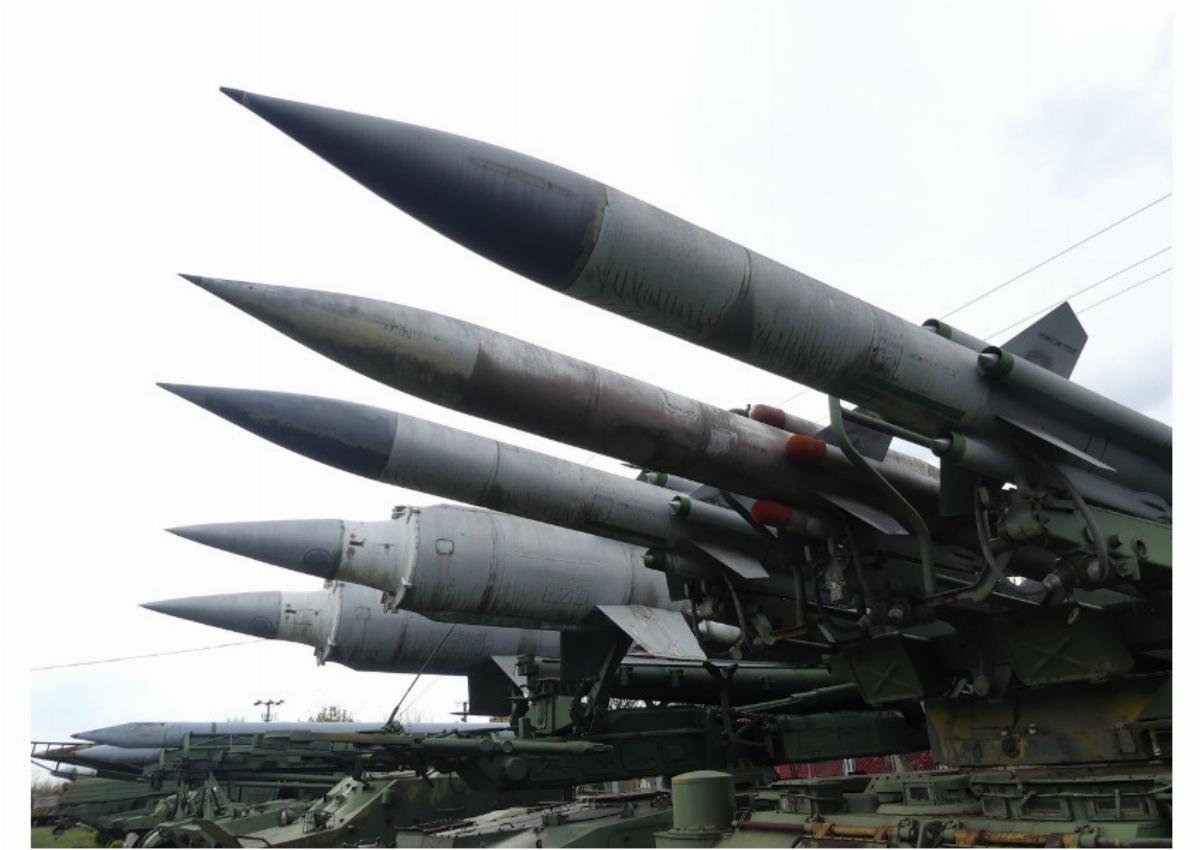
Image: Pixabay // Pixabay Content License
Source link