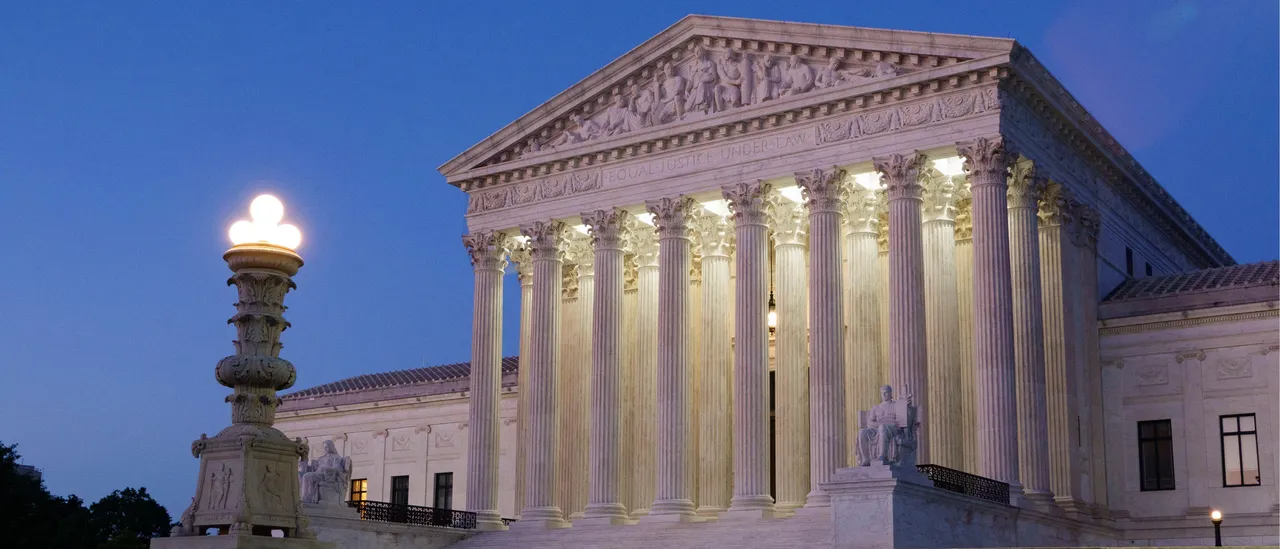
The Supreme Court cleared New Hampshire to keep student IDs out of its November election.
The justices granted the state's emergency request Thursday, pausing a lower court ruling that had eased New Hampshire's identification rules, according to the court's order. The decision lands in a state where a closely watched Senate race could help decide chamber control, NBC News reported.
Former Republican Sen. John E. Sununu faces Democratic Rep. Chris Pappas for retiring Democratic Sen. Jeanne Shaheen's seat. Earlier polling showed the two in a dead heat, though Pappas has recently opened a wider lead, and Cook Political Report ranks the race as "Lean Democrat."
The Republican National Committee backed the SCOTUS petition. (RELATED: Young Voters Flocking Back To Democrats After Helping Trump Win In 2024: POLL)
The majority leaned on a rule that discourages federal courts from rewriting election procedures near Election Day, according to the order. The justices found no adequate reason for the district court to step in so late.
BREAKING: The Supreme Court allowed New Hampshire to continue enforcing voter ID guidance excluding student IDs as evidence of identity, citing Purcell to stay a contrary lower court ruling. Justice Jackson dissented. pic.twitter.com/8UoAekug6I
— SCOTUS Wire (@scotus_wire) October 22, 2026
U.S. District Judge Joseph Laplante upheld the law in early October but blocked a directive from Republican Secretary of State David Scanlan that reached past the statute, The Boston Globe reported. The Boston-based 1st U.S. Circuit Court of Appeals refused to pause that ruling, sending the state to the Supreme Court, according to NBC News.
Republican state Rep. Ross Berry, who chairs the New Hampshire House Election Law Committee, called Laplante's order the work of "another Liberal judge," according to The Boston Globe.
Justice Ketanji Brown Jackson handles emergency filings from that circuit and referred the case to the full court, according to SCOTUSblog.
Republican Gov. Kelly Ayotte signed House Bill 323 on April 3, the Valley News reported. The law, which dropped student IDs from the list of ID types that can be presented to receive a ballot, took effect June 2 after passing on party lines. Scanlan later applied that restriction to voter registration as well, according to the New Hampshire Bulletin.
Democratic state House Minority Leader Alexis Simpson alleged that the law was an attempt by Republicans to put their finger on the electoral scale. "Eligible voters have a fundamental right to cast a ballot, and deliberately removing ways to prove identity is voter suppression," he said, according to InDepth NH. "If Republicans had an agenda Granite Staters wanted, they would run on that instead of attacking the right to vote."
Jackson was the high court's lone dissenter. She argued the trial court had corrected misinformation about the rules, not rewritten them, according to her opinion.
"I respectfully dissent because—even, and perhaps especially, when an election is looming—I would not disturb a clearly justifiable federal-court order issued to ensure that the public receives accurate information about a State's electoral processes," Jackson wrote.
The stay holds through the 1st Circuit appeal and any petition to the justices, according to the order. The lawsuit continues in district court.
Source link