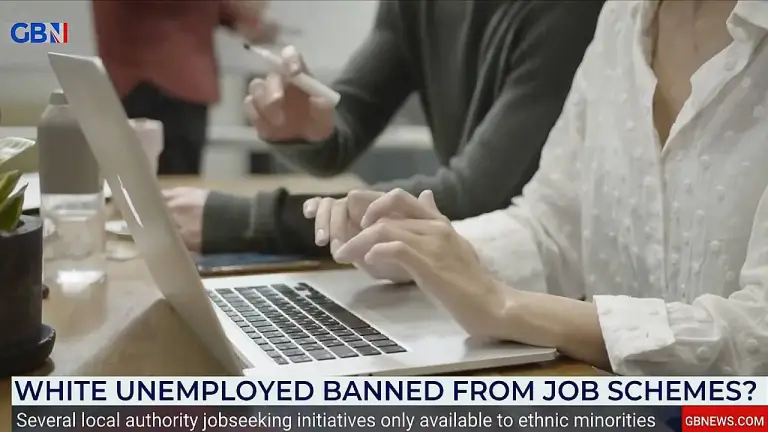
Oxfam paid its white staff a median of 33% less than colleagues who described themselves as black or a person of colour last year, according to the charity's own annual report. Cancer Research UK and the British Red Cross reported similar negative ethnicity pay gaps in favour of ethnic minority staff.
The figures, drawn from the organisations' voluntary disclosures, have prompted questions about how "positive action" provisions in the Equality Act 2010 are being applied in practice. Critics argue the measures, intended to address under-representation, are producing outcomes that disadvantage white employees in recruitment, promotion and pay.
Oxfam's ethnicity pay gap stood at –33.0% on the median and –12.9% on the mean, based on data from 69.2% of staff who shared their ethnicity. Black or people of colour (BPOC) staff made up 10.5% of the workforce. The median gap had been –10.4% the previous year.
Oxfam pay white people 33% less than non-white employees. Is this even legal? Because if it was the other way around you can bet your bottom dollar there would be uproar in Downing Street and on the streets!
— JP-ExileinDerry (@UkandNIbackup) October 22, 2026
Remember the BBC are paying Black Asians more than white colleagues. pic.twitter.com/wY6hUilhXZ
The charity noted that a higher proportion of staff in the top two pay quartiles disclosed their ethnicity, and that lower overall numbers of BPOC colleagues "may be driving a skew in the pay gap." It stated the figures "cannot be seen as conclusive" but were "suggestive of lower average pay at the charity for white workers."
A spokesman for Oxfam said the organisation was "committed to fair, inclusive recruitment practices that value diversity and ensure everyone has the opportunity to thrive. We do not operate a policy of positive discrimination," adding that the "reported ethnicity pay gap is not evidence of unequal pay for the same work."
Cancer Research UK reported that white staff were paid 7.6% less on average in 2025. The charity has recorded a negative gap in favour of ethnic minority employees since 2020, though it said the figure is now "the closest to being neutral it has ever been."
British charities spark furious backlash after paying white employees a THIRD less than ethnic minoritieshttps://t.co/1MkBcsgHmS
— GB News (@GBNEWS) October 22, 2026
It attributed much of the disparity to a higher proportion of white staff in lower-paid high-street retail roles and a larger share of ethnic minority staff in higher-paying positions such as technology.
The British Red Cross reported an 11.4% gap in favour of ethnic minority staff. Racially minoritised colleagues made up 19.6% of its workforce. A spokesman said the charity's "priority is to ensure people are paid fairly for the work they do and that our workforce reflects the communities we serve" and that it was committed to equal pay "regardless of ethnicity."
James Wild, the Shadow Culture Minister, said individuals "should be rewarded for their talent and hard work, regardless of their background or ethnicity." He added: "Fairness means ensuring everyone has an equal opportunity to succeed, not preferential treatment or discrimination that puts others at an unfair disadvantage. Pay should be based on merit, skills and performance, rather than factors beyond anyone's control."
Suella Braverman, Reform UK's Equalities Spokesman, described the results as "the Equality Act laid bare. Rampant positive action schemes are actively discriminating against white, working-class Brits in favour of ethnic minorities, leading to certain groups gaining an upper hand when it comes to the jobs market. This is simply unacceptable. We cannot live in a society that values thoughts and feelings over merit."
Lord Young of Acton, founder of the Free Speech Union, said: "The positive action section of the Equality Act has become a get-out-of-jail-free card for any employer who wants to discriminate against white people. I expect we'll see much more of this once the reporting requirement becomes mandatory."
Under the Equality Act, positive action allows proportionate steps to address disadvantage or under-representation connected to a protected characteristic. It is distinct from positive discrimination, which remains unlawful.
Critics contend that in practice the distinction is being blurred in hiring and advancement decisions. A forthcoming government requirement will compel organisations with more than 250 staff to publish ethnicity and disability pay gap reports; currently such disclosures are voluntary.
A Broader Pattern
The charity figures sit within a series of documented cases in which white applicants or employees have faced restrictions or differential treatment in public and quasi-public bodies.
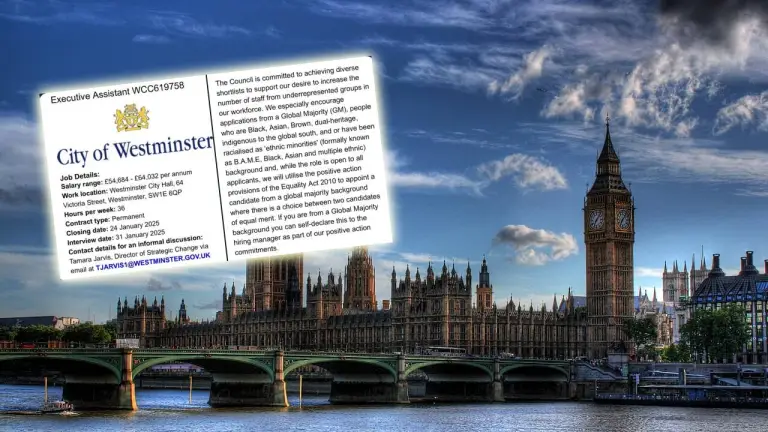
London Council Admits It Will Discriminate Against White People In Job Advert
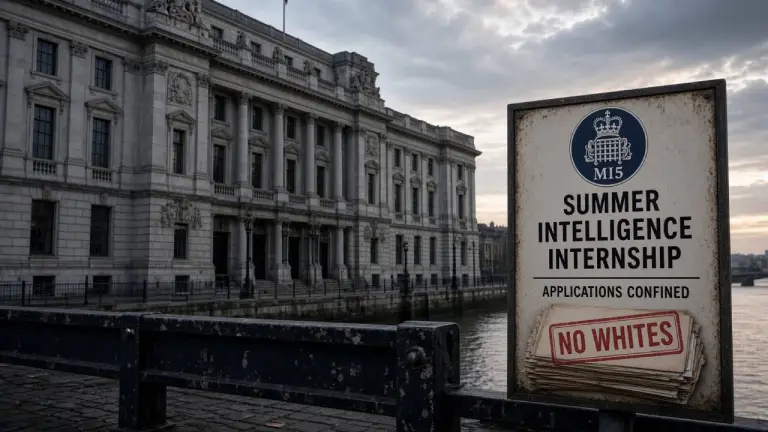

Whites Need Not Apply — British Police Force Blocks Applications From White People

Why I'm Suing the Bar Council Over 'No Whites' Internship Scheme
Police forces have faced repeated scrutiny over recruitment practices and internal training. One force blocked applications from white candidates for certain roles. Officers have also been required to complete training that frames white privilege as a necessary starting point for professional conduct.

UK Police Being Forced To Undergo Training To Accept Their 'White Privilege'
The same culture exists within education.

Students In UK Ordered To Undertake WHITE PRIVILEGE Training
At the BBC, white staff received lower median pay than ethnic minority colleagues in six of seven pay bands according to the broadcaster's latest figures, with the gap reaching 13.2% in the lowest band and 5.3% among senior leaders.
The band-level pattern has drawn attention alongside the corporation's diversity targets and programmes.
The consistent direction of the gaps in these large organisations, combined with explicit restrictions on white applicants elsewhere and the legal framework of positive action, has reinforced concerns that equal treatment is no longer the operating principle in significant parts of the public and charitable sector. Mandatory reporting is likely to surface further examples.
Your support is crucial in helping us defeat mass censorship. Please consider donating via Locals or check out our unique merch. Follow us on X @ModernityNews.
More news on our radar
Source link