History rarely announces its turning points. It shifts quietly—through reopened channels, revived corridors, and states choosing coordination over distance. The recent official visit of Niger’s head of state to Algeria belongs to that category of events whose significance becomes clear only in retrospect. What appears on the surface as diplomatic normalization is, in reality, part of a deeper recalibration: the reactivation of a north–south axis capable of reshaping the geopolitical architecture of North Africa and the Sahel at a moment when the global order itself is being reconfigured.
The international system is moving away from rigid hierarchy toward a more diffuse multipolar configuration. The United States remains central but increasingly stretched across multiple theaters.
China expands economically across Africa while limiting direct security entanglements. Russia has reinserted itself selectively. Gulf states invest heavily in ports, logistics, and mineral infrastructure. Europe, meanwhile, searches for energy stability amid structural dependencies exposed over the past decade. Influence is no longer concentrated in a single center. It flows through networks, infrastructure, and corridors. In such an environment, geography returns as destiny. Few states are better positioned than Algeria to translate geography into leverage.
Stretching from the Mediterranean deep into the Sahara, Algeria connects European energy markets to the Sahel and West Africa. It borders Mali, Niger, and Libya—states whose stability directly affects its own. It remains one of Europe’s principal gas suppliers and maintains a diplomatic tradition rooted in autonomy and mediation. These structural advantages do not automatically produce leadership, but they create the conditions under which leadership can be built if supported by coherent strategy, infrastructure, and sustained political coordination.
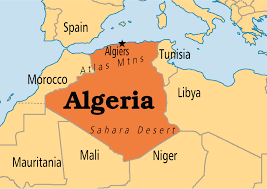
To understand Algeria’s current posture in the Sahel, one must recall a defining chapter of its recent history. During the 1990s, the country faced a large-scale internal terrorist insurgency in conditions of relative isolation. It endured, adapted, and ultimately defeated that insurgency largely through its own institutional capacities. The experience left deep scars but also produced hardened security structures and a doctrine that continues to shape Algerian strategy: stability at home is inseparable from stability across borders, and durable security emerges from coordination, development, and capacity-building rather than external substitution.
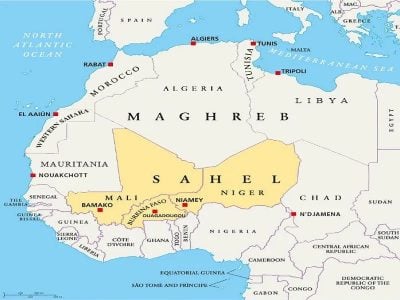
That historical memory informs Algeria’s current engagement with its southern neighborhood. The Sahel—long described as one of Africa’s principal “soft bellies”—has moved from the margins of global attention to its center. What was once framed primarily as a fragile security belt is now understood as a corridor linking energy reserves, mineral wealth, migration routes, and emerging transport networks. Western military drawdowns have not eliminated external involvement; they have diversified it. Regional states are asserting sovereignty. The strategic map is being redrawn.
Within this evolving landscape, the recent high-level exchanges between Algiers and Niamey carry structural implications.
The official visit of Niger’s president to Algeria marked more than a diplomatic courtesy. It formalized the reactivation of a corridor central to three interlocking dimensions: energy, infrastructure, and security. Reciprocal invitations, commitments to regular consultations, and the establishment of follow-up mechanisms signaled an intent to move from episodic engagement toward institutionalized strategic alignment. The tone and choreography of the visit suggested a deliberate effort to anchor cooperation in continuity rather than contingency.
Energy sits at the center of this recalibration. The Trans-Saharan Gas Pipeline linking Nigerian reserves to Mediterranean export terminals through Niger and Algeria has regained decisive strategic relevance. Europe’s search for diversified supply, Nigeria’s need for stable export routes, and Niger’s role as a transit state converge along this axis. Political momentum generated by recent meetings—combined with indications that implementation phases may advance in the coming months under Sonatrach’s technical leadership—suggests a transition from prolonged feasibility discussions toward operational sequencing. If realized at scale, the pipeline will not simply transport gas. It will bind markets and governments across thousands of kilometers and position Algeria as a central processing and transit hub in a trans-African energy chain.
In contemporary energy geopolitics, control of transit corridors often confers more durable influence than control of reserves themselves. Corridors create interdependence. They reorganize space. They anchor sovereignty across territory. The trans-Saharan pipeline thus represents not merely an industrial undertaking but a strategic backbone capable of reshaping the spatial economy of North and West Africa. Its forward movement also recalibrates competing proposals that, in recent years, sought to redirect West African gas along alternative Atlantic routes supported by external alignments involving Morocco, Israel, and certain Gulf partners. Such competing visions formed part of a broader contest over connectivity and influence. As projects move from concept to execution, however, geography and feasibility tend to assert themselves. Pipelines ultimately follow viable terrain—politically, economically, and technically. The current trajectory reflects that reality.
Image:Hassi R’mel (Source)
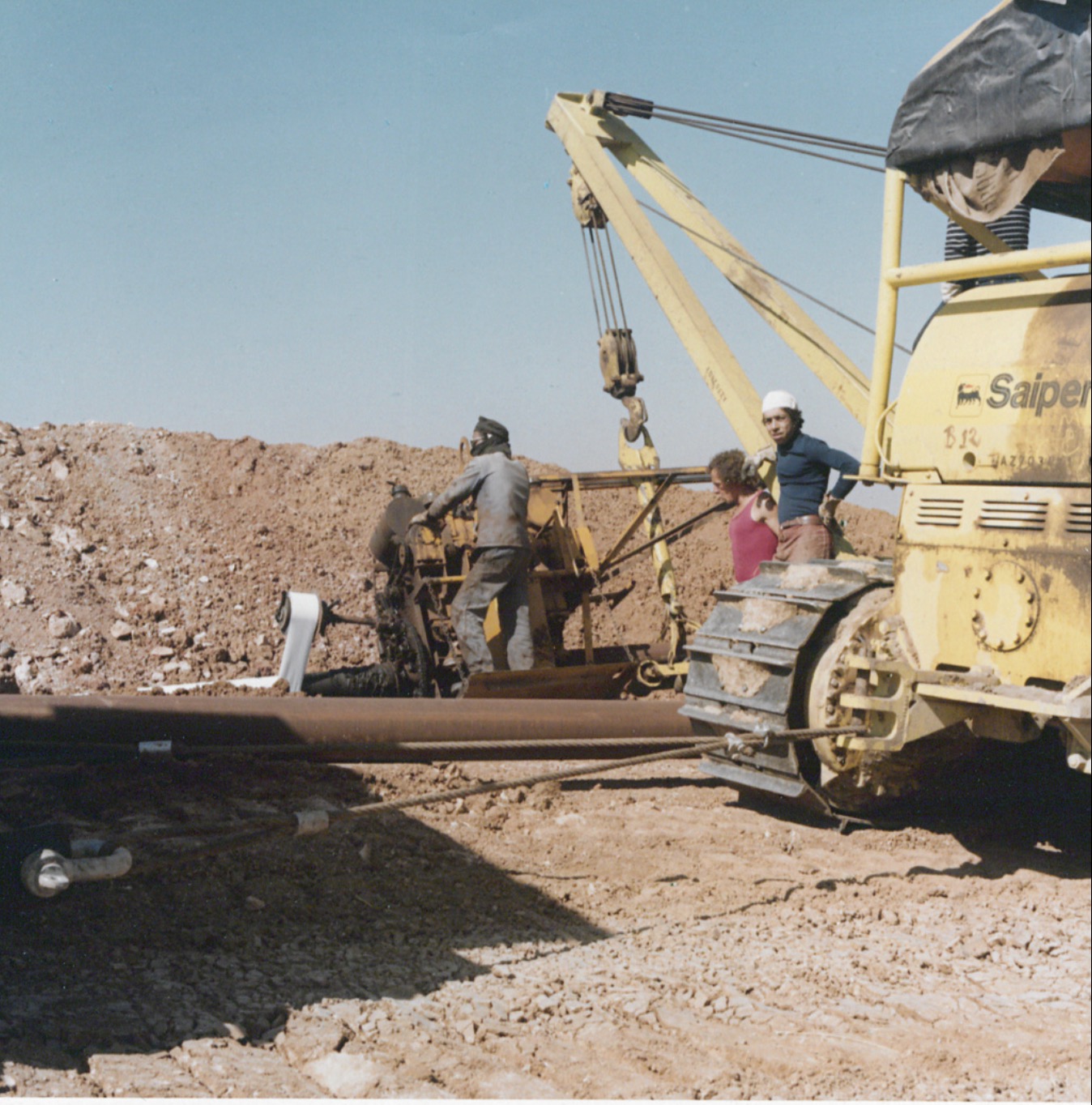
The scale and feasibility of such infrastructure are not theoretical. Algeria’s own internal gas network demonstrates its capacity to construct and operate complex pipeline systems across extreme Saharan environments. Projects linking southern fields to the Hassi R’mel hub required hundreds of kilometers of pipeline under severe climatic conditions. These lines did more than transport gas; they integrated remote regions into national networks and created logistical spines capable of supporting transnational extensions. What was once internal infrastructure now appears as a foundation for a broader trans-Saharan system connecting West African reserves to Mediterranean markets.
Yet energy alone does not define influence. Connectivity does. Across Africa, infrastructure has become the grammar of geopolitics. Roads, railways, pipelines, and digital networks determine trade patterns and investment flows. Algeria’s trans-Saharan road network, expanding southern infrastructure, and major mineral projects such as Gara Djebilet could transform the country into a logistical hinge linking sub-Saharan production zones to Mediterranean markets. As the African Continental Free Trade Area gradually lowers barriers, reliable north–south routes will become decisive strategic assets. States that anchor them will shape supply chains and investment flows for decades.
Security remains central to this equation. The limits of externally driven stabilization in the Sahel have become evident. Algeria’s approach—prioritizing intelligence coordination, training, and development over direct intervention—has often been described as cautious. It may also prove more sustainable. Capacity-building and infrastructure create interdependence that outlasts individual operations. They embed influence in institutions rather than in temporary deployments. Having confronted and overcome a prolonged internal security crisis, Algeria’s emphasis on resilience and long-term stabilization carries particular credibility across the region.
North Africa itself is evolving through divergent strategic choices. Morocco has deepened security and technological cooperation with Israel and strengthened integration within Western defense frameworks. Algeria has followed a different path centered on strategic autonomy, diversified partnerships, and a focus on Sahelian stabilization and trans-African connectivity. The regional landscape is therefore shaped less by direct confrontation than by competing network architectures: one oriented toward Atlantic-aligned security systems, the other toward corridor-based integration linking the Mediterranean to the Sahel and beyond.
The recent diplomatic sequence suggests a normalization process unfolding at variable speed across the Sahel. With Niger, the restoration of full diplomatic coordination and the renewed momentum behind shared infrastructure projects indicate a clear thaw. With Burkina Faso, sector-level cooperation in energy, mining, and training has resumed in a pragmatic, project-driven manner. The Malian file remains more complex. Relations between Algiers and Bamako have been strained by security incidents, political divergences, and unresolved disputes over recent years. Yet even here, subtle signals have begun to circulate. In recent days, unconfirmed reports and informal channels have hinted at the possible return of Mali’s ambassador to Algiers. Such indications remain speculative and unverified, but in regional diplomatic practice they are often interpreted as preliminary signals of de-escalation. If confirmed, they would not constitute full normalization. They would, however, mark the first tangible step toward restoring institutional dialogue between two states whose security and geography remain deeply intertwined.
For now, caution is warranted. The Malian track is likely to advance more slowly than those involving Niger or Burkina Faso. Yet the broader trajectory suggests a gradual re-anchoring of Algeria’s southern relationships within a framework defined by corridors, infrastructure, and coordinated sovereignty rather than by episodic crisis management. Geography imposes a logic of engagement that political tensions cannot indefinitely override.
For Algeria, the opportunity is clear but not automatic. Structural advantages must be translated into outcomes. Infrastructure must move from blueprint to execution. Southern regions must be developed as gateways rather than peripheries. Energy partnerships must be integrated into broader industrial and logistics strategies. Diplomatic credibility must be matched by delivery on the ground. Above all, Algeria must articulate and act upon a vision of itself as a stabilizing and integrative power within a multipolar environment.
The evolving Algeria–Niger axis offers a glimpse of what such a vision might produce: a structured north–south sphere linking Mediterranean markets, Sahelian transit routes, and West African resources. In a world where influence increasingly flows through corridors rather than declarations, states that anchor these systems shape the order around them. Algeria sits at the intersection of several of the most consequential lines. Geography gives it reach. Energy gives it leverage. Experience gives it resilience. Diplomatic tradition gives it credibility.
Execution will determine the outcome.
Turning points rarely announce themselves in real time. They become visible only once networks are built and alignments settle. The quiet recalibration now underway between Algeria and its southern neighbors—reinforced by recent high-level visits, sectoral agreements, and tentative signals of diplomatic thaw—may, in time, be recognized as one of those moments when infrastructure, strategic memory, and geography converged to redefine the map of North Africa and the Sahel.
States that anchor corridors shape the century. Algeria already sits on the lines that matter. The question is no longer whether it possesses leverage, but whether it will fully convert geography, experience, and infrastructure into durable power within a multipolar world.
*
Click the share button below to email/forward this article. Follow us on Instagram and X and subscribe to our Telegram Channel. Feel free to repost Global Research articles with proper attribution.
Laala Bechetoula is an Algerian journalist and writer, author of “The Book of Gaza Hashem: A Testament Written in Olive Wood and Ash”.
Featured image source
Global Research is a reader-funded media. We do not accept any funding from corporations or governments. Help us stay afloat. Click the image below to make a one-time or recurring donation.