Labour wants to digitally track drivers' car mileage as part of its new pay-per-mile road tax, sparking fresh privacy fears over the 'Big Brother' scheme.
Under plans buried in the small print of last week's Budget, ministers want to tap into 'in-built connectivity' systems in newer cars.
This would allow transport officials to interact digitally with vehicles and calculate motorists' bills for driving electric and hybrid cars on the roads. Officials also hope it will help prevent mileage fraud and streamline the road tax payment process.
But while Treasury officials insist the new measure would require motorists to opt-in, critics fear it could be abused and risks being the first step in a slippery slope towards all drivers being forced into having their mileage monitored.
Tory transport spokesman Richard Holden accused Labour of a U-turn, pointing out that it has previously ruled out tracking drivers' mileage amid privacy concerns about people's locations and other journey details being shared.
He said: 'They have snuck it out in the Budget, and they want your car gossiping to the taxman every mile you drive.
'Labour's war on drivers knows no bounds. They are forever hunting for new ways to tax motorists, all to pay for ever more benefits handouts.
'Labour needs to be honest with drivers and rule out pay-per-mile road pricing for good. Drivers should not be taken for a ride.'
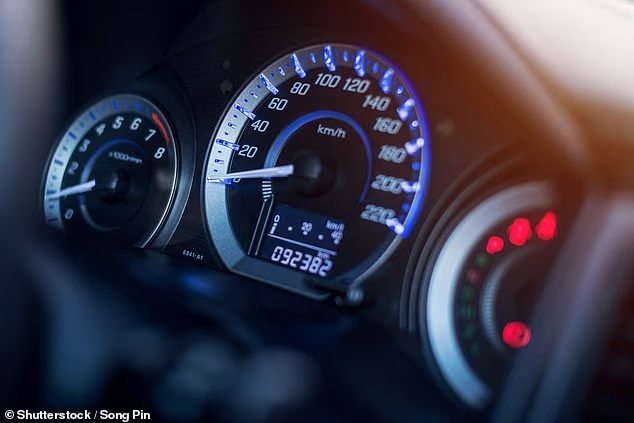
Most modern cars display mileage electronically near the speedometer and officials want to be able to monitor that digitally in order to calculate pay-per-mile tax bills
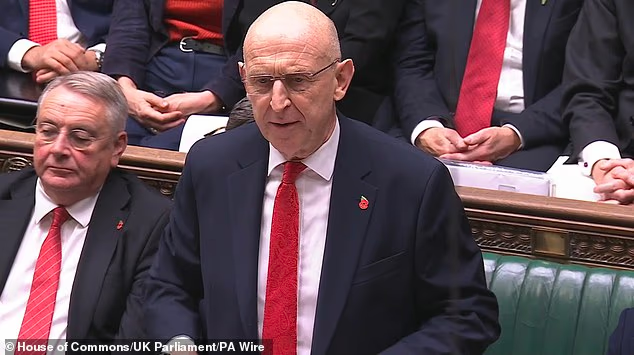
Under plans buried in the small print of last week's Budget, unveiled in the Commons by Chancellor John Healey, ministers want to tap into 'in-built connectivity' systems in newer cars
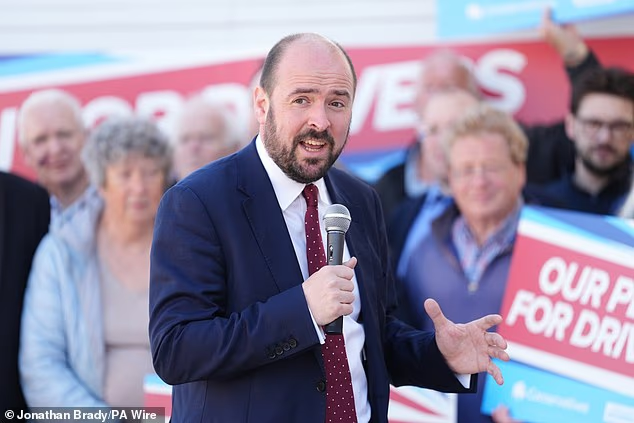
Tory transport spokesman Richard Holden said Labour 'want your car gossiping to the taxman every mile you drive'
Howard Cox, founder of the FairFuelUK group, which campaigns for lower driving taxes, said: 'This reeks of Big Brother Britain.
'Labour says it's voluntary, but motorists have every right to ask: for how long? Today they want your mileage. Tomorrow, what else will they want to know?
'Where you drive, where you visit, and what you do in your private life. Our cars, our journeys, and our freedom to travel anywhere, any way, are ours, not Westminster's.
'Motorists have been the Treasury's cash cows for decades.
'Don't let us become the state's digitally tracked cash cows.'
Josie Appleton, director of the Campaign for Freedom in Everyday Life, which campaigns against draconian regulations, added: 'This new mileage tax is becoming a gigantic excuse to monitor and invade the liberties of e-vehicle drivers.
'Not only can their homes be raided to check for mileage fraud, but now their cars could have mileage monitors reporting to the DVLA.
'Automatic reporting might be more convenient but it is also the sort of monitoring system that could be weaponised in case of an emergency, or to meet green targets.'
The Treasury has insisted that any scheme would not require trackers or other devices being fitted to vehicles, and that 'where and when miles are driven' won't have to be reported.
But it failed to set out how it would work in practice and what safeguards would be put in place to ensure drivers' location and journey details aren't recorded.
Pay-per-mile, also known as eVED, will be enforced from April 2028.
The new levy, first announced by ex-Chancellor Rachel Reeves in last year's Budget, will be charged at 1.5p a mile for hybrid motorists and 3p for fully electric cars and will be paid in addition to the current standard road tax (Vehicle Excise Duty).
It will rise annually in line with the Consumer Prices Index rate of inflation from April 2029, meaning a pure electric motorist faces an extra annual bill of around £300 if they drive 10,000 miles a year.
Ministers want to introduce it to fill the financial black hole being created by falling fuel duty receipts, which netted the Treasury £24billion last year, as people switch away from fossil fuel-powered cars.
Buried in the small print, last week's Budget pledged to create an 'eVED Connect' scheme and 'develop an opt-in system to make use of vehicles' in-built connectivity', adding: 'eVED Connect will allow motorists to use this connectivity so that they do not have to report their mileage manually.
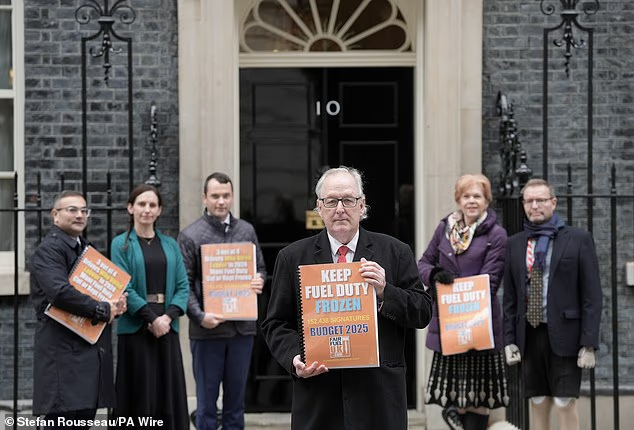
Howard Cox (front, centre), founder of the FairFuelUK group, which campaigns for lower driving taxes, said the plan 'reeks of Big Brother Britain'
'The technology could also support mileage estimation.'
Many new fully electric or hybrid vehicles have in-built internet and GPS tracking systems which could interact with databases at the DVLA and give mileage readings, allowing road tax bills to be calculated according to the mileage driven that year. It could also be used to estimate bills for future years.
Until now, ministers have only said in public documents that drivers will be required to submit their mileage reading at the end of each year so their eVED bill can be calculated.
This would be cross-referenced with a mileage reading taken during the car's MOT to try and prevent fraud.
It comes after the Mail revealed last month that police are set to be handed 'Big Brother' powers to raid the homes of drivers suspected of trying to dodge the new pay-per-mile tax.
The scheme also sparked controversy after it emerged drivers will still have to pay the tax when driving abroad in countries such as France, where 13 million trips are made by Britons every year.
Because fuel duty is effectively paid at the pumps, there's no need for checks by officials on whether drivers have paid it.
But this will change under pay-per-mile, with a new system needed for ensuring drivers have paid it.
A Treasury spokesman said: 'There will be no requirement to install trackers in cars, or report where and when miles are driven.'
Source link