Some of the Albanese government's largest departments exceeded their staffing budgets by a combined $5.6 million a day last financial year.
Annual reports show more than 40 federal departments and agencies spent more than a combined $2billion above their employee-cost estimates.
The Department of Home Affairs recorded the largest increase, with employee expenses reaching $2.23billion, $275million above budget.
The National Disability Insurance Agency exceeded its staffing budget by $224.6million, while the Department of Climate Change, Energy, the Environment and Water overshot forecasts by $197.6 million.
The Department of Agriculture, Fisheries and Forestry spent $157.1million more than budgeted on staff, while Employment and Workplace Relations exceeded its allocation by $135.1million.
Health, Disability and Ageing recorded a staffing overspend of $129million.
The figures come as Treasurer Jim Chalmers and Finance Minister Katy Gallagher face mounting pressure to contain spending ahead of December's Mid-Year Economic and Fiscal Outlook.
The Reserve Bank is widely expected to lift interest rates again on Tuesday after underlying inflation accelerated in the September quarter.
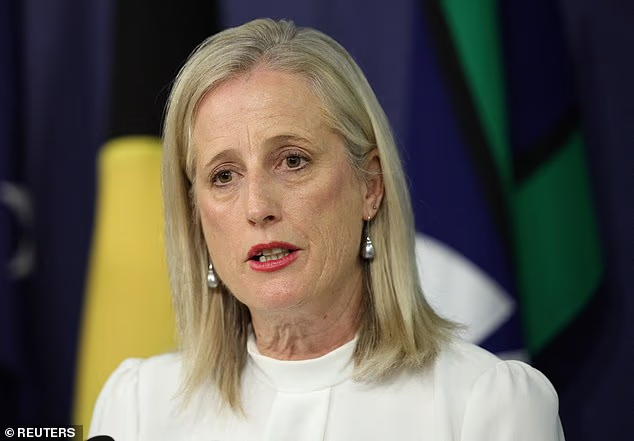
Katy Gallagher (pictured) admitted that the 'pressures on the budget are real' on Sunday
Markets have priced in a strong chance of a quarter-point rise, which would take the cash rate from 4.60 per cent to an 18-year high of 4.85 per cent.
Gallagher acknowledged on Sunday that budget pressures were continuing to mount, as ministers search for savings ahead of the economic update.
Speaking on ABC's Insiders, Gallagher said the government faced growing spending demands across some of its largest programs.
'The pressures on the budget are real,' she said.
'The pressures on the budget are increasing, not decreasing, and so not only is it how do we manage those, it's how do we repair the budget over time.'
Gallagher identified the National Disability Insurance Scheme, healthcare, aged care, defence spending and interest payments on government debt as the biggest spending pressures.
'When you look at the areas of growth, when we came to government and they haven't changed really, but it's been NDIS, healthcare, aged care, defence spending and interest on government debt,' she said.
Host David Speers asked whether those pressures meant it had become too difficult for the government to rein in spending.
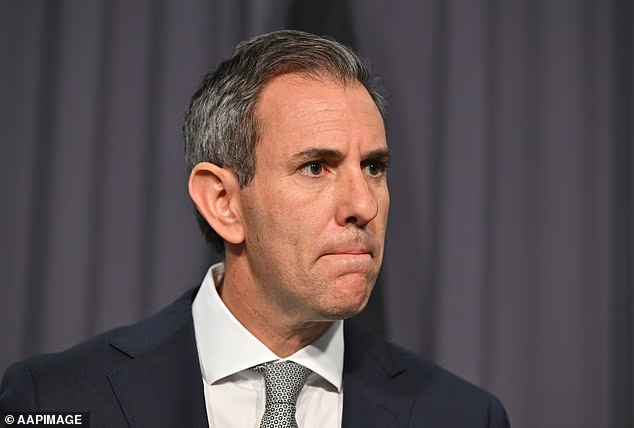
Jim Chalmers (pictured) is under pressure with an expected interest rate rise on Tuesday
Gallagher rejected that suggestion but conceded the budget was under increasing strain.
'No, I'm not saying it's too difficult, but I am saying that there should be some acknowledgement of the world in which we are living and the pressures on the Commonwealth budget,' she said.
'They are real, they are increasing, and we have to deal with them.'
Pressed on whether the government would deliver net savings in the December budget update, Gallagher declined to make a commitment.
'I can't get ahead of decisions that haven't been made yet,' she said.
However, she said ministers were working intensively to find savings.
'There is enormous effort being placed, particularly by Jim and myself, on the savings side,' Gallagher said.
Asked whether any areas would be protected from savings measures, Gallagher indicated spending across government was under review.
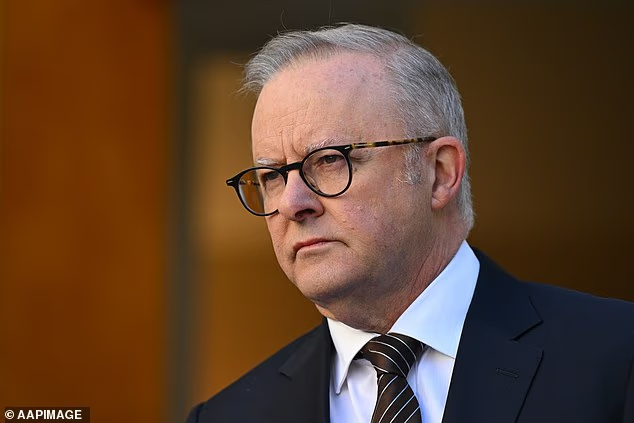
Budget blowouts under the Albanese government are costing taxpayers $5.6million per day 'We look across the board,' she said.
'I would not say that any area is exempt from the scrutiny that the Department of Finance applies.'
While many large departments blew out their staffing budgets, a small number spent less than forecast.
The Australian Taxation Office spent $76.8million less than budgeted on employee benefits, while the Department of Social Services underspent by $35.1 million.
The employee-cost overruns occurred as federal tax collections continued to climb.
Personal income tax receipts surged by $28.5billion in 2025-26 alone, taking total collections to about $346 billion.
When Labor came to office in 2022, personal income tax revenue stood at about $242 billion.
The increase partly reflects bracket creep, under which rising wages can push workers into higher tax brackets, as well as employment, population and income growth.
Source link