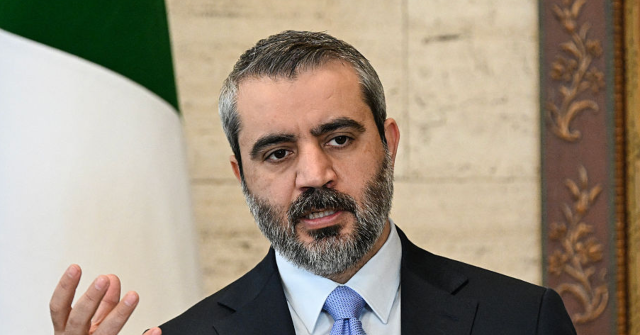
Syrian Foreign Minister Asaad al-Shaibani said on Saturday that his government is considering membership in the Mecca Alliance, the trilateral security partnership created by Saudi Arabia, Turkey, and Pakistan in August.
"Regarding Mecca pact integration, there are some negotiations on this issue and regardless of whether it is in the pact or not, or any other pact, Syria is part of the security of this region and it’ll stand by any organisation that protects the security of this area," Shaibani said at the Manama Dialogue, a regional security conference in Bahrain.
Shaibani said the Syrian junta has a "very special" relationship with Turkey, which could help pave the way to joining the alliance.
Turkey has been strongly supportive of the revolutionary government that took power in Damascus in December 2024 by overthrowing longtime dictator Bashar Assad, especially since the new Syrian government has been amenable to Turkey's complaints about armed Syrian Kurdish militias.
The Mecca Joint Defense Agreement, signed in the Saudi city of Mecca on August 7, 2026, created a mutual defense environment that was nominally similar to NATO. The three member states promised to treat an attack against any of their number as an attack against them all.
This agreement was quickly put to the test when Saudi Arabia was attacked by the Iran-backed Houthi insurgents of Yemen in September, and it would be difficult to argue that the Mecca alliance has risen to the challenge.
The Houthis have been hitting Saudi oil refineries and airports on an almost daily basis for months, including reported threats to Mecca, the very city where the joint defense agreement was signed. Turkey and Pakistan have yet to take any substantive action to defend their Saudi partners.
Turkish officials have explained their inaction by saying the Mecca agreement has not yet been ratified by their parliament, but they have indicated that even when ratification is completed, they would not conduct offensive operations against the Houthis.
In early October, the Syrian government denied reports that Saudi Arabia asked it to send ground forces into Yemen to fight the Houthis.
Shaibani expressed support for the Saudis and the legitimate government of Yemen at the Manama Dialogue on Saturday, but still did not indicate that Syria was prepared to put boots on the ground in Yemen. In fact, he spent more time complaining about Israeli airstrikes against terrorist targets in Syria than Houthi attacks on Saudi cities.
"How can calls for border control and placing weapons exclusively under state control be justified while Syrian sovereignty is violated and targeted on a daily basis?" he said, referring to the Israeli strikes.
Shaibani denounced cross-border attacks in general at the conference, and said Syria supported initiatives like the Mecca agreement that could increase regional stability.
"Geography is destiny, and integration is a choice. We have chosen to make our territory a bridge for prosperity and the exchange of interests, and we stand as a bulwark against turning Syria into a platform for threatening neighbouring countries," he said.
Syria might have looked like a good defense partner to Saudi Arabia because the Syrians have a good number of battle-hardened fighters left over from the long and grueling Syrian civil war, plus the new Syrian government resents Iran for supporting the Assad regime.
On the other hand, Turkey's Daily Sabah noted that the Syrian military "remains in the process of reconstruction and integration after years of conflict," so it might lack the "operational capacity and military coordination required for meaningful participation" in the Yemen conflict.
Source link