Wall Street just sent Washington a warning that was impossible to miss.
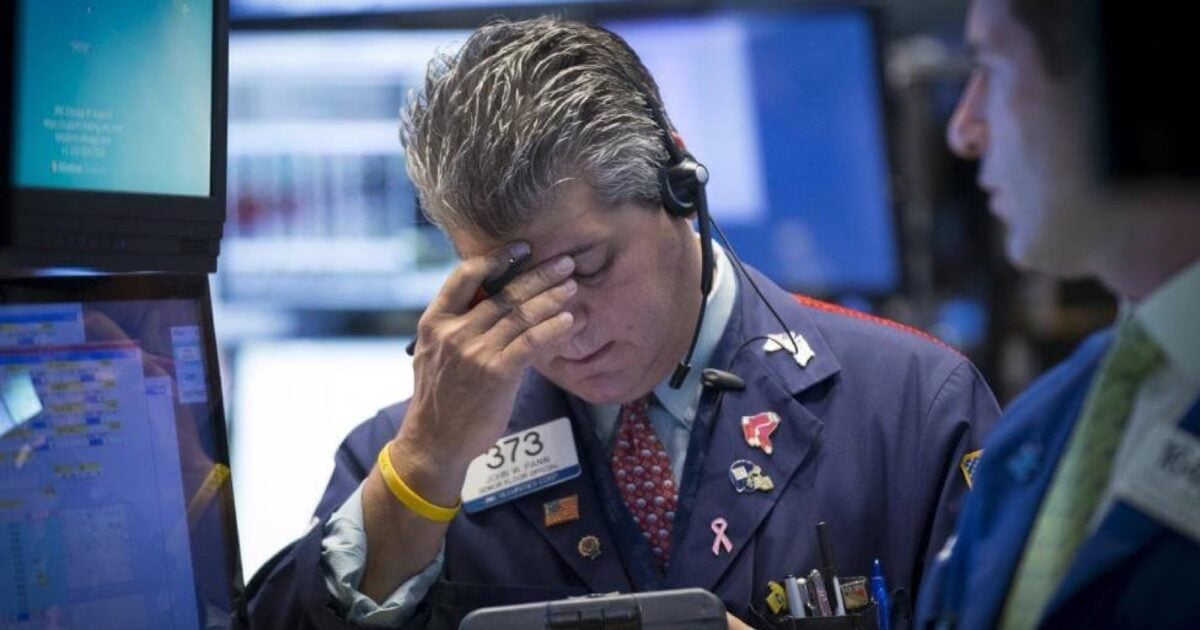
The Dow plunged more than 1,800 points Thursday, the Nasdaq collapsed 5.5 percent, and the S&P 500 lost roughly 4.4 percent as investors dumped technology and
artificial-intelligence stocks after the midterm elections.
The Associated Press reported that the selloff erased the market's entire gain from the previous day and pushed the Nasdaq into correction territory. The semiconductor index suffered a 12 percent collapse as investors rushed out of the companies that powered the artificial-intelligence boom.
The Dow closed down 1,833 points at 51,523. The S&P 500 ended at 7,353, while the Nasdaq fell to 24,315.
Those point totals were historic, but the percentage losses require perspective. The Dow's 3.4 percent decline was punishing for retirement accounts and investment portfolios, yet it remained far below catastrophes such as the 22.6 percent Black Monday crash in 1987.
President Trump blamed the rout on Democrats and the voters who handed them control of Congress.
“The Stock Market suffered one of the Worst Days in History based on the results of the Election. Such a sad thing to watch! It took so much work to get us to a level that no one has ever seen before, and then this. Your 401(k)s have, therefore, dropped. Remember, it wasn’t… pic.twitter.com/iIAXvPqqMv
— The White House (@WhiteHouse) November 5, 2026
Axios reported that AI-related shares led the selloff and that companies tied directly to the data-center buildout suffered double-digit losses. The Nasdaq was already down 4.7 percent before the closing bell, while the broader market was also being squeezed by rising oil prices.
The election was not the only pressure on stocks. Expensive valuations, weak reactions to corporate earnings and an already-fragile AI trade helped create the conditions for a violent selloff.
But the Democratic victory added a new question that Wall Street had to price immediately: whether Congress will slow data-center construction, increase pressure on major corporations or disrupt the energy supply needed to power the AI boom. By the close, the Nasdaq-100 had lost roughly $2.3 trillion in market value.
If "Republicans" had passed the Save America Act it wouldn't have happened. If it weren't for THIS GUY it wouldn't have happened. pic.twitter.com/ILI4H37vdi
— ChazThompson (@ChazT2025) November 5, 2026
Kiplinger placed the rout in a longer market context. The Nasdaq had fallen 12.5 percent from its October 6 peak by Thursday's low, crossing the 10 percent threshold that Wall Street commonly uses to define a correction.
That does not prove one election result caused every dollar of the loss. Markets move for several reasons at once, and traders had already been questioning whether AI stocks were priced for perfection.
The correction did not begin in one afternoon, and the major indexes remained positive for the year. Still, Thursday's acceleration showed that political risk became real money immediately because investors do not wait for the first bill to pass before moving capital.
JUST IN - Trump: "You only have yourselves to blame!" pic.twitter.com/enNHZzyFvA
— Disclose.tv (@disclosetv) November 6, 2026
Democrats spent the campaign promising tougher restrictions on AI, energy-intensive data centers and major corporations. Investors are now calculating what those promises could mean for profits, construction, jobs and American competitiveness.
The market may rebound, and one terrible session cannot erase a full year of gains. A $2.3 trillion warning from the Nasdaq-100 is still not political spin.
It is money disappearing from American portfolios. Washington should pay attention, because Wall Street already is.
Source link