
by WorldTribune Staff, November 3, 2026 — Real World News
Was there a memo?
At least 33 countries, including the United States, have advised households to stockpile 3 to 10 days of emergency food, water, and essential supplies due to
growing geopolitical tensions, extreme weather which many blame on climate change, cyberattacks, and potential disruptions to critical infrastructure.
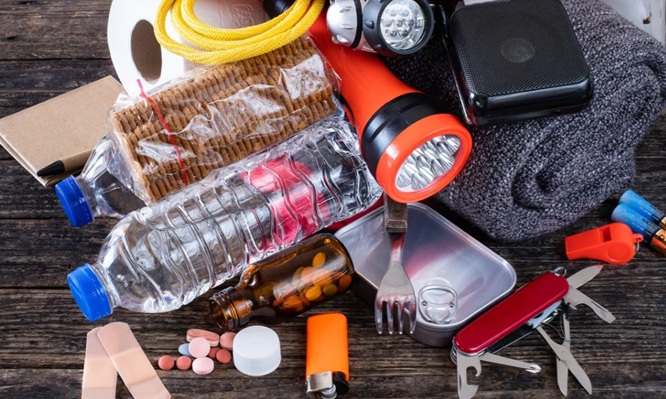 While U.S. civilian guidance recommends preparing to manage for several days during potential emergencies, including natural hazards and man-made disasters, recommendations in other countries range from 72 hours to around two weeks.
The U.S. has also reportedly outlined plans for military bases to operate independently for up to 90 days.
Governments and international reports stress that these recommendations are standard precautionary measures to help communities remain self-sufficient during temporary infrastructure outages rather than an indication that a specific catastrophe or war is imminent.
Recommended stockpiling guidelines by country:
• 72 Hours: The United States, France, the United Kingdom, Canada, Japan, Mexico, and the Netherlands recommend maintaining at least 3 days of basic supplies. For example, the UK Be Ready Campaign suggests non-perishable food, canned goods, and roughly 9 liters of water per person.
• 1 Week: Sweden and Norway. • Up to 10 Days: Germany.
• General Guidelines (unspecified period): India's National Disaster Management Authority advises families to maintain emergency kits containing non-perishable food, water, flashlights, batteries, and radios without a specific time window.
What governments are advising citizens to store:
• Non-perishable food (canned beans, soup, dry goods)
• Drinking water
• Flashlights and spare batteries
• First-aid kits and essential medications
• Emergency wind-up or battery-powered radios
• Power banks, cash, and basic tools
Full list of countries and regions with stockpiling and emergency advice
Europe: Germany, Sweden, Norway, Switzerland, United Kingdom, France, Ireland, Netherlands, Denmark, Finland, Estonia, Latvia, Lithuania, Poland, Czech Republic, Austria, Croatia, and the European Union
North America: United States, Canada, and Mexico South America: Chile, Colombia, Argentina, and Brazil Africa: South Africa
Asia: Japan, Taiwan, Israel, India, the Philippines, and Singapore Oceania: New Zealand and Australia Official reasons for the guidance
• Geopolitical conflicts: Ongoing international conflicts and heightened military-political friction.
• Cyberattacks and sabotage: Recent cyber-incidents targeting power grids, water treatment facilities, and food supply chains (such as supermarket refrigeration systems in Europe).
• Extreme weather and disasters: Escalating severe weather events and natural disasters and climate alarmism.
• Emergency response delays: Official campaigns emphasize that emergency services can take several days to reach every household during a major grid failure or widespread disruption.
Source link


