
DW Opinion
Who Is Writing The Global Censorship Script?
Brazil has become the next pillar of the censorship regime.
 Julio Pohl Listen Listen 6 min
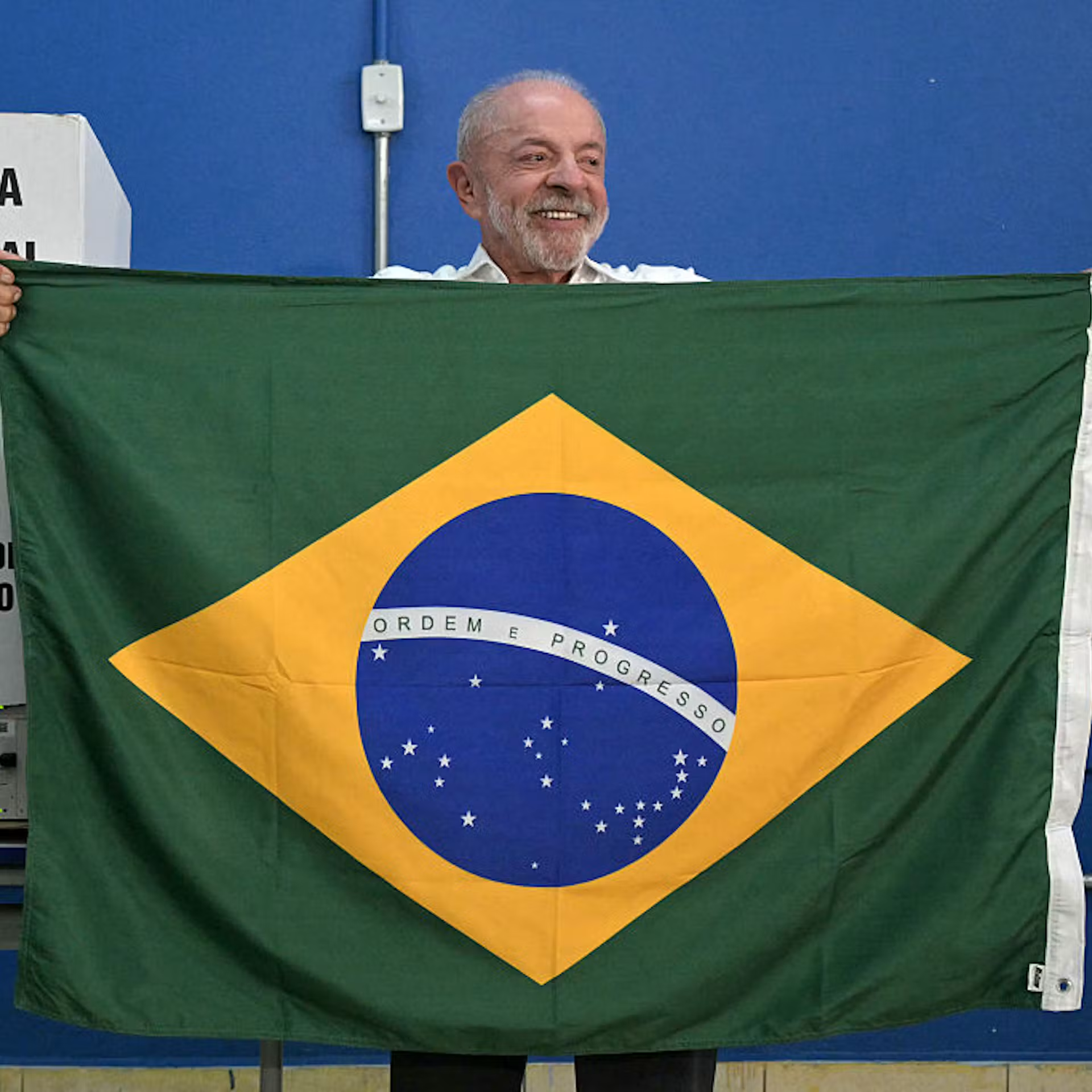
Last Sunday, Lula da Silva won an unprecedented fourth term. In his victory speech, he vowed to "regulate" major tech companies. Judging by the relentless crackdowns on speech in Brazil, we must assume that he will deliver on his promise to ratchet up censorship.
The last several years have set an alarming precedent. Mirroring a rising global trend to censor peaceful speech, the Brazilian government has discovered that the easiest way to control a public narrative is to keep people from speaking in the first place, especially online. Endless police investigations and prosecutions, accompanied by threats of financial penalties, imprisonment, or other punishments, are wielded against individuals who speak their mind and dissent against those in power. Their example becomes a cautionary tale to those around them: Stay silent or face harsh consequences.
This is Isadora Borges, a veterinary student in Brazil.
— ADF International (@ADFIntl) February 9, 2026
She is facing up to 10 YEARS in prison.
The reason?
She stated on social media that men cannot become women.
Censorship in Brazil is spreading at an alarming rate.
We are supporting Isadora's case.
🇧🇷 No one… pic.twitter.com/f1FZWDWThg
We've seen this happen in Brazil too many times to count. Individuals threatened with prison for their social media posts; pastors criminalized for simply teaching their congregations; journalists prosecuted for reporting facts. Now, Lula's promises for his next term predict even more of the same, or worse. In his words: "crime on the digital network should be treated as a crime in real life."
What matters is that while Brazil's censorship regime is certainly a national crisis, it is also a pillar of a larger, global censorship regime.
Lay Brazil's censorship playbook next to that of Europe or the U.K., and you will find they operate in the same way. Take Europe's Digital Services Act and Britain's Online Safety Act, which oblige platforms to remove broadly defined "illegal" or "harmful" content. But who is deciding what those terms mean? And who is stopping them from using those terms to target peaceful, lawful speech? Authorities in Brazil have repeatedly abused their power to control public opinion. In 2019, the Supreme Federal Tribunal, bypassing Congress, "created" the crime of "transphobia" and "homophobia," stating that it was analogous to the crime of racism. Criminal law generally prohibits courts from creating new crimes or extending criminal liability to unlisted conduct through analogical reasoning. Since then, this rogue decision from the highest judicial authority has all but promised punishment to those who peacefully dissent to "transgender" ideology.
In 2024, Brazil infamously showed the lengths to which it would go to silence its people. An order from a single Supreme Court justice shut down X nationwide for more than a month, preventing over 20 million Brazilians from engaging in discussion during a crucial municipal election period. This was one of the first major shows of how an entire society can be completely cut off from online expression and political debate with the stroke of a pen.
O Instituto Isabel manifesta sua preocupação com o monitoramento de mais de 7 mil missas e cultos durante o período eleitoral de 2026.
— Instituto Isabel (@instisabel) October 16, 2026
A liberdade religiosa é um direito fundamental e deve ser respeitada e protegida.
Confira nossa carta de repúdio na íntegra. pic.twitter.com/FP6azwpMaT
Brazil is not an outlier. It is one pillar of the broader trend of global censorship. In Europe, in Britain, and in Latin America, the same pattern is spreading: vague categories of forbidden speech, enforced by officials who decide what counts, with penalties heavy enough that most people simply stop talking.
Public officials have a duty to uphold fundamental human rights. Instead, as Isadora's story shows, officials across the globe use their positions of power to control speech, especially online. They don't even need to fine or jail everyone who dissents; it is enough to make sure that enough people believe they might.
That is the real power of censorship laws, and it is why the dismissals and acquittals, welcome as they are, are not enough. Each case that ends in vindication still teaches the same lesson to everyone watching: the process is the punishment. Until the democracies that claim to defend free expression start defending it at home, and holding their allies to the same standard, the fear of that punishment will continue to deter individuals from speaking freely.
***
Julio Pohl serves as Legal Counsel for Latin America with Alliance Defending Freedom. As part of the team, he monitors the Latin American region and the Organization of American States, while also assisting allied lawyers in litigation to protect the right to life, religious freedom, and the family.
Create a free account to join the conversation!
Already have an account?
Log inSource link


