The White House moved to reduce the likelihood of an artificial intelligence-made bioweapon by vetting the vendors of molecular materials.
The White House science office announced on Thursday that the government would begin to screen purchases of synthetic nucleic acids, the raw material scientists use to build viruses in the lab. The policy tackles the possibility of a humanity-exterminating bioweapon — among the major fears of artificial intelligence labs for years — by closely guarding the critical inputs for making one. It offers a highly technical solution to Silicon Valley's existential dread about a humanity-exterminating biological disaster.
"Through this Policy, the Administration is building a dynamic biosecurity defense centered on strong controls over the materials that enable synthetic biology misuse," said White House Office of Science and Technology Policy Director Michael Kratsios in a Thursday letter introducing the policy.
Today, we released the National Policy for Nucleic Acid Synthesis Screening to protect American biotechnology innovation while reducing the risk of misuse.
— Director Michael Kratsios (@mkratsios47) November 5, 2026
This policy establishes a new, government-wide screening requirements for synthetic DNA and the equipment used to make it.… pic.twitter.com/PDEFP13N1L
An executive order addressing dangerous gain-of-function research signed by President Donald Trump on May 5, 2025, required the government to produce the screening policy in 90 days. Roughly 460 days after that specified deadline, the White House published the policy.
Scientists receiving federal tax dollars for their research must purchase their raw materials from certified suppliers. The certified suppliers agree to ensure their customers are not bad actors or hostile foreign governments.
The National Institute of Standards and Technology (NIST) is expected to issue a more detailed set of standards and evaluation protocols in the next 90 days. Purchasers of dangerous genes will have to be vetted as good stewards of that material.
The Department of Health and Human Services (HHS) will then publish a list of certified suppliers.
In a little over a year, the government expects that scientists with government funding will only be buying from certified suppliers of synthetic nucleic acids and DNA synthesis equipment.
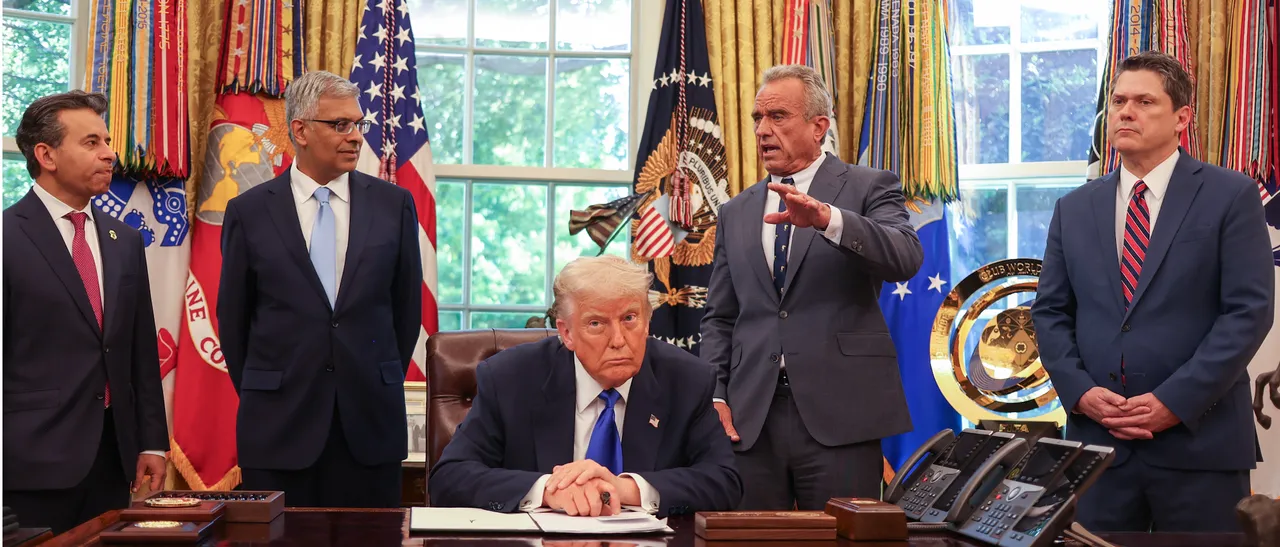
A 2024 policy by the Biden administration sought to achieve a similar goal, but had no enforcement mechanism to verify vendors were following the rules.
"The Trump Administration's new policy is a big step forward for U.S. biosecurity," said Gerry Parker, a biodefense expert who drafted the gain-of-function executive order while serving on the National Security Council. "It puts strong safeguards in place to protect the American people against the misuse of biological materials. And by requiring independent verification and customer screening for synthetic DNA, it replaces an honor system with a real, verifiable system for accountability while keeping American industry competitive and cutting-edge."
Trump administration officials also hope to set the standard for scientists worldwide. America has soft power as the original pioneer of the biotechnology that allows scientists to read, describe and edit genes, Kratsios said. The U.S. is also the leading supplier of synthetic nucleic acids to researchers around the world.
A United Nations working group will meet in early December on strengthening the Biological Weapons Convention, the 1972 international treaty that bars offensive biological weapons programs. Biotechnology has rapidly advanced in the intervening decades. The treaty exempts biodefense programs that create more dangerous viruses with the stated goal of protecting Americans against them.
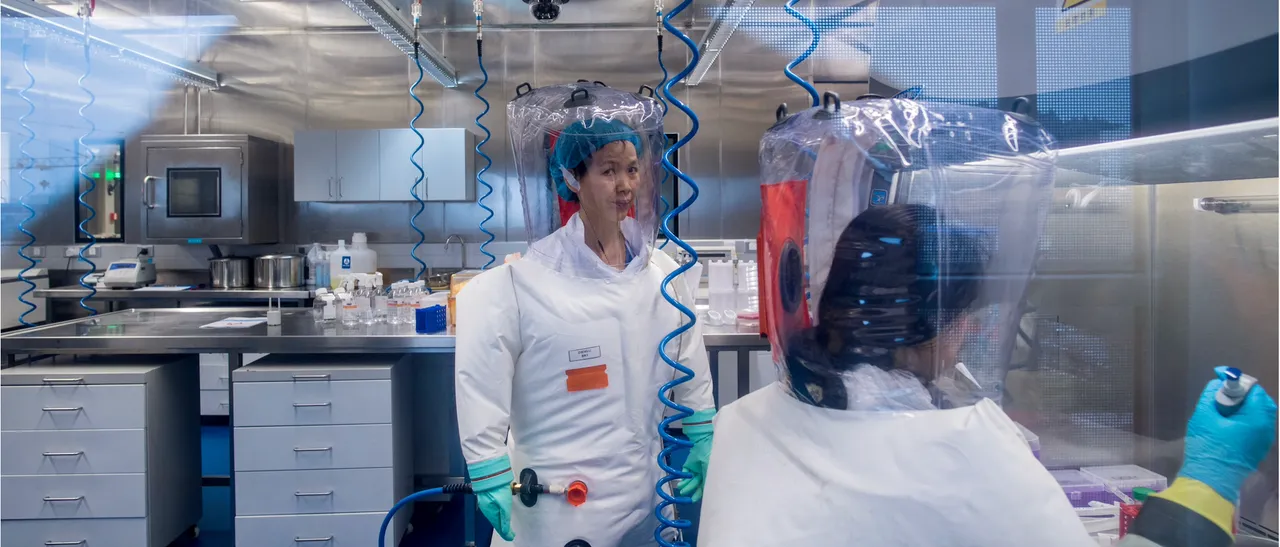
One such virus expedition and engineering project, a collaboration between nonprofit EcoHealth Alliance, the University of North Carolina, and the Wuhan Institute of Virology, said in a grant proposal that they intended to make viruses with the precise features of COVID-19 at the epicenter of the pandemic.
The FBI, the CIA and the Department of Energy, which houses the U.S. National Laboratories, all assess the most likely origin of the COVID pandemic to be a laboratory leak.
When Anthropic CEO Dario Amodei released a call to "pace the frontier" in September, initiating a push by Silicon Valley and Washington to prevent AI apocalypse, he listed narrow restrictions on AI to prevent biological weapons as the most feasible policy change.
"Bioterrorist attacks are bad for everyone, including both the US and US adversaries, so an agreement here is probably possible," he wrote.
Suppliers of molecular materials have called for more guidance from the U.S. government on how to ensure they are not selling their product to bad actors for 20 years, the scientific literature shows. It reduces their liability risks and insurance costs. A 2025 cost-benefit analysis in the United Kingdom found a mandatory screening policy would on net increase investment and innovation.
The policy also brought cheers from AI safety advocates.
"Great to see these requirements released. Gene synthesis screening is a common-sense, important protection against misuse that should receive broad bipartisan support, and is even more urgent to enact in the era of rising AI capabilities," said Nathan Calvin, chief strategy officer of Encode AI, a youth-led AI safety advocacy group.
Biosecurity experts and advocates see the policy as creating momentum toward other common-sense approaches to the risk of a biological disaster enabled by emerging AI and gene editing technology.
For example, the policy tasks U.S. Department of Agriculture (USDA) and HHS with examining whether certain genetic sequences that encode for dangerous viruses and genes should be incorporated into the Federal Select Agent Program.
Congress could also eventually take up the Biosecurity Modernization and Innovation Act, which would require screening at privately funded labs in addition to taxpayer-supported ones, regulate DNA printers, and consolidate regulations on gain-of-function research that are fragmented across several government agencies.
Source link