Two-third of Britons are against paying slave trade reparations, according to a poll.
YouGov research has highlighted the extent of opposition to the idea of financial compensation.
The resistance extends across all parties, including the bulk of those who voted green at the last election.
However, there is broader support for a formal apology - something that has been floated by Andy Burnham at the Commonwealth Summit this week.
Some 52 per cent backed the idea - 25 per cent 'strongly' - while 37 per cent were against.
Mr Burnham's offer to say sorry as part of a 'structured dialogue' with other nations has caused a storm, with critics warning it opens the door for reparations demands.
The King pointedly avoided any suggestion of an apology in his keynote speech at the Commonwealth Heads of Government Meeting (CHOGM) yesterday, insisting 'we cannot change the past'.
Charles did however acknowledge that the transatlantic slave trade 'still casts a shadow' and that 'shameful chapter of history is one that fills my heart with horror and my soul with the most profound personal sorrow'.
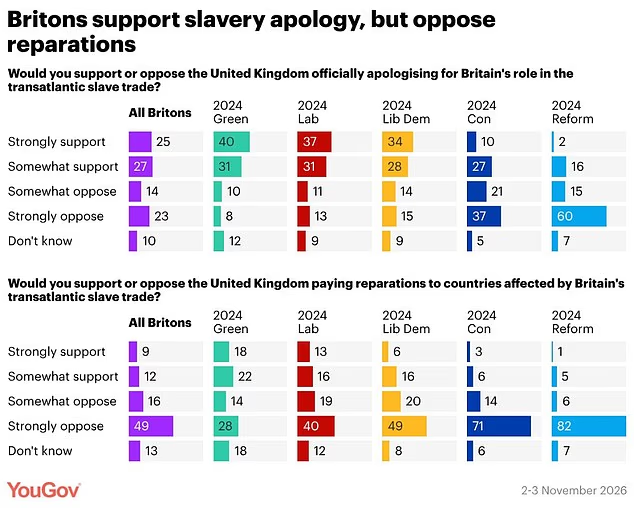
YouGov research has highlighted the extent of opposition to the idea of financial compensation
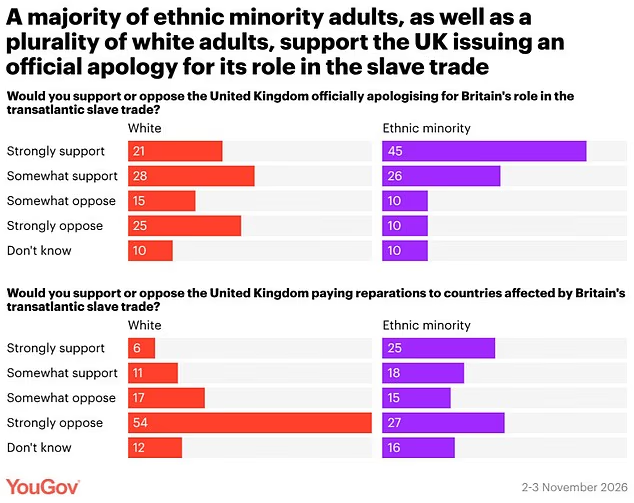
Some 49 per cent of white Britons were were favour of an apology, a figure that rose to 71 per cent among ethnic minorities
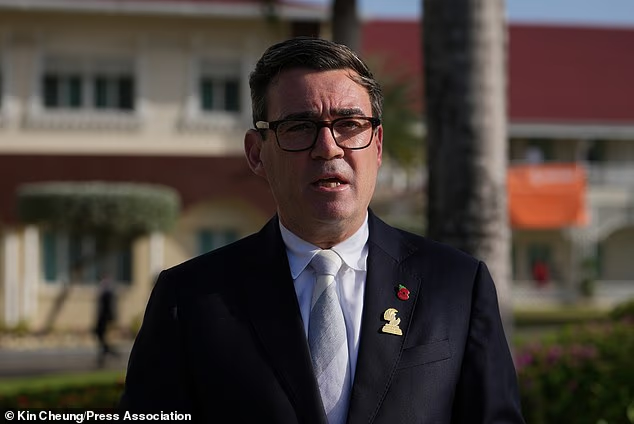
Andy Burnham's offer to say sorry for slavery as part of a 'structured dialogue' with other nations has caused a storm
Mr Burnham has been floating debt write-offs and downgrades instead of cash payments to countries affected by the slave trade.
The Government is also prepared to fund health, education and Net Zero projects in Commonwealth states, but so far that is from existing aid budgets.
The UK is allocating £40million over three years to speed up critical infrastructure investment including green energy in the Caribbean.
Calls for an apology and reparations have grown in recent years, with St Lucia's Prime Minister Philip J Pierre, chairman of the 15-member Caribbean Community (Caricom) reportedly saying the economic and political bloc was 'ready to engage'.
The YouGov research, carried out on November 1 and 2, found support for a formal apology rose to 68 per cent among Labour's 2024 voters.
But large majorities of Tory and Reform supporters were against.
Nearly half of Britons - 49 per cent - were strongly against paying reparations, and another 13 per cent were somewhat opposed.
The split was deeper when broken down by ethnicity. Some 49 per cent of white Britons were were favour of an apology, a figure that rose to 71 per cent among ethnic minorities.
Just 17 per cent of white Britons back reparations, while the equivalent number among ethnic minorities was 43 per cent.
In an interview at CHOGM overnight, Foreign Secretary Ed Miliband pledged that Britons will not pay a 'penny more' due to the shift in approach.
But in contrast the PM has been repeatedly refusing to give the same guarantee.
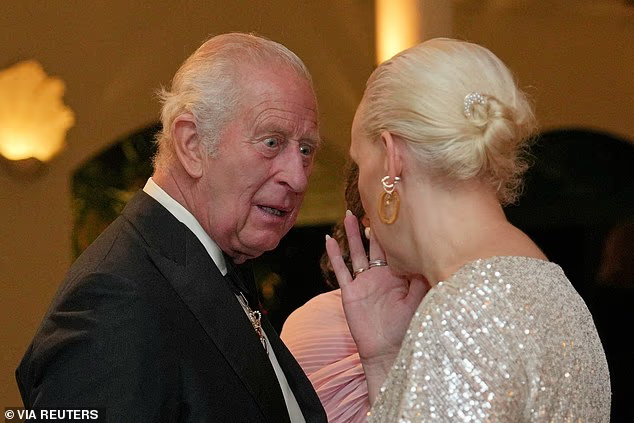
The King pointedly avoided any suggestion of an apology in his keynote speech at the Commonwealth Heads of Government Meeting (CHOGM) yesterday
Asked by the BBC whether the formal apology could be ready by the time of the G20 leaders' summit in Manchester next November, Mr Miliband said: 'Broadly speaking, yes.'
But asked whether the new approach could end up costing UK taxpayers a penny more, Mr Miliband said it wouldn't.
He added: 'I mean, not… no. And that's – for us, that's never been what it's about. And that's why it's been important that you know, and I did have this conversation with our partners in advance. I said, 'look, we are going to say we are willing to say that we're open to an apology, but we're not going to shift our position on reparations.'
'It's not for us. It's not the right answer. It's not practical. It's not feasible for us, but there are things we can work on co-operatively.'
He added: 'And you know there's been a lot of acceptance of that, and I mean people have been honestly a bit bruised by the past, what happened in the past, the sense that we just really just wanted to sweep this issue under the carpet and not confront it.
'My sense is there's a bit of a sigh of relief that OK well at least you know at least there's a sense of we've got a shared interest now in moving the Commonwealth on.'
Mr Miliband said Tony Blair 'did sort of do a kind of sorry not sorry situation', adding: 'He sort of, yeah, he kind of expressed sorrow, but and then said sorry, and then it was walked back by No 10.'
Pressed in a separate interview whether the slavery dialogue could involve any additional contributions from UK taxpayers, Mr Burnham said merely that was 'getting ahead' of the process.
'What we need to have is that meaningful dialogue where we take time to listen,' he said.
The PM said the UK wanted to 'work closely with you to make sure we get that right' as he met the president of Ghana for one-to-one talks on the sidelines of the summit yesterday.
Exchanging warm words at the top of the meeting, John Dramani Mahama in turn said Britain had shown a 'shift in some very strong positions' and is now 'more open to interacting with the rest of the world' and the Commonwealth.
After the last CHOGM in 2024, when Downing Street was resistant to any discussions about reparations, the Ghanaian leader said the new PM's approach 'creates a first step for us to continue to work to see how we can put this whole issue of transatlantic slave trade and colonialism behind us'.
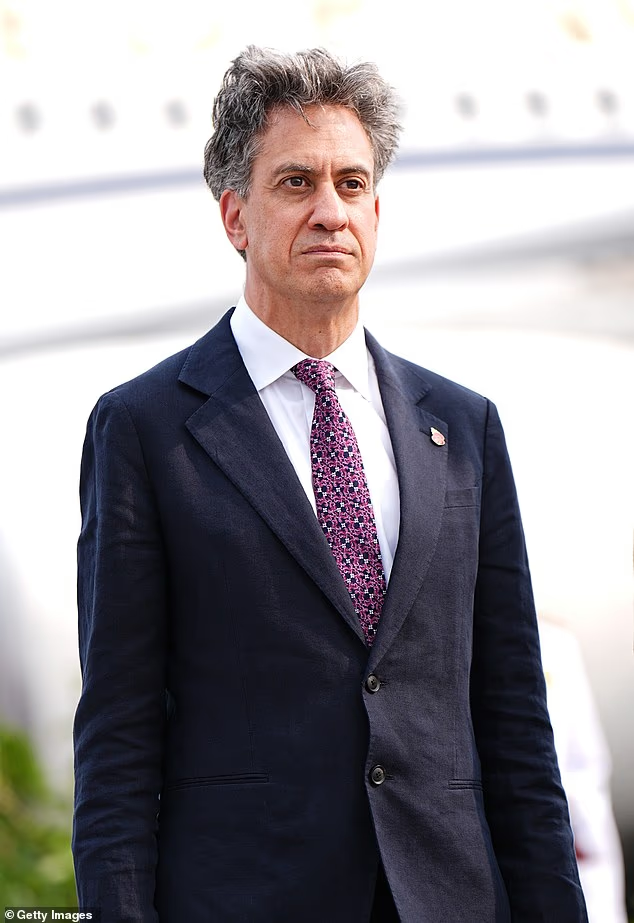
Foreign Secretary Ed Miliband has pledged that that Britons will not pay a 'penny more' due to the Government's shift in approach
Source link