Scammers can now harvest your social media photos, leaked personal information and even snippets of your voice from TikTok to effectively 'recreate you' online, a leading cyber expert has warned.
Former Google executive Richard Mallam said rapid advances in AI were making it frighteningly difficult to distinguish a real person from a sophisticated digital impersonation, opening the door to a new wave of identity fraud.
He said the prospect of criminals using AI to effectively recreate their victims was among the scenarios that 'keep me up at night'.
'They can find personal information on you that's been leaked... They can take imagery from your social media, they can take a clip of voice, your voice from TikTok, and they essentially, using AI deepfake tools, can recreate you,' he told the Daily Mail.
'It's very, very difficult for the business to understand whether that's you or not, or a deepfake of you.'
Mr Mallam said AI could allow criminals to effectively create a digital twin of a victim and use their identity to apply for financial products and other services.
'We are not only seeing a rapid increase in the volume of scams but sophistication thanks to AI including the ability to re-create a person's ID, effectively making a digital twin to then sign up to different services, operating on that person's behalf from leasing vehicles to taking out loans and credit cards.'
He warned that the consequences could be devastating, with some victims potentially unaware their identity had been stolen until a bill or debt notice arrived.
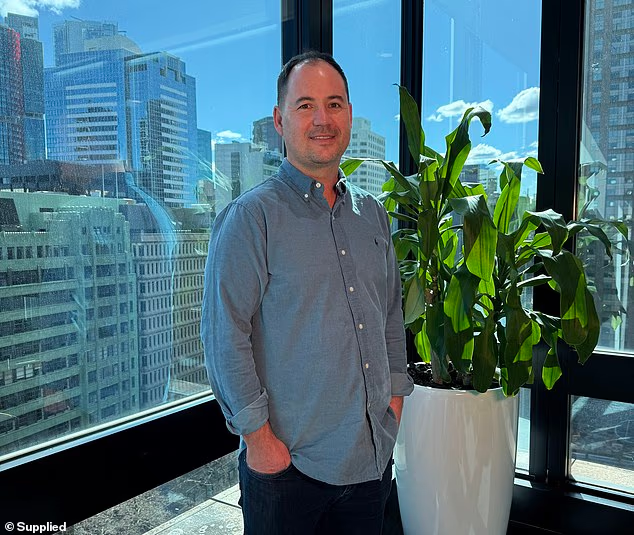
Richard Mallam (Ppictured) said rapid advances in AI were making it frighteningly difficult to distinguish a real person from a sophisticated digital impersonation
AI isn't just making scams more convincing, it was allowing criminals to target vastly more people at once
'Scammers can originate a loan or a payment plan on your behalf using data, face and voice that they've stolen from you,' he said.
'You just wake up one day and you have a debt notice. A lot of people won't know they've been scammed until they get the bill.'
Mr Mallam said financial institutions were already fielding fraudulent calls from criminals using AI bots in attempts to take over customers' accounts.
'Financial institutions like banks as well as super funds are receiving thousands of fraudulent calls every week from hackers using AI bots to try and take over customers' bank accounts,' he said.
He warned Australians against staying on the phone to toy with suspected scammers because criminals could potentially capture their voices.
'I think people sometimes like talking to scammers on the phone... Don't do that,' he said.
'They could be cloning your voice.'
He claimed scammers might need only a small amount of information to attempt to defeat existing verification systems.
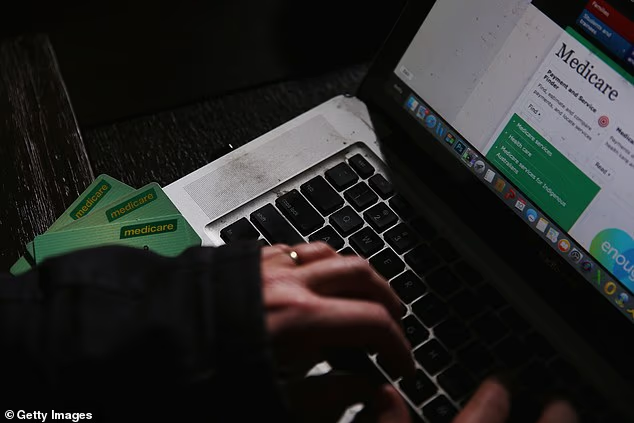
Government services such as the ATO and Medicare will become increasingly attractive targets because of the vast amounts of sensitive personal and financial information they hold
'All they need is a few seconds of your voice, your bank details and access to your phone or email to confirm the bank's verification and they are in. It's such an outdated system and consumers are powerless.'
AI supercharging scams
Mr Mallam said AI wasn't just making scams more convincing, it was allowing criminals to target vastly more people at once.
'It used to be a sort of one-to-one attack vector, so one person to one attack. Now it can be one person coordinating tens of thousands, if not more, agents to run these scams concurrently,' he said.
'They're able to hit more people, and they're also able to hit more businesses with much more sophisticated attacks.'
Mr Mallam said cybercrime was increasingly being driven by organised criminal networks, including so-called 'scam farms', where large groups of people are used to target victims.
'People will dupe someone to come, and they'll say, 'Here's a job of a lifetime,' and essentially they'll send them into a farm with lots of people who will hit the phones and try and scam, typically people in richer countries,' he said.
He said more sophisticated hackers could also work with organised criminals under profit-sharing arrangements.

Despite the growing sophistication of scams there are simple steps Australians could take to make themselves harder to target
'The sophisticated hackers who have access to advanced AI tools will essentially operate on behalf of organised crime gangs or state actors as well, to sort of coordinate mass attacks.'
Mr Mallam said the growing threat meant banks, governments and other organisations holding sensitive personal information needed to shoulder more responsibility for protecting customers, rather than expecting individuals to identify increasingly sophisticated scams themselves.
He fears AI could eventually enable cyber attacks on a far greater scale, including attacks affecting financial institutions and their customers.
'You log out of your net banking, maybe at night, you log back in in the morning, and you're missing five grand or 100 bucks or whatever is there,' he said.
But he stressed that scenario had not yet arrived.
'We're probably not there yet.'
Mr Mallam also fears government services such as the ATO and Medicare will become increasingly attractive targets because of the vast amounts of sensitive personal and financial information they hold.
'They're pillars of Australian society and the Australian economy,' he said.
'They've got huge amounts of personal information, and that's an extremely attractive honeypot for a scammer.'
He warned that without a dramatic strengthening of cybersecurity defences, major institutions could eventually be breached.
'It's almost inevitable that one, if not more, of these services, these critical services, will be breached without huge intervention or action.'
How to protect yourself
Despite the growing sophistication of scams, Mr Mallam said Australians could take simple steps to make themselves harder to target.
At the top of the list was ditching easy-to-guess passwords and, crucially, avoiding using the same password across multiple accounts.
'Same easy-to-guess password. Don't do it,' he said.
'Using unique passwords for each service is important.'
He also urged Australians to turn on multi-factor authentication wherever it was available and consider newer security measures such as passkeys and biometric authentication, including fingerprints or facial recognition.
'Where multi-factor authentication is available... you should enrol to that,' he said.
'Passkeys are a great authentication tool.'
Finally, he warned against handing over sensitive information or credit card details to unfamiliar businesses online.
'Be very, very, very cautious about sharing your personal information, your credit card information, to anyone online.'
Source link