Ever the soldier, former Royal Engineer Ryan Wallace planned his death with military precision.
Over ten months, he bagged up his clothes for charity shops, used up his aftershaves (leaving a tiny amount in each bottle so his widow-to-be would always be able to smell 'his' scents), had his Bosnia service medal framed and made an exhaustive list of all his online accounts and passwords.
Ryan, 47, even ordered the ornamental urn for his ashes. 'It arrived before he left for Switzerland,' says Marianne, Ryan's widow. 'He wanted to place it in the garden. I said, "No, Ryan, please, no", but he just wanted to make it easier for me.
'At one point I found him researching puppies. He thought I should get one, to keep me company when he was gone. I said, "I don't want a puppy, Ryan. I want you, alive".'
And yet, when it came to it, even though he was not terminally ill, she felt she had no other option but to respect Ryan's decision to die.
This summer, on August 15, Marianne, 38, drove her husband to the airport and they both sobbed their goodbyes.
Three days later, once the final paperwork had been completed, the former soldier died by assisted suicide in a Swiss clinic.
Marianne wasn't informed until the following day, but she tells me she 'pretty much knew' when the voluntary assisted death procedure had been completed.
'I knew that his phone would be wiped once he was gone, because that's the clinic's procedure.
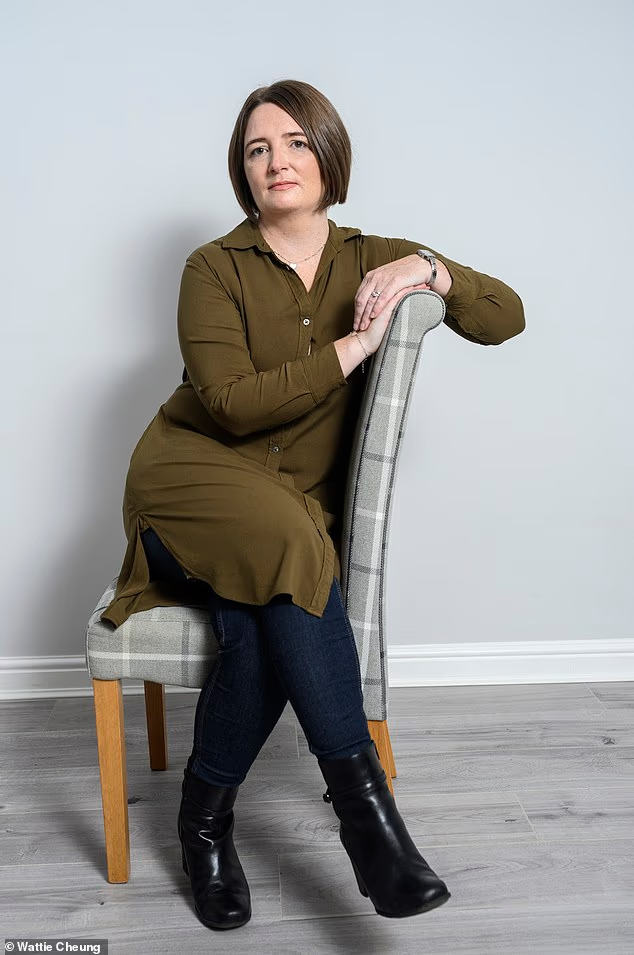
Marianne Wallace says her husband Ryan had been pleading for help to treat what he believed was an agonising physical reaction to medication
'I had access to his email account and an email arrived on the Tuesday from his Find My iPhone saying his phone had been disabled. It was only the next afternoon that I had an email from the clinic confirming he was gone.'
A week later, her husband's ashes arrived at their Falkirk home, sent by Royal Mail.
Just over two months on, those ashes are sitting on a side table in this pristine living room.
There hasn't yet been a funeral, military or otherwise, but some of Ryan's former army colleagues, on hearing of his death, have been in touch. 'I'm thinking of a small celebration of his life, then the placing of his ashes in the garden. He designed the Zen garden himself. He loved his plants,' says Marianne.
Her grief is raw. Her anger too. What has happened here is almost unthinkable. This is a man who served his country, and yet he died alone, abroad, and in circumstances that are anything but neat.
Marianne insists that Ryan's last battle – the one he felt he couldn't win – was with the NHS. For six years he had been pleading for help to treat what he believed was an agonising physical reaction to prescribed medication.
That medication had been offered as doctors tried to treat a range of mental health conditions, including the complex PTSD he had developed after serving in Bosnia as part of a UN peacekeeping squad.
Instead, claims Marianne, it left Ryan in unbearable pain.
'After he was prescribed these two medications together, in 2020, he started vomiting blood,' she says. 'He was in agony. He couldn't eat, had issues with swallowing, he said it felt as if his eyeballs were on fire.
'But from then, up until he died, we couldn't get any answers. I believe we were gaslit.
'Ryan felt they were branding him a hypochondriac – although they never used that word. They said he had "health anxiety". I just don't think they believed him.
'Even when he told them he wanted to die – and was planning to die – he wasn't taken seriously. Once, a psychiatric nurse said "you're very chatty for someone who is suicidal". Ryan came home and tried to take his life that day. I had to break the spare room door down to get to him.'
The mountain of medical notes that Marianne holds today tell a difficult story about Ryan's dealings with healthcare professionals. In the years leading up to his death he had been seen by a bewildering array of psychiatrists and doctors, diagnosed with 'everything under the sun', from bipolar to ADHD, complex personality disorder and autism. But the physical pain, running alongside his mental distress, was the thing that made him think life was untenable, says Marianne.
He and Marianne, desperate for answers, had paid £60,000 on private consultations. 'We put it on zero per cent credit cards and tried to juggle it all,' she says.
A few years ago, to Marianne's horror, Ryan told her he had signed up with three different assisted dying clinics in Switzerland.
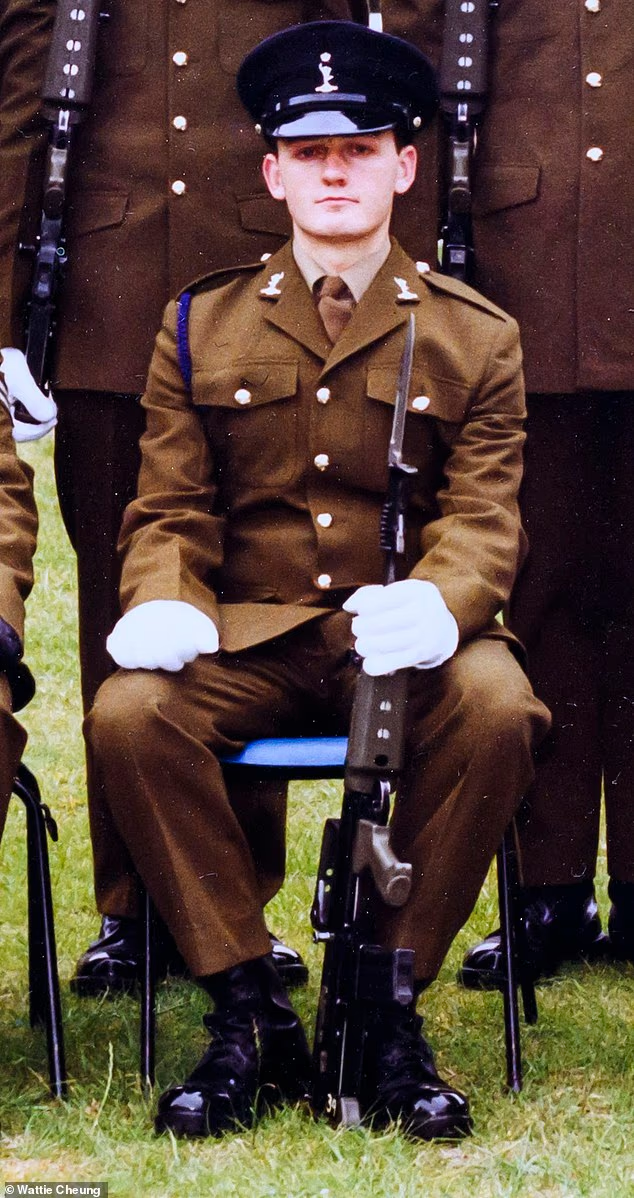
Ryan joined the Royal Engineers in 1999 and served five-and-a-half years, including postings in Germany and Bosnia – the latter of which had a lasting and traumatic impact on him
Last December he paid a deposit to the Athanasios Clinic in Basel, which is one of the Swiss suicide clinics which does not require applicants to have a terminal diagnosis (the better-known Dignitas does). The final bill, settled before he died, was £15,000.
In the end, says Marianne, Ryan simply gave up on the NHS and on life. Heartbreakingly, he made it explicit that he was doing it for her. 'He told me that he'd decided the only way forward for us was for him to end his life – so I could live mine,' she says.
This is yet another difficult story about the very modern phenomenon of British people travelling to Switzerland to die, even when not terminally ill.
In March this year, the Daily Mail told of Wendy Duffy, a physically healthy 56-year-old who died in a similar Swiss clinic, having decided that she no longer wanted to live after the death of her only child.
Ryan's story has parallels, but there is a major difference: Wendy went to pains not to broadcast her plans until the eleventh hour.
There was nothing clandestine about Ryan's exit.
He not only told his wife and his family (his three sisters travelled to be with her after she had dropped him at the airport), but he told his UK doctors.
Several were even aware of the exact day on which he was planning to die.
The Daily Mail has seen emails from his wife to the chief executive of the hospital trust involved with his care, begging for help, even as Ryan packed.
Today, Marianne reveals that his GP not only saw him just days before he got on the plane – 'she said she would have sectioned him, if she could, but he was of sound mind' – but called Marianne on the very day Ryan was scheduled to die, asking if he had gone through with it. 'She was in tears. She said, "This should never have been allowed to happen to Ryan".
'She felt she had failed him, but actually she was one of the few people in the NHS who didn't fail Ryan. She tried. She just came into his life too late, and there was only so much she could do. He kept getting referred back to mental health services, who were the ones who had caused the main problems.'
Marianne – who is now calling for a public inquiry into her husband's treatment – insists that Ryan travelled to Switzerland aware that any of the medics involved could alert police about his plans. 'Ryan was warned by doctors that the police could be there to stop him at the check-in desk. He told me that if that happened, he would take his own life by whatever means he had to.'
In the event, there was no police involvement. Could, or should, someone have stopped Ryan getting on that plane?
The law here is complicated. While suicide itself is not illegal, assisting someone to die is a criminal offence in England and Wales. In Scotland, however, anyone assisting a death could be charged with culpable homicide.
Whether medical professionals are legally bound to act if they have evidence of a planned assisted suicide is a grey area.
A spokesman for NHS Forth Valley said there were no plans to commission a Serious Adverse Event Review and that the case had already been considered by them internally and reviewed independently by the public services ombudsman.
'We take all complaints about patient care very seriously and our thoughts remain with Mr Wallace's family at this difficult time,' the spokesman said.
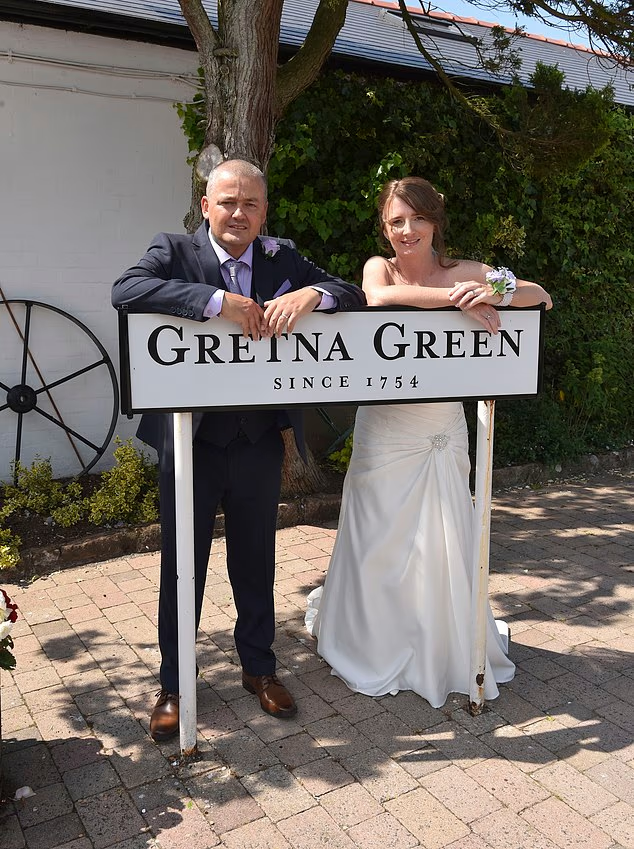
The couple tied the knot back in 2019
What is indisputable is that it is desperately sad that a man who was prepared to die for his country should have ended his own life like this.
Ryan's story was never a straightforward one. Born in Northern Ireland at the height of the Troubles, he grew up in a Protestant family in the predominantly Catholic town of Strabane, County Tyrone.
Marianne believes he was scarred by his upbringing. 'One of his most vivid memories was of his mum being caught up in a pub bomb blast. He remembered his dad picking shrapnel out of her legs.'
He joined the Royal Engineers in 1999 and served five-and-a-half years, including postings in Germany and Bosnia – the latter of which had a lasting and traumatic impact on him.
'He told me about once finding himself in a minefield, and there was another occasion where he walked into a room full of men with their guns trained on him.'
By the time the pair met in 2009, Ryan was working as a security guard in the same shopping centre her mum worked in. It was also immediately clear to her that Ryan had mental health issues: alongside anxiety, he was forgetful and prone to mood swings. But Marianne adored the man beneath all that.
'He made me laugh. He was sweet and funny. He always said he could talk to me, in a way that he couldn't talk to anyone else.'
They married at Gretna in 2019 and bought their home soon after, but by then Marianne – working for the Scottish Prison Service – was the main earner, Ryan's anxiety issues having caused him to stop work. He'd had a bipolar diagnosis. PTSD would later be confirmed.
'He suffered from terrible night terrors. He'd act out army manoeuvres in the bedroom, doing the "roll and drop" thing over the side of the bed, or be crawling on the floor.
'He became so distressed that he would hurt me. There was one night he was flailing about and he punched me in the backside, completely by accident. I joked about there not even being a bruise – proving how big my bum was – but he was distraught.'
In 2020, as Ryan's anxiety became more extreme, he was prescribed two medications – sodium valproate (used to treat a range of disorders, it works by calming overactivity of signals to the brain) and lamotrigine (used to treat epilepsy and stabilise mood for bipolar disorder).
While there is no issue about taking both together, the guidance is that care should be taken with 'titration' – the process of gradually adjusting doses to monitor their effects.
Marianne's central complaint – rejected by the medics involved – is that this was not done.
'Those two pills changed our lives,' she insists. 'The physical reaction was immediate. The next day, he was bringing up blood. He had all sorts of bizarre things going on – headaches, burning eyeballs. He couldn't eat and had pain down each side of his throat. He was in agony.'
Ryan became convinced he was suffering from Stevens-Johnson syndrome, a recognised excruciating physical reaction to some combinations of drugs. 'The only symptom he didn't have was a rash.'
His records show an increasingly hostile relationship with his psychiatric team, as he challenged his treatment plan. He also became increasingly distressed, convinced the doctors thought his physical symptoms were 'all in his head'.
'I was witness to the fact they weren't. I saw the blood,' says Marianne.
In 2024 Ryan – by now seeing both private physicians and mental health specialists – paid £12,000 for a private stomach operation to tackle his acid reflux. 'They agreed he needed it on the NHS, but there was no rush to do it.'
He was distraught when his pain continued. 'There was one day he asked me to boil up all his medication so he could end his life, he was in so much pain. I was crying. I said, "That's never going to happen, Ryan. Never".'
Marianne isn't sure exactly when Ryan started to think seriously about 'the Switzerland option', but by last December he had paid his deposit. There are repeated references in his medical notes to his plans.
'I don't think anyone really took it seriously,' says Marianne. 'I kept being told that there was no immediate risk of suicide.'
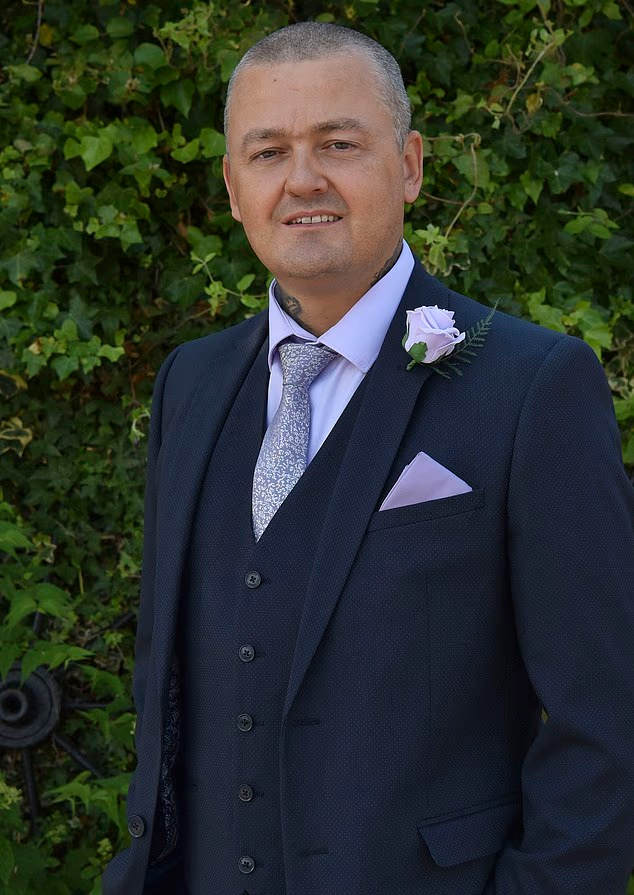
Ryan left a letter for Marianne on his laptop And yet here we are.
Once Ryan had arrived in Switzerland there were several phone and video calls. He and Marianne spoke for the last time on the Monday night. 'I was crying, saying, "You can still change your mind". Two of his sisters said goodbye, but the third couldn't do it.'
She has no criticism of the Swiss clinic, although their communication with her was breathtakingly brusque. 'I had to email to ask if Ryan had gone through with it,' she says. 'And even then it was a full day-and-a-half before I got a reply.'
The clinic later told her this was in accordance with Ryan's wishes.
When she heard, she said: 'I just cried and cried. I feel I let him down. In reality, the system let him down. I believe he was failed by the NHS.'
Marianne knew that Ryan had left her a letter on his laptop before he flew to Switzerland. She couldn't bear to read it until a few weeks ago.
It still makes her cry. 'Thank you for being my wife, my soulmate, my best friend, my reason. Thank you for seeing me when I was invisible to everyone else. Thank you for staying when leaving would have been easier,' Ryan wrote.
Ever the organiser, he issued a list of instructions.
'Sell the car. Cancel the subscriptions. Let our families help you move forward. When the grief hits you (and it will), don't bottle it up. Cry, scream, break things – then breathe. Plant cherry blossoms where the stones sit.'
Marianne hasn't yet felt strong enough to return to work, but in a few weeks she will collect a new puppy, having picked one from a litter of cockapoos.
'I do need something to make the house less silent,' she says. 'Ryan was right about that.'
■ For confidential support call the Samaritans on 116 123 or go to samaritans.org
Source link