London homeowners living near HS2 tunnelling say they are 'trying not to panic' after construction work caused their homes to 'sink and crack'.
Workers began using a tunnel boring machine underneath two streets in Queen's Park, north-west London, to carve out a stretch of the track between Euston and Oak Common Road in August.
But around a dozen homeowners on Kliburn Lane and Claremont Road - just a short walk from the tube station - say the work has damaged their Victorian homes, with some even being rehomed.
One resident, 57-year-old Sonia, said cracking in her bathroom had 'got a lot worse' over the summer before construction caused the entire property to sink so severely those living inside could not open the front door.
HS2's cost has ballooned from £37.5billion since it was announced to potentially more than £100million. Services, however, are not expected to reach London until 2039.
The project has become synonymous with colossal waste and delay, with scores of residents across the Midlands left living with loud banging, vibrations and road diversions.
'I've lived here for 20 years and had cracking in my bathroom for a while, but it got a lot worse over the summer,' Sonia told MyLondon.
'We weren't able to get the buildings front door open, so someone was sent to shave it down but now it's crooked, and you can see where it has sunk.
'When I saw the cracks get worse, I was really worried. I didn't know what to do. I'm trusting what my landlady has said, but it does make me concerned.'
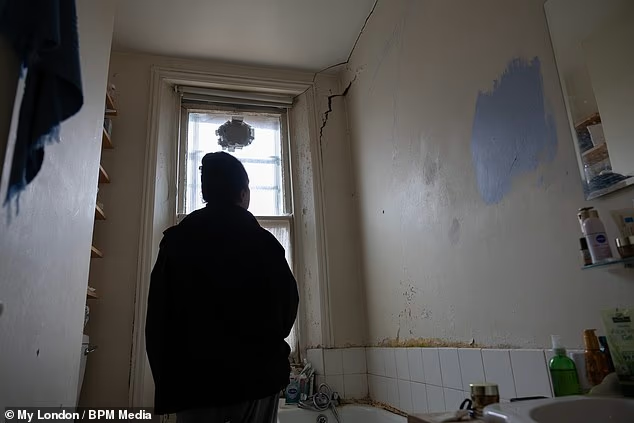
Homeowners living in Queen's Park, north-west London, say cracks have surfaced in their homes since HS2 construction work started
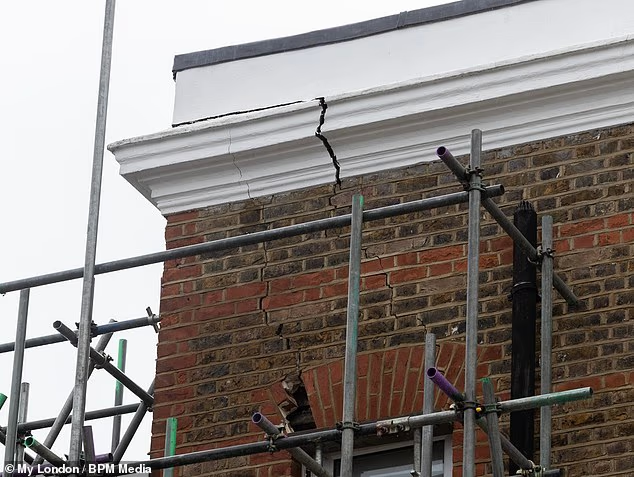
Ground-floor tenants living on Claremont Road were two weeks ago placed in temporary accommodation after emergency scaffolding was put up over their building
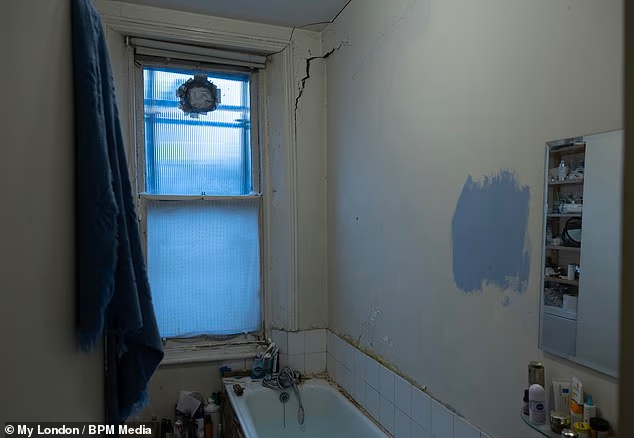
One resident, 57-year-old Sonia, said cracking in her bathroom had 'got a lot worse' over the summer
Ground-floor tenants living on Claremont Road were two weeks ago placed in temporary accommodation after having emergency scaffolding put up outside their building.
Cracks have been visible on the homes - many of which were built during the 20th century - for years, though they have now been deemed to pose a safety risk.
One local told how she noticed a crack running up the entire length of her property, while another revealed that a crack on her wall had become as wide as a £1 coin.
Elsewhere, a 'spiderweb of cracks' is said to have cropped up on the ceiling of one residents' living room.
Some of the homeowners lodged formal complaints about the damage, but claim they were told by HS2 they would need to wait between eight and 10 weeks for a response.
'It's worrying to see part of our Victorian row actually crumble so much they had to make an emergency reinforcement of the building itself,' another resident said.
'As a homeowner, when you've invested your entire life savings into your home, it's disheartening to see what we are now left to deal with this damage and without necessarily any clarity from HS2 on a speedy resolution.'
A statement from HS2 read: 'We take our responsibility to communities very seriously and try to respond quickly to concerns when raised.
'Claims from inside the area that could be affected by our work are dealt with thoroughly and where tunnelling is shown to have had a material impact on a property we will compensate.
'Analysis of the monitoring data indicates that tunnelling-related ground settlement in this area has been small in magnitude and in line with expectations.'
Constructing HS2 from London to Birmingham was initially estimated to cost £32.7billion in 2011 prices, but the budget has spiraled.
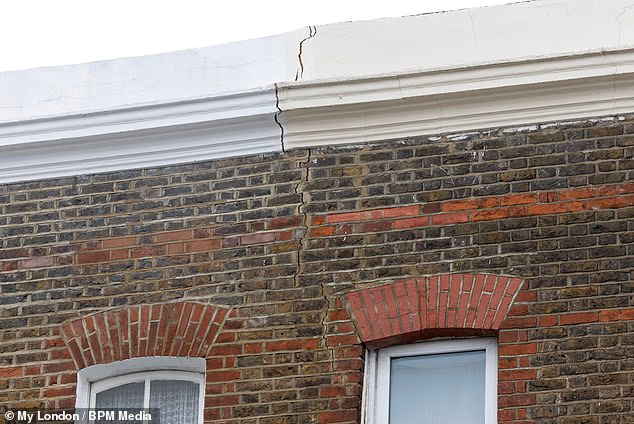
Many of the homes near where constructions is taking place were built in the 20th century, making them susceptible to cracking
The original route would have seen new tracks continue onto Leeds and Manchester after forking into an Eastern and Western leg northwards from Birmingham.
But these were scrapped by previous Tory governments to save cash as costs rocketed. It suggests that delivering the original route would have comfortably exceeded £150billion.
Services between Old Oak Common in west London and Birmingham's Curzon Street station are expected to start running between May 2036 and October 2039.
The high-speed trains will not run between Euston station in central London and Handsacre Junction in Staffordshire until between May 2040 and December 2043.
Handsacre Junction is where HS2 trains are planned to leave the dedicated high-speed tracks and merge onto the conventional West Coast Mainline.
Source link