The most politically damaging thing Michele Bullock delivered on Tuesday wasn't another interest rate rise.
It was her description of how Australians now feel while their government insists it's managing the economy responsibly.
People 'feel like it's a recession because they feel poorer', the RBA governor warned.
For Anthony Albanese and Jim Chalmers, that's a problem no reassuring press conference laced with spin can fix.
The fifth rate increase this year (a year after the Treasurer reassured us that inflation problems were behind us) has taken the cash rate to 4.85 per cent. The highest it's been in nearly two decades.
The RBA expects slower growth, rising unemployment and inflation that doesn't return to target until mid-2028.
For context, that's after the next federal election is due. Albo had been hoping to call an early election for late next year.
It is becoming increasingly likely he now runs full term, in the hope that the longer he waits the more likely it is that rates come down.
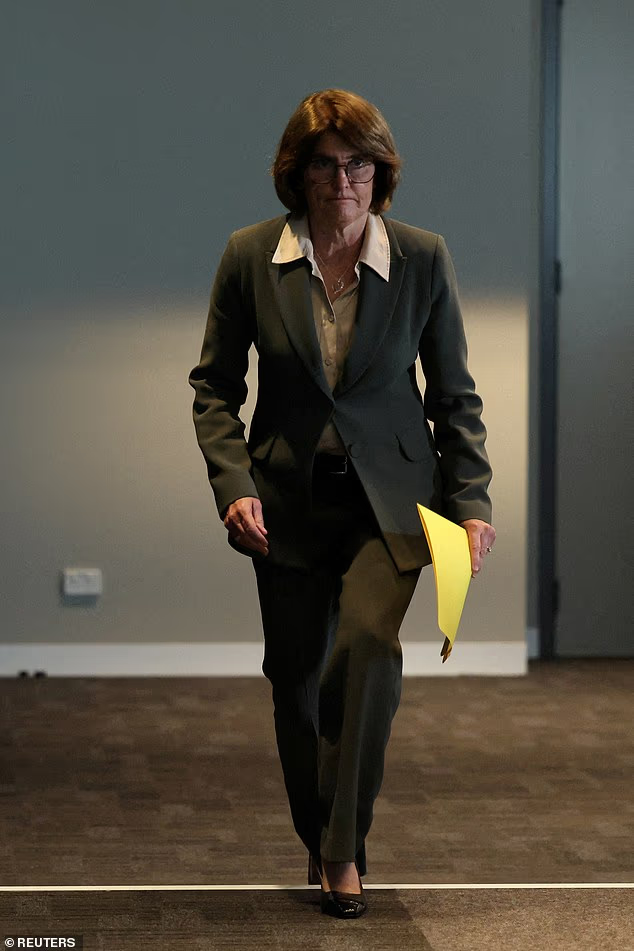
Michele Bullock is a woman with a mission to crush inflation... and she may have inadvertently crushed a political dream of the Prime Minister's, too
The RBA isn't forecasting a recession, defined as two consecutive quarters of negative economic growth. But growth is expected to be anaemic, and a per capita recession in 2027 is a distinct possibility.
Low economic growth, high interest rates and inflation, and rising unemployment is a terrible confluence of circumstances for any political leader.
It threatens Labor on several fronts. Borrowers lose spending power. Businesses lose customers. Workers worry about their jobs. Even Australians without mortgages find their purchasing power eaten away by inflation.
A government can survive an unpopular economic decision. It's much harder to survive the impression that the sacrifice keeps growing while promised improvements keep retreating or never materialising at all.
Bullock also offered a pointed reminder about institutional boundaries: 'Independence is a two-way street', she said, avoiding commenting on Labor's fiscal management while insisting that setting interest rates is her job and she'll do what she has to in order to bring inflation back under control.
The simple fact is that the task of doing that is made harder when a government spends and spends and spends. Labor's record spending makes it harder for Bullock to avoid lifting rates.
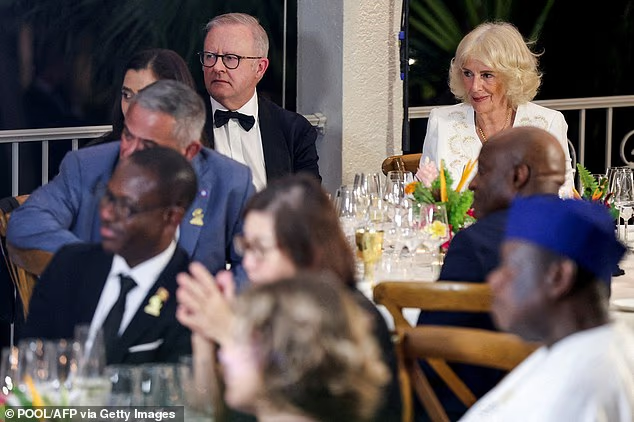
Albanese owns this looming test as much as his Treasurer. Everyone knows he runs the show and pushes his treasurer around at will. He's pictured in the Caribbean with Queen Camilla this week, above
Public demand had been weaker than the bank expected earlier this year, and its growth had eased while private demand accelerated. Chalmers argued that his budgets were therefore not the driving cause of inflation. Bullock nevertheless maintained that total demand, public and private put together, remained excessive, effectively looping government spending in as part of the inflation problem.
Besides, a not inconsiderable amount of private demand is fuelled by government spending, a point Chalmers either doesn't appreciate or chooses to ignore when spinning his defence.
The political question is bigger than who supplied the latest inflationary impulse. It is what the government is prepared to change now that the crisis is well and truly upon us.
An overseas shock can be beyond Canberra's control, but how it responds is important. Laying blame on international factors doesn't help Australians doing it tough. Labor had ample opportunities to reduce spending to counter the inflationary effects of the ongoing war. It didn't do that, at least not sufficiently.
Will it finally do so now?
Which makes December's budget update a test of seriousness for Labor. Chalmers has promised further savings but hasn't committed to those savings exceeding new spending.
Announcing cuts in one column while adding more spending in another might produce an impressive talking point. It doesn't sufficiently reduce pressure across the economy.
Albo owns this looming test as much as his Treasurer. Everyone knows he runs the show and pushes his treasurer around at will. The PM determines the government's priorities and the political pain it will or won't tolerate. He can't claim authority over achievements while leaving Chalmers to explain away disappointments and failures.
The opposition, meanwhile, should resist assuming that public anger automatically establishes its economic credibility. It absolutely does not. The Coalition lost its standing as good economic managers a while ago.
Demanding restraint is one thing. Identifying defensible savings, and resisting compensating promises elsewhere, requires considerably more courage. It's unclear if the modern Liberal Party is even capable of that.
Frankly, I'm not even sure if the entire political class in the modern era is up to the challenges afoot. No wonder voters are thoroughly disillusioned.
Source link