Michigan Democratic Senate candidate Abdul El-Sayed clashed with a British journalist on election day, putting his hands on the reporter's shoulders while declaring he didn't care about his questions because he couldn't vote in Michig
an.
The confrontation unfolded on Tuesday as El-Sayed faced a crucial showdown with Republican Mike Rogers in one of the most closely watched Senate races of the midterm elections.
El-Sayed became visibly frustrated during the exchange with Sky News US correspondent James Matthews, accusing the journalist of following him around.
'Are you registered to vote in the state of Michigan?' El-Sayed demanded to know.
When Matthews acknowledged that he was not, the Democratic hopeful fired back: 'Then why would I care to have a conversation with you?'
Matthews explained that he was a journalist covering an election with consequences far beyond Michigan, telling El-Sayed that the result 'matters to the world.'
But the candidate was unmoved.
'You know how many votes I want to get into the UK? Zero,' El-Sayed snapped. 'I do not care what you think or the questions you ask.'
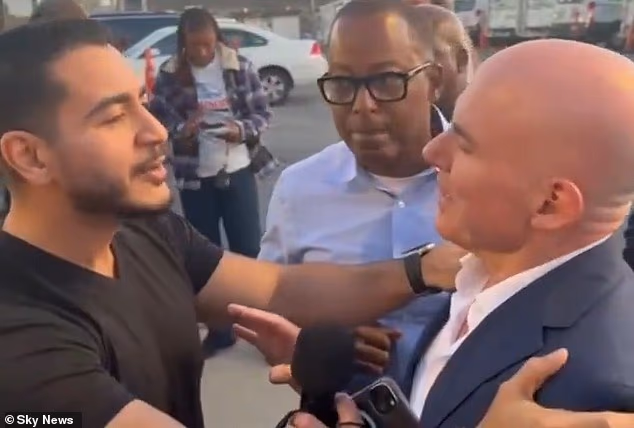
Abdul El-Sayed placed both hands on Sky News reporter James Matthews' shoulders during the tense election day confrontation, accusing him of 'chasing' him around
Michigan's Democratic candidate for Senate Abdul El-Sayed confronted @jamesmatthewsky, telling him he wouldn't answer his questions as he wants "zero" votes in the UK.
— Sky News (@SkyNews) November 3, 2026
Watch the heated exchange between the two.
Watch our live coverage of the US midterms➡️… pic.twitter.com/qWAodH1qrf
By this point, El-Sayed had placed both hands on Matthews' shoulders as the increasingly tense encounter continued.
'I'm asking you to stop chasing me around,' he demanded, before walking away from the reporter.
The exchange, captured on camera and shared by Sky News, offered a dramatic final-day distraction for a candidate already battling turmoil within his own party.
El-Sayed, 41, is fighting to defeat Rogers, a former Republican congressman backed by President Donald Trump, for the Senate seat being vacated by retiring Democrat Gary Peters.
The race is particularly important because Democrats are fighting to regain control of the Senate, with Michigan viewed as one of the states they cannot afford to lose.
The confrontation came just two days after El-Sayed's former Democratic primary opponent, Congresswoman Haley Stevens, stunned her own party by endorsing Rogers.
Stevens, who narrowly lost to El-Sayed in August, announced on Sunday that she was backing the Republican after a bitter dispute over her involvement in the Democrat's campaign.
The political U-turn came after Stevens was excluded from a planned unity event with El-Sayed.
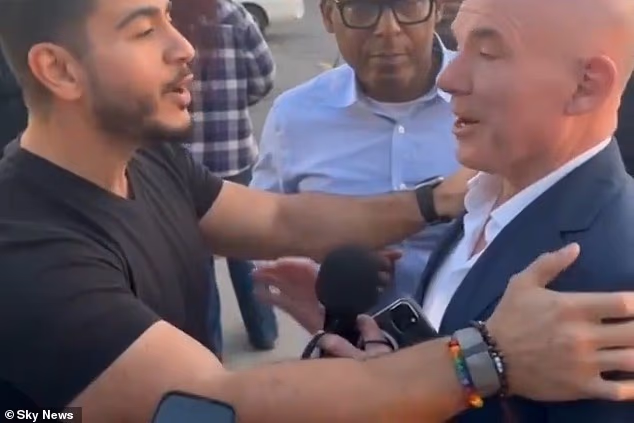
El-Sayed had placed both hands on Matthews' shoulders as the increasingly tense encounter continued.
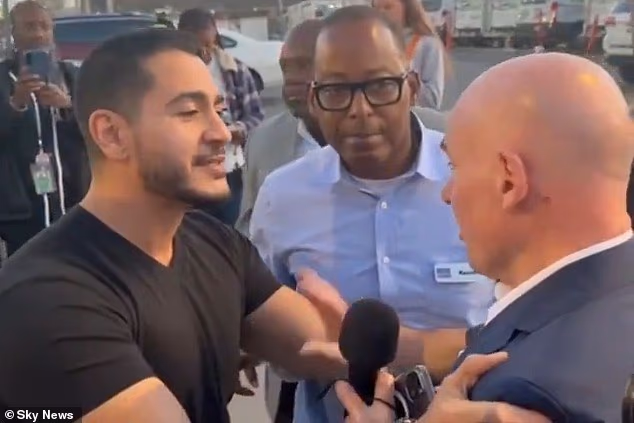
The exchange, captured on camera and shared by Sky News, offered a dramatic final-day distraction for a candidate already battling turmoil within his own party
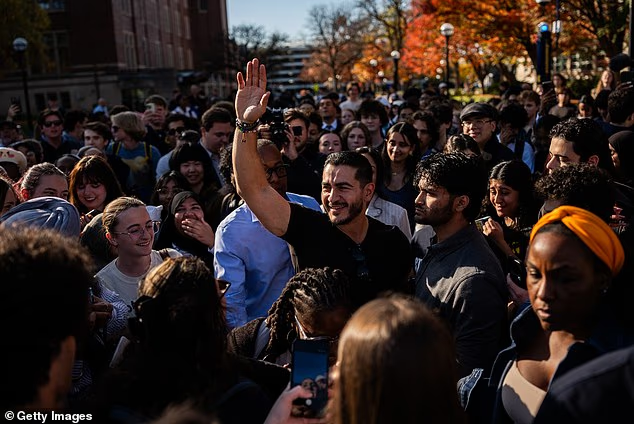
Michigan Democratic Senate candidate Dr. Abdul El-Sayed visited a polling precinct on the campus of the University of Michigan on Wednesday in Ann Arbor, Michigan
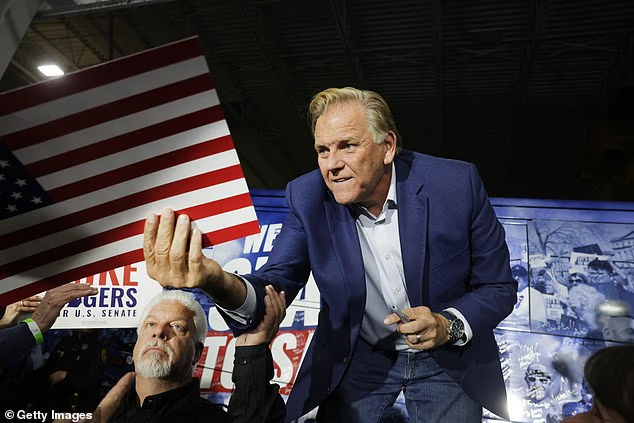
El-Sayed is running against GOP candidate Mike Rogers for the open US Senate seat
Rather than rallying behind the Democratic nominee, she appeared alongside Rogers at a Detroit church before publicly throwing her support behind him.
Her decision sent shockwaves through Michigan's Democratic establishment, prompting fierce condemnation from party leaders.
Senate Democratic Leader Chuck Schumer was among those criticizing Stevens, while her longtime chief of staff resigned following the announcement.
The Michigan Democratic Party subsequently expelled Stevens, turning an already bitter primary rivalry into a full-blown election-eve crisis.
The Democrat entered election day with a lead in several major opinion polls, although surveys showed considerable differences in the size of his advantage.
A New York Times/Siena poll conducted through November 1 put El-Sayed ahead of Rogers by 53 percent to 42 percent.
Other surveys suggested a much narrower contest, including a Trafalgar Group poll placing the candidates just one percentage point apart.
Source link