The Shield of the Americas: A Strategic Imperative

For years, the West has assumed Europe would remain the anchor of democratic civilization. That assumption no longer holds.
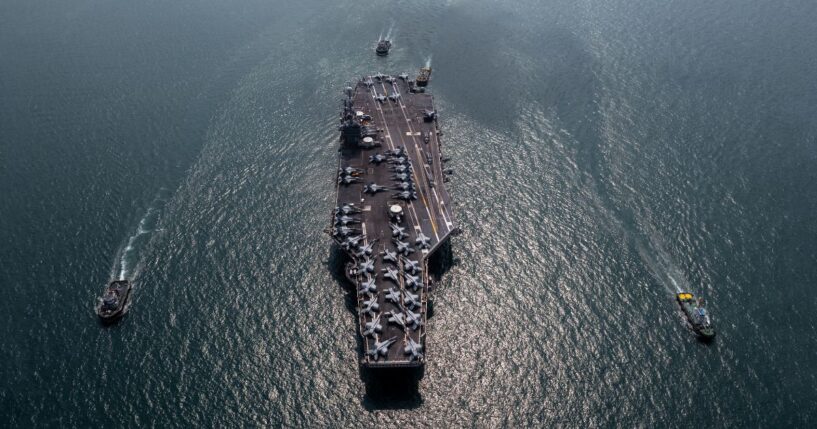
NATO is strained, and Europe has shown it cannot secure even its own territory against Russia. The result is a strategic vacuum at the heart of the Free World.
Our Hemisphere must fill it. We need our own shield.
The strategic lesson is this: As Europe becomes increasingly absorbed by its own security challenges, the United States cannot afford to treat the Western Hemisphere as a secondary theater.
American security begins long before threats reach its borders. It begins by ensuring that the Americas remain stable, prosperous, and firmly anchored to the democratic West.
A stronger hemispheric architecture is not a distraction from global strategy. It is the foundation on which that strategy rests.
That shield is not another regional pact. It is the new frontier of Western defense.
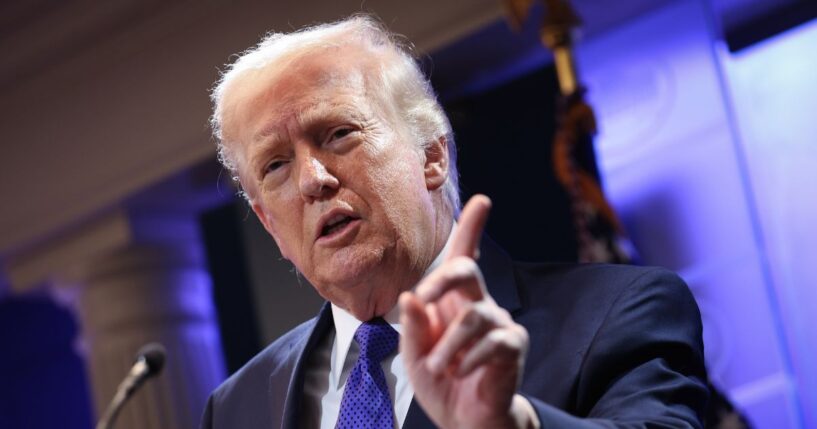
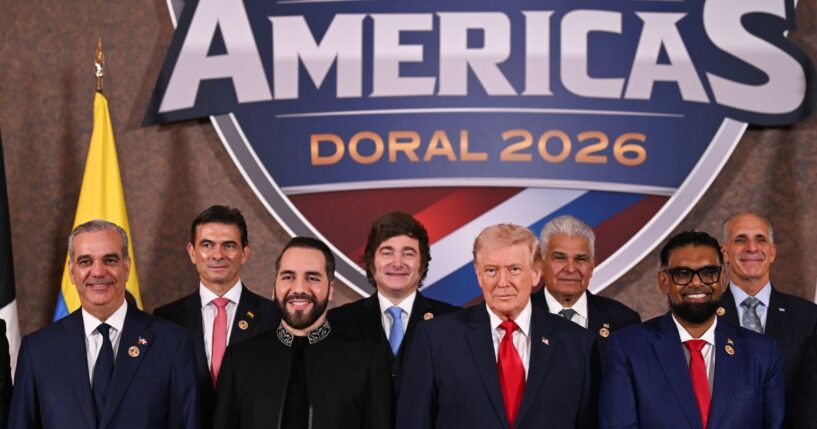
President Donald Trump launched the Shield of the Americas at the Miami Summit on March 7. Nothing like it has been tried before in the region. It brings together governments that recognize what the left has spent decades denying: disorder is not an accident. It is the product of narco-terrorism, foreign meddling, and decades of economic surrender.
As Secretary of State Marco Rubio put it bluntly: “You can’t have economic progress without security.” Without order, prosperity cannot take root.
For Colombia, this is more than strategy. It is survival.
Under President-elect Abelardo de la Espriella, the country is re-entering the community of Western democracies after years of drift. De la Espriella has already made a defining decision: Medellín will host Colombia’s headquarters for the initiative. He called the city what it is — “the head of the serpent of drug trafficking and organized crime.”
To place the headquarters there is not mere symbolism. It is a direct strike at the command center of the networks that have conditioned Colombian politics for a generation.
What Bogotá envisions, according to highly reliable sources, is a robust international pacification force operating along the Venezuelan border, composed of American and Israeli personnel.
This would not be an occupation. It would be a sovereign invitation to restore order. Its mission would be surgical: to dismantle trafficking routes, crush transnational organized crime, and — critically — to prevent a direct war between the Colombian Armed Forces and the Venezuelan regime.
By internationalizing the security burden, Colombia can avert a catastrophic conflict while cutting off the revenue streams that keep the ELN, FARC dissidents, and other narco-terrorist structures alive.
What’s in it for Washington? Plenty.
No initiative in recent years has offered such a credible path to choking off the cocaine supply reaching the U.S. border. It also gives Washington a mechanism to do what aid packages never achieved: turn fragile states into capable partners.
Kristi Noem, the special envoy for Shield of the Americas, framed the moral urgency well when she spoke of cartels “killing our children and our grandchildren.” The Shield finally gives that warning an operational backbone.
For Colombia, the payoff would transform the country.
Remove the criminal safe havens that have captured local economies and what follows is not speculation. Tourism returns. Agriculture expands. Cities become livable again. A secure Colombia ceases to be a problem to manage and becomes what it should have always been: a strategic partner for the United States.
Vice President-elect José Manuel Restrepo captured that shift when he said the new administration will join “with absolute respect for national sovereignty.” Colombia will not arrive as a supplicant, but as a partner.
One dimension deserves particular attention. The Shield is also a political deterrent. The radical left that has devastated the region survives on a single source of patronage: drug money. Cut off that oxygen, and its patronage networks begin to collapse.
This is not merely a military operation. It is a defense of democratic institutions against criminal capture and ideological extremism. That is why Secretary of State Marco Rubio has made it a top priority — and why a dedicated envoy matters.
This is not Plan Colombia 2.0. It is a recalibration of hemispheric power.
It rests on a strategic reality Washington can no longer ignore: the security of the United States depends first on the stability of its own hemisphere.
The 21st century will be defined by competing spheres of influence. The Americas have no choice but to become the West’s most secure and cohesive sphere.
The Hemisphere now faces a choice. It can remain a hostage to narco-terrorism and ideological capture, or it can become the bulwark of Western civilization.
The Shield is not just another option. It is the only response worthy of our shared destiny.
The views expressed in this opinion article are those of their author and are not necessarily either shared or endorsed by the owners of this website. If you are interested in contributing an Op-Ed to The Western Journal, you can learn about our submission guidelines and process here.
Advertise with The Western Journal and reach millions of highly engaged readers, while supporting our work. Advertise Today.
We are committed to truth and accuracy in all of our journalism. Read our editorial standards.