
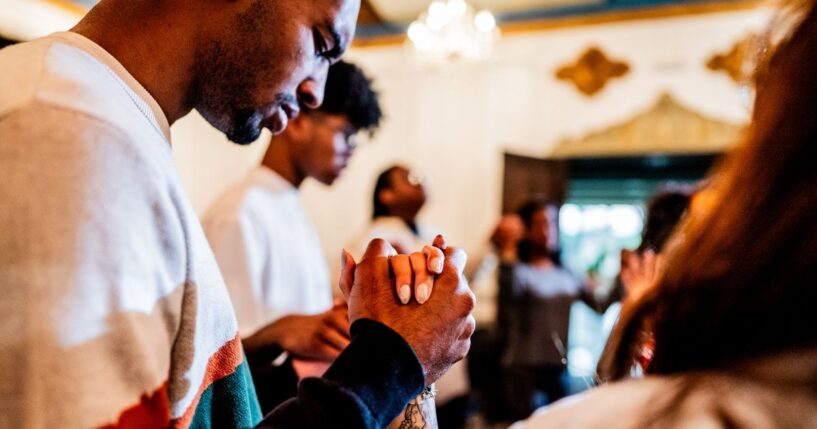
Gen Z Is Twice as Likely to Want This Type of Church

In comparison to older churchgoers, young Americans are twice as likely to prefer church services with more liturgical elements.
A poll from Lifeway Research released on July 28 found that one in five respondents between the ages of 18 and 29 — corresponding with Generation Z — would prefer “additional liturgical elements in their services.”
That’s more than double the rate of those 50 and older who say the same.
Scott McConnell, executive director of Lifeway Research, noted that “many younger churchgoers are curious and eager to grow in their faith, but they may still be learning how the larger story of Scripture fits together.”
“Liturgical elements such as creeds and other regular practices can serve as helpful reminders of biblical truths and provide structure that guides believers through worship," he said.
The findings correspond with other reports concluding that Generation Z — especially conservative young men — who are returning to Christianity or exploring the faith generally prefer more liturgical church styles.
Lifeway noted that Protestant churches vary significantly with how much liturgy they include in their services.
While 56 percent of Lutherans and 38 percent of Presbyterian or Reformed believers said their church is “very liturgical,” only 27 percent of Baptists said the same.
Nearly half of nondenominational respondents said their church has “no liturgical style.”
The nondenominational respondents were also most likely to be “satisfied with their current level of liturgical worship,” with 79 percent saying they are content with their church’s approach.
Presbyterian and Reformed Christians are most likely to say they want “more liturgical elements in their services.”
The survey, taken from Sept. 2-7, 2025, included responses from 1,200 American Protestants, and had a sampling error of plus or minus 3.2 percent.
There were also demographic differences with respect to how much liturgy the respondents preferred.
For instance, men were more likely than women to say their church “is very liturgical” — 26 percent to 21 percent, respectively.
African-American churchgoers are more than twice as likely as white and Hispanic churchgoers — 19 percent versus 11 percent and 10 percent — to say “they would like more liturgical elements.”
Levels of educational attainment also correlated with preference for liturgy.
Those with more formal education had more satisfaction with their church’s approach.
Respondents with a bachelor’s or graduate degree were more likely than those with a high school education or less to “say they are satisfied with their church's current amount of liturgical style” — 78 percent versus 70 percent, respectively.
Advertise with The Western Journal and reach millions of highly engaged readers, while supporting our work. Advertise Today.
We are committed to truth and accuracy in all of our journalism. Read our editorial standards.
Source link