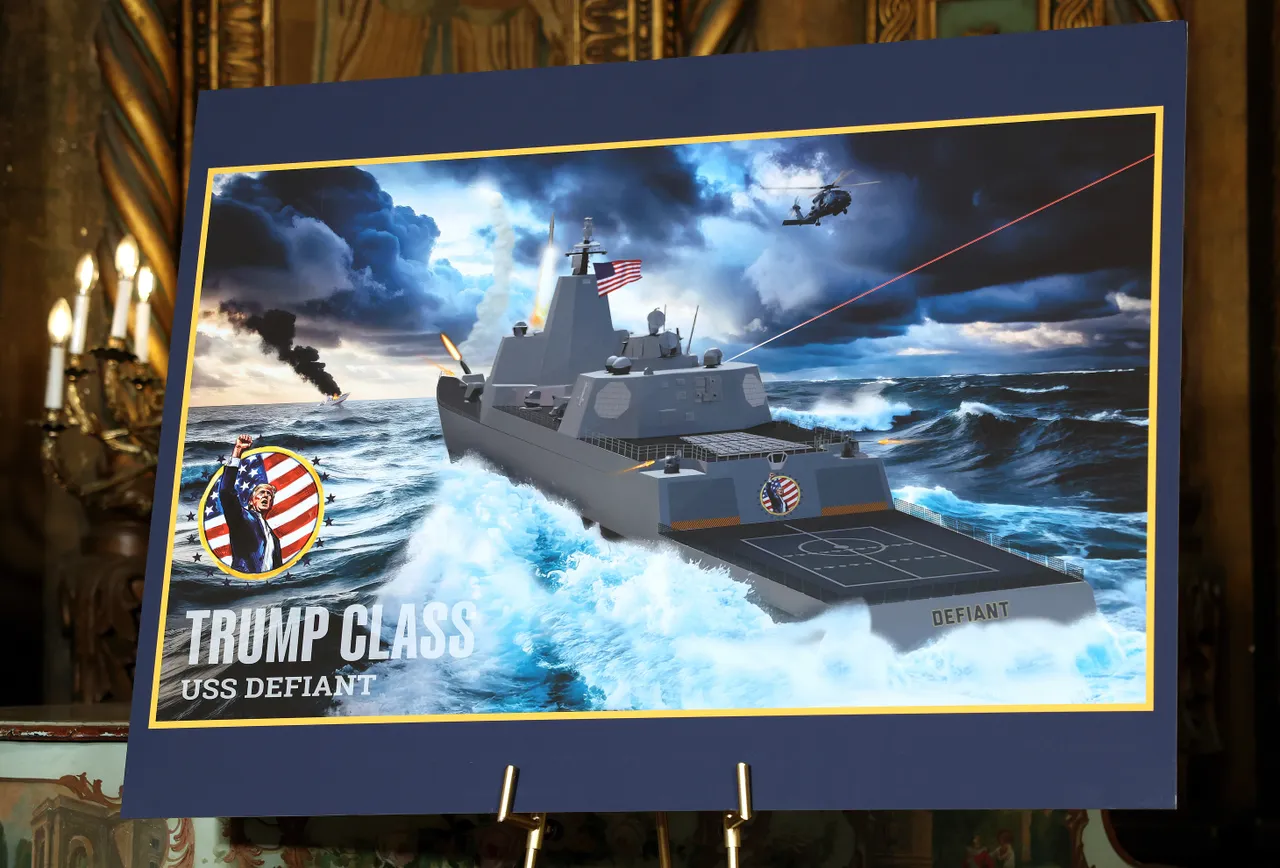
President Donald Trump's proposed fleet of massive new battleships could cost American taxpayers approximately $275 billion, even as the Navy struggles to construct the warships it already has.
The first Trump-class battleship alone could cost $23.4 billion, nearly six times an early $4 billion estimate, according to the Congressional Budget Office. The proposed program would place additional pressure on America's already strained shipbuilding industry, potentially diverting resources from other naval priorities.
The White House and U.S. Navy were initially discussing massive new surface combatants displacing between 15,000 and 20,000 tons in November 2025, Breaking Defense reported, citing unnamed officials through earlier reporting and military analysts.
The proposed funding was intended to help revive an American shipbuilding sector that has fallen far behind China in overall production capacity. (RELATED: Navy Sighs In Relief As Trump Floats $65,000,000,000 To Confront China's Shipbuilding Empire)
"China's shipbuilding capacity outstrips the United States 236-to-1," former U.S. Navy Capt. Morgan Murphy previously told the Daily Caller News Foundation. "That is a national security emergency."

(Photo by Tasos Katopodis/Getty Images)
"Quantity does have a quality of its own," former Navy Secretary John Phelan told the DCNF in April, defending the administration's efforts to restore domestic maritime production.
Trump formally announced the new Trump-class battleships in December 2025, proposing vessels displacing between 30,000 and 40,000 tons. Construction of the first vessel, the USS Defiant, was initially targeted for the early 2030s, according to the U.S. Navy.
The Navy subsequently outlined plans to purchase 15 nuclear-powered battleships between 2028 and 2056, according to the Congressional Budget Office. The office estimated that each subsequent battleship would cost approximately $18 billion, bringing the entire program to $275 billion.
The Navy's own earlier estimate placed the first battleship at $15.1 billion, with the next two costing approximately $10.2 billion each. However, those figures assumed conventional propulsion rather than the nuclear-powered design subsequently incorporated into the Navy's shipbuilding plan, according to the Congressional Budget Office.
The vessels are expected to carry 128 vertical missile launch cells, additional hypersonic missiles and potentially nuclear-armed cruise missiles. Their proposed weapons also include large lasers and an electromagnetic railgun, according to the Congressional Budget Office.
The larger ships could offer offensive capabilities beyond those of existing American destroyers, Breaking Defense reported, citing retired Navy officer and Hudson Institute fellow Bryan Clark.
However, the enormous price tag raises questions about whether building fewer expensive vessels would offer greater military value than constructing additional destroyers.
The Navy could purchase approximately five Arleigh Burke-class destroyers for the price of one proposed battleship, although maintaining those destroyers over their service lives would cost considerably more, according to the Congressional Budget Office.
The program would also require American shipbuilders to increase their production of large surface combatants by approximately 60% over three decades. By 2035, the planned construction workload, measured by ship tonnage, would more than double compared with the Navy's earlier shipbuilding plan, according to the Congressional Budget Office.
Those ambitions confront an American shipbuilding industry already struggling to satisfy existing military requirements.
None of the seven companies constructing Navy battle-force ships were positioned to meet the service's delivery goals, according to a Government Accountability Office assessment published in 2025.
Delays affecting existing Arleigh Burke Flight III destroyers have reached between 22 and 58 months, while the Navy's submarine construction programs continue experiencing significant production setbacks, according to the Government Accountability Office.

(Photo by Tasos Katopodis/Getty Images)
The administration proposed $65.8 billion for shipbuilding in its 2027 budget, including initial funding for the Golden Fleet, according to the White House.
A $1 billion battleship advance-procurement provision in the House Armed Services Committee's proposed 2027 defense authorization legislation, according to the committee's bill.
The administration has also pursued new shipyards to overcome America's naval production bottlenecks, including a $6.6 billion submarine manufacturing initiative in Maryland involving defense contractor Anduril.
Despite those investments, designing an entirely new battleship presents additional financial and manufacturing challenges. (RELATED: $1.15 Trillion In Defense Spending Approved By House Armed Services Committee)
Construction costs could climb further if the ships exceed their projected displacement or incorporate increasingly sophisticated weapons and defensive systems. Starting construction before completing the design could also produce significant cost overruns, according to the Congressional Budget Office.
The resulting challenge for the administration is whether America's struggling shipbuilding industry can deliver the enormous vessels without further delaying the Navy's existing fleet modernization efforts.
Source link