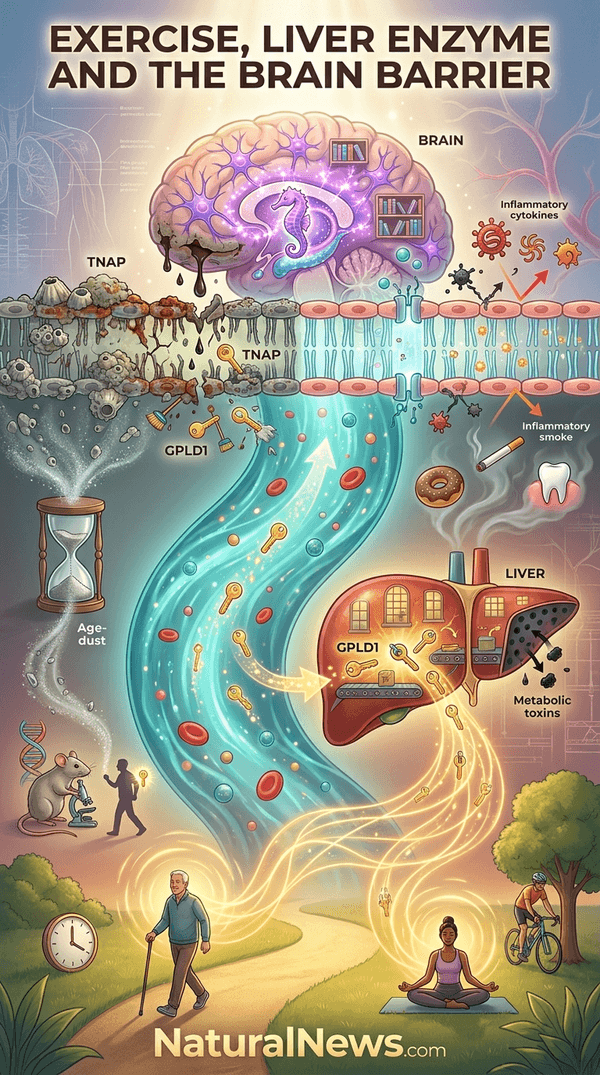
Researchers at the UC San Francisco Bakar Aging Research Institute have found that exercise prompts the liver to release an enzyme that travels through the bloodstream to the brain and repairs the blood-brain barrier, according to a study published Aug. 7 in the journal Cell.
The enzyme, called GPLD1, removes a protein called TNAP that accumulates on blood-brain barrier cells over time, the report stated. The blood-brain barrier controls which substances enter brain tissue, and age-related leakage has been linked to inflammation and cognitive decline, according to the study. The findings describe a direct liver-to-brain pathway that partly explains how physical activity protects the brain, the authors said. Earlier reporting on the same research area found that exercise strengthens the brain's natural defenses by repairing the blood-brain barrier, which weakens with age and allows toxins to infiltrate brain tissue [1]. A protein called GPLD1, elevated by exercise, has been shown in mice to reverse age-related memory loss and stimulate new brain cell growth, and active older adults carry higher levels of it, according to a separate report [2].
How the Enzyme Works
The study identified TNAP as a protein that builds up on blood-brain barrier cells over time, according to the researchers.