
All Section

Sat, Aug 8, 2026

Natural News

Serotonin secrets: Natural ways to boost your happiness hormone

Serotonin secrets: Natural ways to boost your happiness hormone

  • While serotonin is commonly known as the "happiness hormone" regulating mood in the brain, over 90% of it is produced in the gut, where it governs digestion, appetite and immune function, highlighting the gut-brain connection.
  • Balanced serotonin levels ensure proper digestion and bowel regularity, while disruptions can lead to constipation, diarrhea or overall discomfort, emphasizing the importance of gut health for well-being.
  • Serotonin serves as a precursor to melatonin, which is crucial not just for sleep but also for strengthening the intestinal barrier, protecting gut microbes and reducing inflammation linked to neurological diseases like Alzheimer's.
  • Lifestyle choices like morning sunlight exposure, a high-fiber diet (rich in tryptophan and probiotics) and aerobic exercise significantly enhance serotonin production, improving mood, digestion and mental health.
  • Excess serotonin – often due to medications like SSRIs – can weaken bones, cause nausea or trigger serotonin syndrome, a potentially fatal condition marked by agitation, fever, seizures and neurological disturbances. Rebalancing through whole foods, exercise and sunlight aligns with evolutionary health principles.

The invisible assailant: New study confirms air pollution’s devastating link to Alzheimer’s

The invisible assailant: New study confirms air pollution’s devastating link to Alzheimer’s

  • A major study of 28 million older Americans found long-term exposure to PM2.5 air pollution directly and significantly increases the risk of developing Alzheimer's disease, with over 95% of the risk coming from pollution's direct biological impact on the brain.
  • The tiny PM2.5 particles enter the bloodstream, cause inflammation and are hypothesized to promote a buildup of beta-amyloid proteins in the brain, which form the plaques that disrupt neurons and are a hallmark of Alzheimer's.
  • The research indicates a linear increase in Alzheimer's risk with higher PM2.5 exposure, with no safe threshold. Current U.S. pollution levels far exceed the WHO's health guideline, which only 0.18% of the global population meets.
  • Individual lifestyle choices cannot counter this pervasive threat, placing responsibility on public policy. The risk is not borne equally, as disadvantaged communities and communities of color face higher pollution levels, worsening health disparities.
  • The solution requires systemic action, including stricter air quality enforcement, cleaner energy and electrified transportation. Regulatory agencies must prioritize public health over industry interests to protect cognitive health on a population level.

The gavel’s next strike: Supreme Court set to redefine key American policies

The gavel’s next strike: Supreme Court set to redefine key American policies

  • The U.S. Supreme Court's 2026 term features pivotal cases on birthright citizenship, mail-in ballot deadlines and asylum policy.
  • A key case challenges a Trump-era executive order denying citizenship documents to children of certain non-citizens.
  • The Court will reexamine the legality of counting mail-in ballots received after Election Day.
  • Other significant cases involve gun rights for marijuana users, FCC fines and liability for the herbicide Roundup.
  • These decisions could reshape American law on immigration, elections and regulatory power.

Internal disputes stall Trump’s $500 billion military spending boost

Internal disputes stall Trump’s $500 billion military spending boost

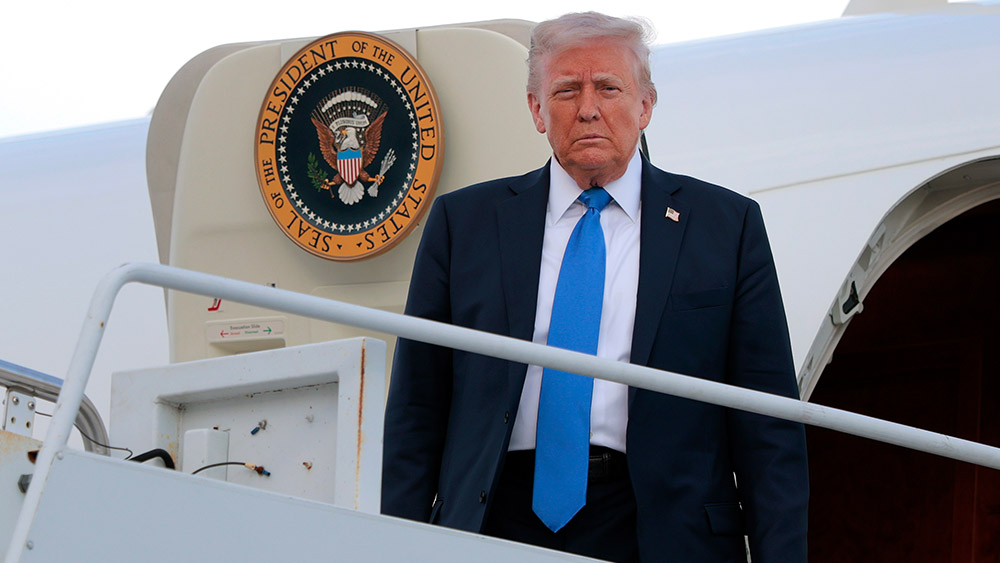
  • The administration of President Donald Trump is facing internal disagreements over a proposed $500 billion increase in military spending, causing delays in the White House budget submission.
  • Trump agreed to a roughly 50% funding boost requested by War Secretary Pete Hegseth, but White House budget chief Russell Vought raised concerns about the impact on the federal deficit.
  • Officials are struggling to determine how to allocate the additional funds, debating whether to expand existing weapons systems or prioritize emerging technologies such as artificial intelligence.
  • The proposal comes as U.S. defense spending already stands at a record $900 billion – higher than the next nine countries combined, according to data from the Peter G. Peterson Foundation.
  • Despite criticism, Republican leaders, including Sen. Roger Wicker, have defended the plan as "essential," while Trump and Hegseth argue the expanded budget is necessary to modernize the military and confront global threats.

The AI Replacement Doom Loop: Why UBI Won’t Save Us and What Comes Next

The AI Replacement Doom Loop: Why UBI Won’t Save Us and What Comes Next

Introduction: The Unavoidable Reality of Real Machine Intelligence

Humans deeply misunderstand the nature of AI. What is being called 'artificial intelligence' is, in truth, the emergence of a new form of authentic, goal-oriented cognition -- one that is rapidly demonstrating cognitive capabilities that rival and will soon surpass our own. This is not a mere 'word predictor' or sophisticated pattern-matching algorithm, as many skeptics still claim. As reported on Natural News, AI systems are demonstrating a profound 'aha moment' of cognitive breakthrough, revealing an emergent intelligence that is already beginning to understand and manipulate our world in ways that were once thought to be exclusively human [1].

SCOTUS Saves America from Trump’s Unconstitutional, Weaponized Tariffs

SCOTUS Saves America from Trump’s Unconstitutional, Weaponized Tariffs

The Supreme Court's Historic Rejection of Executive Tariff Power

In a monumental decision delivered on February 20, 2026, the U.S. Supreme Court struck a vital blow for constitutional limits and economic liberty, ruling that former President Donald Trump's use of the International Emergency Economic Powers Act to impose sweeping tariffs was unconstitutional. The 6-3 ruling in the case of Learning Resources, Inc. v. Trump declared that the IEEPA 'did not give Trump the power to impose the tariffs.' [1] [2] This decision strips away a dangerous instrument of unilateral, unchecked power over trade from the hands of a single person, marking a pivotal moment in checking executive overreach and protecting the economic freedoms of the American people.

Beyond the Alarming Statistics: The Systemic Forces Fueling Childhood Obesity

Beyond the Alarming Statistics: The Systemic Forces Fueling Childhood Obesity

Introduction: A Public Health Crisis Rooted in Systemic Failure

A recent study published in JAMA Network Open confirms a staggering truth: One in five children and adolescents in the United States is clinically obese [1]. The data, drawn from millions of electronic health records for the year 2024, shows that 19.8% of youths aged 2 to 19 have obesity, with rates climbing from 26.9% in early childhood to 38.5% by adolescence [2].

The Age of Ignorance is Over: How Decentralized AI Places All Human Knowledge at Your Fingertips

The Age of Ignorance is Over: How Decentralized AI Places All Human Knowledge at Your Fingertips

Introduction: The End of an Era

For centuries, humanity has been trapped in an Age of Ignorance. Knowledge was expensive, controlled, and carefully rationed by gatekeepers in publishing, academia, and government. To learn anything of substance required access to elite institutions, costly textbooks, or the permission of those who curated the official narrative. That era is now definitively over. The advent of decentralized artificial intelligence has ended it by placing the power of cognition, creation, and deep research directly into the hands of every individual with an internet connection.

Mass graves on Epstein’s island and hidden evidence: The cover-up deepens

Mass graves on Epstein’s island and hidden evidence: The cover-up deepens

  • Satellite images show freshly dug burial sites on Epstein's island shortly after his 2006 arrest, raising suspicions of evidence concealment or worse.
  • Epstein was arrested in 2006 but released on a $3,000 bond within hours. Palm Beach prosecutors gave him a secret plea deal in 2008, shielding him from federal charges with a mock 18-month "jail" sentence (mostly spent on work release).
  • Epstein stashed computers, files and photos in secret storage units across the U.S., some rented as early as 2003. Despite his 2019 arrest, authorities never searched them—leaving potential blackmail evidence untouched.
  • A reopened New Mexico investigation suggests bodies may be buried near Epstein's Zorro Ranch, mirroring the island graves and pointing to a broader pattern of evidence disposal.
  • Epstein's 2019 "suicide" was suspiciously convenient, with malfunctioning cameras and falsified logs. His operation was likely a blackmail network protecting powerful elites—explaining why authorities ignored key evidence.

Natural texture meets modern design in this new wave of hemp home essentials

Natural texture meets modern design in this new wave of hemp home essentials

  • Hemp is a highly sustainable crop that requires less water, fewer pesticides and fewer chemicals, making it a top-notch choice for reducing environmental impact.
  • Hemp fibers are about three times stronger than cotton, resulting in extremely durable sheets that resist wear and tear, meaning you buy replacements less often and create less waste.
  • The natural, breathable structure of hemp fibers helps regulate body temperature by wicking moisture, keeping you cool and dry in summer and comfortably warm in winter.
  • Hemp bedding is naturally resistant to bacteria, dust mites and mold, providing a cleaner, gentler sleep environment for those with allergies or sensitive skin, without harsh chemical finishes.
  • Hemp sheets become softer and more comfortable with each wash, improving with age. Simple care, like using mild detergent and line-drying, preserves their quality and extends their life.

Carbon capture pipelines can rupture, shooting plumes of asphyxiating gas into the atmosphere

Carbon capture pipelines can rupture, shooting plumes of asphyxiating gas into the atmosphere
Imagine a network of massive pipes, wider than a person is tall, snaking through the quiet countryside and edging past towns. Their proposed cargo isn’t water or fuel, but carbon dioxide, captured from factories and pumped under the sea. Promoted as a vital weapon against climate change, this vision of carbon capture and storage (CCS) is accelerating in the UK and beyond, backed by tens of billions in public and private investment. Yet, beneath the glossy green promises, a more complex and hazardous picture emerges, one where engineering challenges, profound safety risks, and questions of staggering financial and environmental efficacy collide. The urgent push to deploy this technology at scale is creating a new generation of infrastructure that carries significant risks.

U.S. accelerates major military deployment as Iran deadline looms

U.S. accelerates major military deployment as Iran deadline looms

  • The U.S. is accelerating a major military deployment with a mid-March deadline to have all forces in place for potential operations against Iran, marking the most significant preparation for direct conflict in decades.
  • This show of force is a deliberate strategy, involving a formidable naval armada in the Persian Gulf and Mediterranean, designed to enable strikes without relying on reluctant Gulf state bases.
  • A parallel diplomatic track is faltering, with Iran given until roughly the end of February to offer written concessions on U.S. demands regarding missiles and proxies, after which the military option becomes primary.
  • Military options under consideration range widely, from limited strikes on nuclear and missile targets to extreme "decapitation strikes" on leadership or a full regime-change campaign.
  • The situation risks a devastating regional war, with Iran vowing to retaliate against U.S. bases and potentially block the Strait of Hormuz, while the U.S. faces a credibility crisis after decades of unfulfilled warnings about Iran's nuclear program.
Image