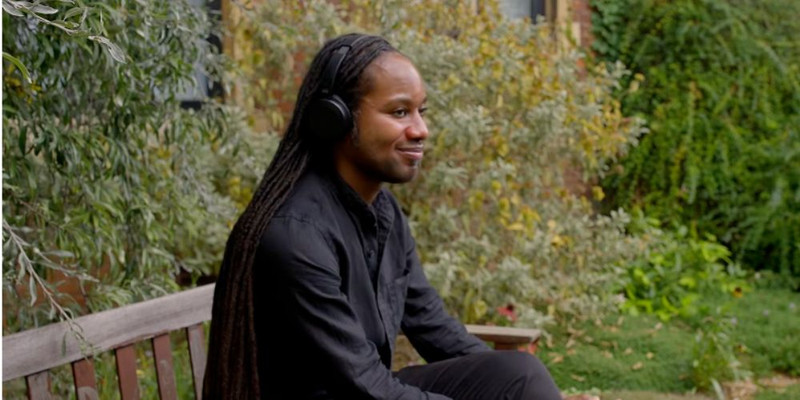
Arday said that the "relentless accusations" had taken a "profound toll" on him.
The Cambridge University professor who has been under fire from his colleagues over allegations of plagiarism has resigned.
Jason Arday, who was touted as the university's youngest black professor, announced on Wednesday that he was resigning effective immediately from both the university and Jesus College. His resignation came just hours after Cambridge had said it opened an investigation into the allegations after "new information" came to light.
In a statement published by the Good Law Project, Arday said that the "relentless accusations" had taken a "profound toll" on him. He added that he has decided to resign for his "own wellbeing."
"I have tried to continue because I believe deeply in the values of higher education, in rigorous scholarship, and in the transformative power of universities. I have tried because of my students, my colleagues and the countless people who have written to tell me that my journey gave them hope," he wrote. "But there comes a point when the personal cost becomes too great. I have a family. I want to be present for them. I want to reclaim some peace, some privacy and some semblance of an ordinary life. I no longer wish to feel as though I am living under a constant spotlight, where every aspect of my life is subject to public examination and judgement."
Following Arday's resignation letter, social media users claimed that the statement itself appeared to have been AI-generated. According to Panagran, the leading AI writing detection software, Arday's resignation statement was deemed to be 100 percent AI-generated.
🚨BREAKING: Jason Arday, the Cambridge professor exposed for plagiarism and fabricating major aspects of his life story, has resigned.
— Colin Wright (@SwipeWright) August 5, 2026
According to leading AI writing detection software Pangram, Arday's resignation letter is "Fully AI Generated" with "High Confidence." pic.twitter.com/XkiUJzjVbU
Arday was accused of including passages within his PhD thesis and other writings that were either identical or substantially similar to previously published academic papers without proper attribution. An independent analysis by The Telegraph identified 100 passages within his doctoral thesis that were identical or near-identical to a 2009 PhD thesis by a Brunel University student.
The professor who first alerted the universities that awarded Arday his PhD about the plagiarism concerns said that he could find no plausible explanation for the similarities within the PhD thesis other than "serious plagiarism."
Cambridge University had previously applauded Arday for his DEI background, as Arday became the youngest black professor in the school's history at the age of 37. He has also been praised for his upbringing, as he was diagnosed with autism as a child and did not begin speaking until he was 11 years old.
When the allegations were first raised, both Arday and Cambridge dismissed concerns, chalking them up to components of a "vile campaign." Additionally, a journalist who began investigating the claims was hit with a harassment inquiry by police after being told that his questions had affected Arday's "mental health."
However, the university ultimately changed its tune, announcing an investigation on Wednesday after it said it had received "new information" about Arday's career.
"While we are fully aware of the public commentary and concerns around this matter, it remains vital that any process is thorough and adheres to both University policies and employment law," The university said in its statement. "We also fully recognise that there is a person at the centre of this situation, and we continue to provide support to him."
Arday's resignation announcement was published only hours later.
Source link