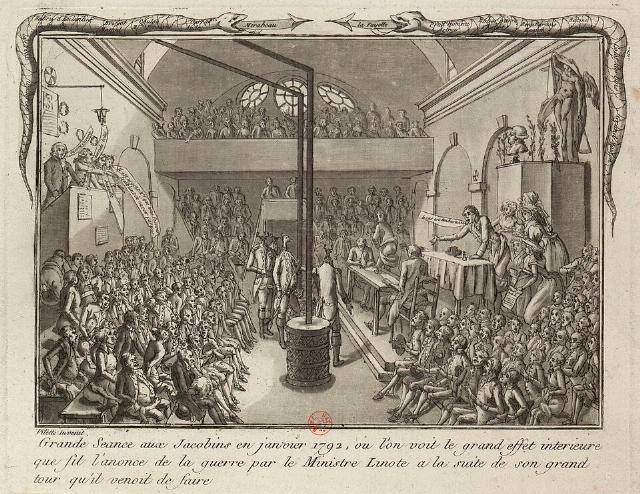
From Wikimedia Commons: Grand session at the Jacobin Club (unknown artist, 1792)
In both the lecture halls and quads of America's elite universities, a disturbing paradox unfolds. The youngest generations of students, beneficiaries of unprecedented material prosperity and intellectual liberty, actively suppress or deny the grim ledger of socialism as it was brutally implemented across the twentieth century. This phenomenon is due partly to ignorance and partly to a cultivated historical amnesia—one that imperils the very freedoms that the West still possesses, however precariously.
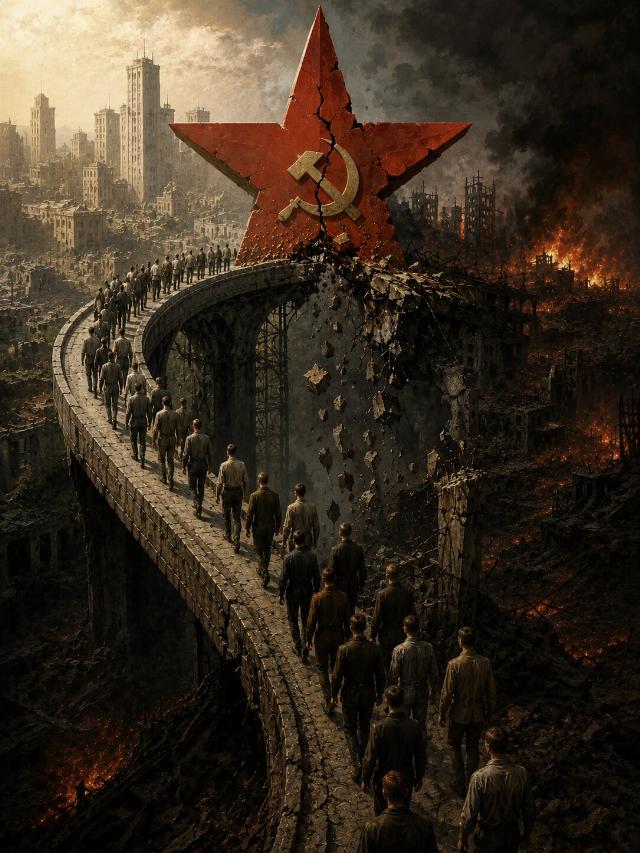
Forced collectivism, in all its variants, has consistently delivered the opposite of utopia: the systematic annihilation of individual dignity, including the suppression of speech, the abolition of private property, engineered famines, gulags, and mass graves. From the Soviet Union to Maoist China, Cambodia's Killing Fields to North Korea's prison colonies, the human cost has been staggering—balanced estimates of excess mortality ranging from 55 to over 80 million people. By comparison, in his book Death by Government (1994), political scientist and statistician Rudolph Joseph Rummel estimates that communist regimes killed around 148 (high-end) million people during the period 1917–1987, with French historian Stéphane Courtois, editor