
Some politically charged words become part of our common vocabulary almost overnight. "Globalism" is a timely example. Ten or fifteen years ago, calling someone a "globalist" didn't have much effect. Today, it is well understood as a pejorative that highlights someone's allegiance to international institutions over those created within a nation state.
Although the term has been used in various academic circles for more than a century, it didn't become part of our common political parlance until anti-Establishment conservatives in the United States and Europe found it a useful taxonomic description of their ideological opponents. In hindsight, it is surprising how long the word "globalism" remained dormant and hidden away in the context of political speech and debate.
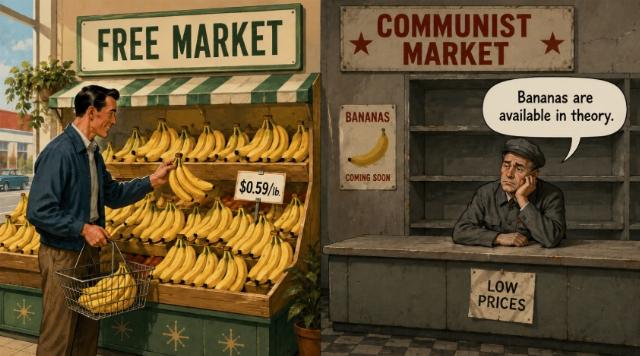
During the Cold War, however, the world was divided between the Soviet Union and the United States, between communism and freedom, between closed economies and open markets. To the extent that nationalism and globalism were distinguished from each other, academics and political leaders did so under the umbrella of the Cold War contest between East and West to gobble up as many nation states as possible. Both sides embraced a "domino theory" of geopolitics in which partisans fought for global domination, one nation at a time.
There was, however, an