My first rental wasn't glamorous, but at least it was honest about what it was and it was in a leafy suburb close to family. I moved in with a freshly single friend and his small kingdom of cats.
The house was a drab 1970s brick-and-tile four-by-two that carried a permanent scent of kitty litter.
The games room doubled as a feline amusement park. Dinner frequently included three‑bean mix, and my housemate considered hot water an optional extra when doing dishes.
A third friend later joined us. She specialised in dramatic exits, after which her mother would calmly suggest we drive around the suburb to retrieve her.
It was chaotic, less sanitary than I was used to, and deeply unaesthetic. But at $60 a week it was affordable for a uni student. And at 21, that felt fair.
My second rental came nearly a decade later, in Lonneker on the agricultural fringe of the Netherlands, near the German border. Our home was a bisected farmhouse on a working dairy farm, octogenarian farmers on one side, us on the other.
It was the kind of arrangement that only makes sense in the Dutch countryside. It wasn’t glamorous and it certainly wasn’t inner‑city. But it offered tractors rumbling past at breakfast, dogs trotting between the barns, and space.
For young kids, it was perfect. Functional. Roomy. Fair.
And that, I would later realise, is a radical concept in Sydney's rental market.
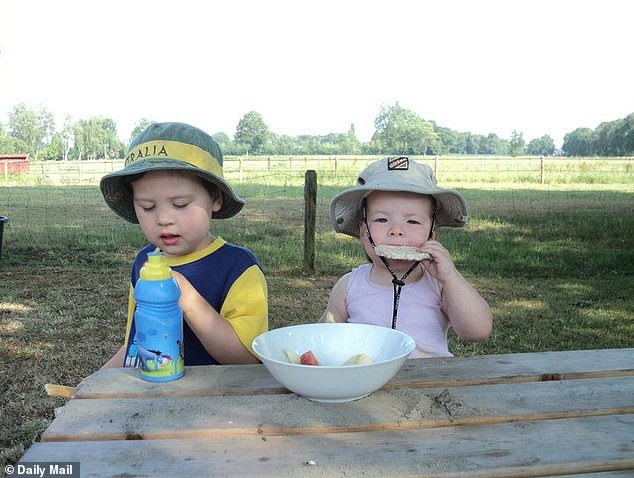
Sarah Brookes moved to the Netherlands with her two young children (pictured) in 2010 where she rented an old farmhouse near the border of Germany
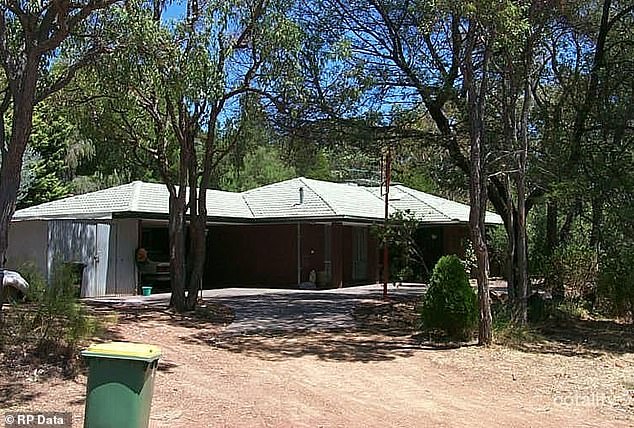
My first rental as a uni student was a tired, colourless old box of a house (pictured) that looked like it gave up trying sometime in the 1980s
When circumstances deposited me on Sydney's coastline in 2025, I discovered that $850-a-week gets you less than you'd reasonably hope.
Mine secured 59 poorly ventilated square metres, complete with recurring mould and a talent for trapping heat. If it was 42 degrees outside, it was 42 degrees inside.
It also came with a property manager from an agency that claims it 'never sleeps', presumably because it is busy crafting emails explaining why structural issues are actually tenant lifestyle choices.
Sydney’s rental market has been on a relentless trajectory of price increases that far outpace wage growth and, increasingly, common sense. Vacancy rates are tight and competition is ferocious.
Landlords have little incentive to improve properties when three prospective tenants are waiting outside, applications pre-filled and references attached.
It's not finding a place to live so much as surrendering money for the privilege of not being homeless.
Sydney, of course, has its charms, beaches, restaurants, cultural institutions and more events than anyone can reasonably attend or afford.
But the gloss fades when the price of entry is a mould‑flecked heat trap with no air‑conditioning, a landlord who treats maintenance requests as personal attacks, and a property manager who implies condensation is your fault for breathing.
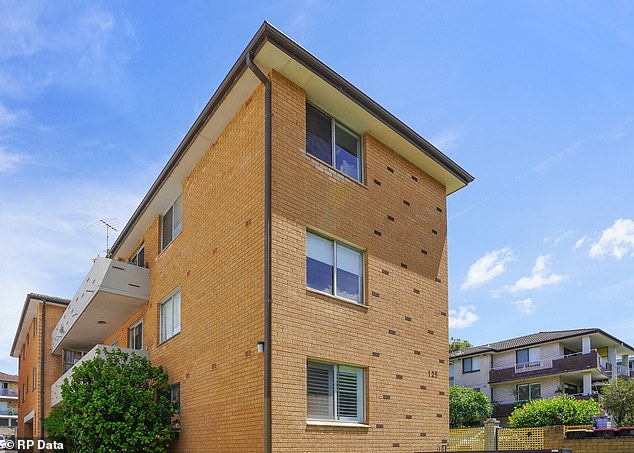
After months of requesting mould removal and basic liveability, the reward was a rent rise
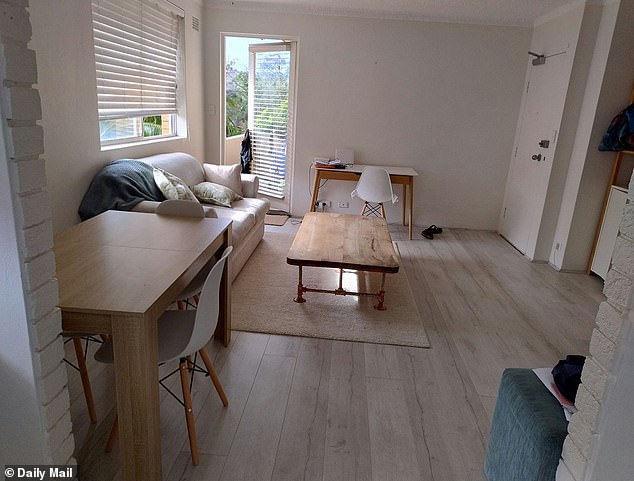
My two bedroom, one bathroom shoebox apartment (pictured) is just 59 square metres but comes at an eyewatering cost of $900 a week.
Renters are expected to be grateful.
But gratitude doesn't substitute for value, especially when the broader story is rising rents, rising rates, stagnating wages, and no improvement in standards or security.
In just one year I've tolerated conditions I once assumed were temporary inconveniences, not the baseline for nearly $900 a week.
In winter, the building's communal hot water system failed. It remained unfixed for nearly a week. Other residents fled to family and friends. With nowhere else to go I stayed put.
Suggested solutions included signing up for a week‑long gym trial for shower access, or using the surf club's cold showers.
Then came the mould.
I reported it mere days into the start of winter. It spread steadily, turning the ceiling grey. An electrician assessed the bathroom and noted a significant ventilation defect requiring a high‑powered extraction fan.
His report also noted persistent moisture and ruled the dehumidifier I forked out hundreds for, running for hours each day at significant cost, was 'not fit for purpose'.
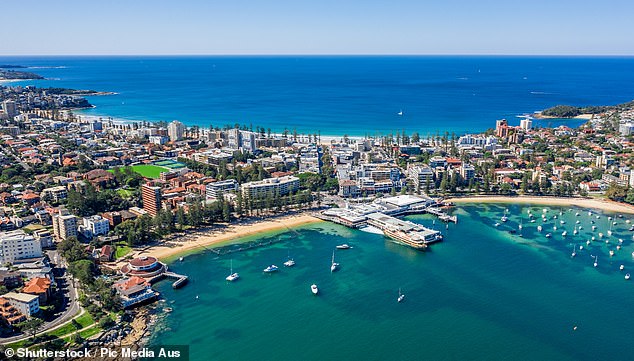
Sydney has its charms, beaches, restaurants, cultural institutions, more events than anyone can reasonably attend or afford
My property manager blamed Sydney's 'unusually wet winter', which the Bureau of Meteorology described as the wettest in 18 years.
'This weather has now become just a one-off event that probably won't happen again for many years,' she wrote.
'The unit ventilation should be fine next winter. Maybe just leave the window ajar. Also having shorter showers will not create so much condensation.'
After much badgering the mould was finally removed... in February 2026. 251 days later. It came with a warning from the mould doctor that it would return unless a ventilation system was installed.
During that period, my teenage daughter experienced repeated respiratory flare‑ups requiring multiple visits to the GP and Ventolin that she hadn't needed since she was 8.
Whether it be a coincidence or consequence, living alongside visible mould did not inspire confidence.
A proper ventilation upgrade was deemed too expensive.
Managing the moisture became, essentially, my responsibility - financially and physically.
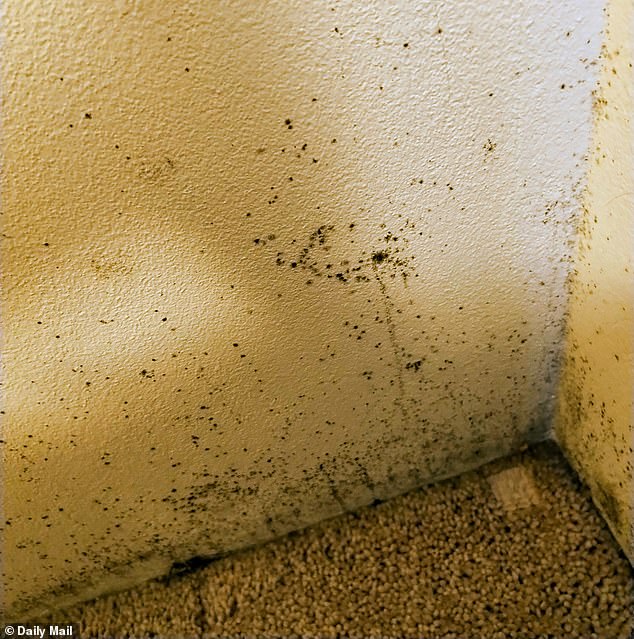
As soon as winter hit so did the mould, creeping up the walls and turning the bathroom ceiling grey in my 1960s apartment complex
Water also leaked across the bathroom floor for months due to the shower needing resealing. My bathmats, soaked beyond salvation, were thrown out as mould crept into their fibres.
Then the Airbnb below me launched an unannounced bathroom renovation. Had I known, I might have packed a suitcase and vanished. Instead I endured weeks of jackhammer staccato vibrating through the building like it was trying to eject me.
Meanwhile, I wage a daily war on large German cockroaches and endure the balcony performances of an unemployed Brazilian man learning guitar, massacring 'Hotel California'. The solo dad is also partial to nightly renditions of 'Let It Go' with his daughter.
During a heated argument with his partner, the guitarist delivered the best line I've ever heard: 'I told you when we met my wife was my best friend.' He disappeared for a week. Returned with a new Nirvana sing‑along.
And then there's Sydney's true modern urban torture device: the whiny leaf blower, deployed hourly as if a single stray leaf is a personal insult.
None of these problems, individually, are extraordinary. Buildings age. Repairs lag. Cities are noisy. Pests are expected.
But in February, I received notice that 'due to increases in charges and costs generally, along with current rental market trends,' my rent would rise from $850 to $900.
Polite phrasing. Impolite implication.
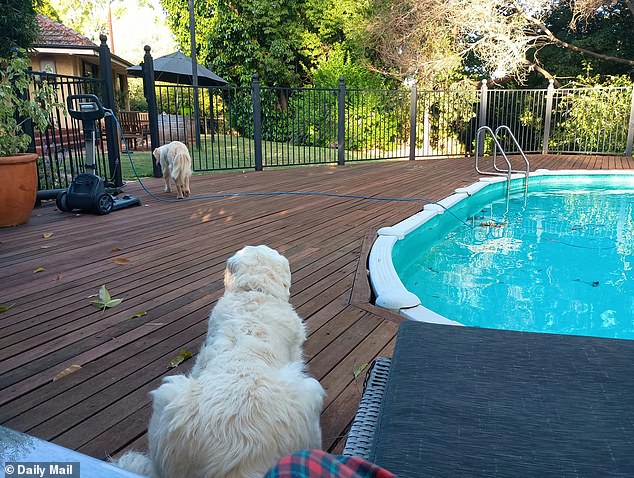
I rent my spacious home (pictured) in Perth out for a fraction of what a similarly sized house would command in rent in Sydney
After months of requesting hot water, ventilation, resealing, mould removal, and basic livability, the reward was a rent rise. Officially market forces. Unofficially, it was hard not to feel classified as 'high‑maintenance'.
I understand rising costs. Interest rates are up. Insurance is up. Strata fees never go down. I'm a landlord myself. I understand the economics.
But I rent out my four‑bedroom, two‑bathroom treetop home with a pool on half an acre in the Perth Hills for $700 a week. It is deliberately below value.
I'd rather have a tenant who treats the place as their own than squeeze out every last dollar.
Did I raise the rent this year? I did not.
So I've decided I’m letting my Sydney apartment go and heading back to Perth. If property can be an investment without being an extraction, I see no reason I should pay for Sydney’s dysfunction in both dollars and decibels.