Children with special needs could lose their right to extra support at secondary school under Labour cost-cutting plans
Children diagnosed with special needs could be stripped of extra support at secondary schools under Labour cost-cutting plans.
Education Secretary Bridget Phillipson is set to announce a revamp of the system covering special educational needs and disabilities (SEND) - expected to provoke a backlash from Labour backbenchers.
Only children deemed to have severe needs would be eligible for Education, Health and Care Plans (EHCPs), with reassessments when aged 11, it has been reported.
Those missing out as a result could include pupils with less complex mental health or developmental conditions, such as many who have been diagnosed with autism or attention deficit hyperactivity disorder.
Ministers are said to want to rein in 'rigid' statutory requirements behind spiralling costs.
EHCP documents lay out youngsters' legal rights to special needs support, but are expected now to be made available to only those put in the highest of three tiers.
Those placed in lower levels would be provided instead with 'individual support plans', with schools in charge of what they might be then given.
The new approach is expected to be announced by Ms Phillipson next week, possibly on Monday, ahead of featuring in the Government's plans for the next parliamentary year from May onwards.
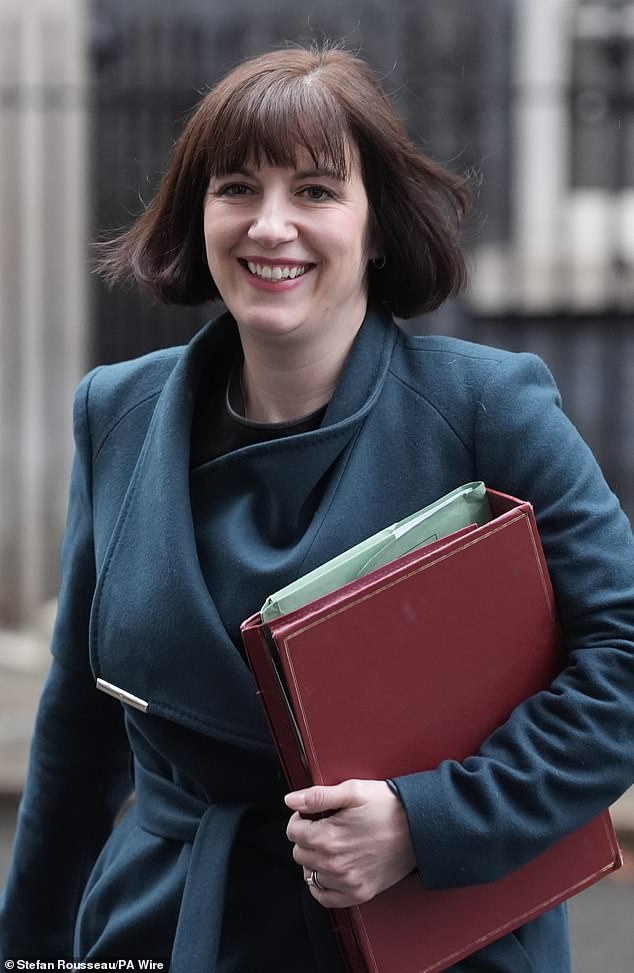
Education Secretary Bridget Phillipson (pictured) is reported to be planning a revamp of the system covering special educational needs and disabilities (SEND)
Under the mooted proposals, earmarked for the start of the 2029-30 academic year, children with existing EHCPs would have their requirements assessed when approaching the conclusion of each phase of education.
This would include transferring from primary to secondary school or leaving school aged 16, the Times reported - with three different layers of support labelled Targeted, Targeted Plus and Specialist.
The newspaper quoted sources as predicting the move would prove 'difficult and controversial' with Labour backbenchers, with a potential rebellion ahead.
But one insisted: 'These reforms are necessary to stop the unsustainable growth in numbers of EHCPs.
'Reviewing the need at transition periods is a key way to help ensure only those who still need them have them.'
There are an estimated 482,000 schoolchildren in England with ECHPs, while the total number across the country aged up to 25 has been put at almost 639,000.
Once those up to the age of 25 and those not in school are taken into account, the number of people with an EHCP in England rises to almost 639,000.
A Department for Education spokesperson said: 'Our Schools White Paper will be an expansion of children’s rights – transforming children’s lives for the better and ending the one-size-fits-all school system that has held too many children back from the outcomes they deserve.
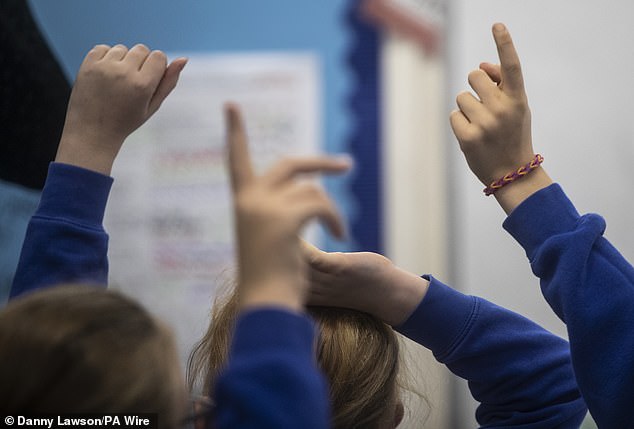
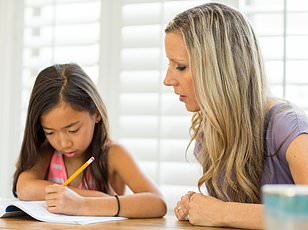
Only children deemed to have severe needs would be eligible for Education, Health and Care Plans (EHCPs), with reassessments when aged 11, it has been reported (stock image)
'It's about creating a better system for all families, where support is needs-led, embedded in every community and wrapped around children at the earliest stage so they can thrive at a school closer to home.
'We'll set out our full plans shortly – building on the work already underway to secure a truly inclusive system, including investing billions in tens of thousands of new places that meet the needs of children with SEND and training up every teacher and teaching assistant in line with the best practice across the country.'
An EHCP is specialised for each child’s needs but can include extra support such as one-to-one teaching assistants, special learning materials and speech and language therapy.
Children's Commissioner Dame Rachel de Souza said: 'Education, Health and Care Plans are highly sought-after, but they are not a panacea. Thousands of our most vulnerable children have one, yet every day they are being failed.
'No child should lose the support they currently receive, but at best the current system serves children badly. At worst, it is an abject failure of their rights.
'Families are at their wits' end, having fought for years to get effective support for their child’s needs, pushed from pillar to post as services argue about solutions.
'It is ridiculous that in today's system, children with lifelong, life-determining disabilities who will require support throughout their lives must fight to get a plan.
'These children need clarity, not unpredictability. Through the government’s White Paper we have an opportunity to provide just that.
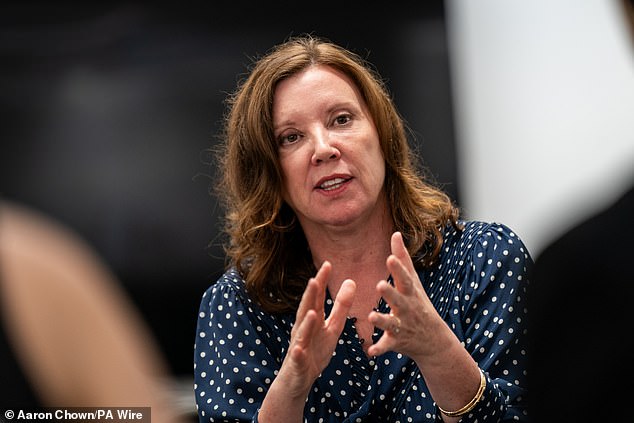
Children's Commissioner Dame Rachel de Souza (pictured in September 2023) said: 'Education, Health and Care Plans are highly sought-after, but they are not a panacea'
'These reforms must create a system that no is no longer focused on telling children they are the problem, and instead creates one that is inclusive by design, setting limitless ambition for children through bespoke, responsive support for a much broader range of needs.'
SEND spending has risen in real terms by 58.5 per cent in the last six years, with a greater rise – 65 per cent – in wealthier local authorities compared to poorer areas, where it increased by 51 per cent.
Schools previously expressed concerns about the prospect of a 4.9 per cent drop in funding after the Government agreed to pick up the tab for councils' spiralling SEND costs.
Chancellor Rachel Reeves' Budget last November revealed that from 2028-29 councils would no longer have to run deficits to pay for children with special educational needs and disabilities.
Instead 'future funding implications' will be managed by central government, with plans promised later to deal with the huge debts already run up.
The move followed warnings that dozens of local authorities are on the verge of going bust following an explosion in autism and ADHD diagnosis.
However, in an analysis report, the OBR said the Government 'has not set out' how this would be paid for, at a starting cost of £6.3billion per year.
The watchdog warned that if the Department for Education were made to absorb the cost, it could eat into the other money schools get.
The OBR said: 'If it were fully funded within the DfE's £69 billion... core schools budget in 2028-29, this would imply a 4.9 per cent real fall in mainstream school spending per pupil rather than the 0.5 per cent real increase planned by Government.'
A 4.9 per cent reduction would be roughly equivalent to £400 a year.
The DfE said the claim was 'incorrect' and that the extra money would be found from across government, rather than from the schools budget.
Related Articles