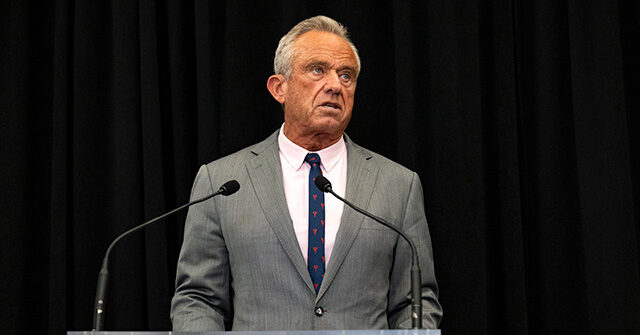
Health and Human Services Secretary (HHS) Robert F. Kennedy Jr. on Wednesday announced the decertification of the organ procurement organization Network for Hope for “persistent patient safety failures,” citing an instance where a man showed signs of awareness while on the operating table, about to have his organs removed.
“The federal government’s first responsibility is to protect human life and patients. When Americans register as an organ donor, they make one of the most generous decisions imaginable. One donor can save up to eight lives and enhance dozens more. Yet today, more than 103,000 Americans are waiting for life-saving transplants,” Kennedy said.
.@SecKennedy: “Under the Biden administration, HHS failed to hold organizations accountable when serious patient safety concerns emerged. Today, we are restoring that accountability.” pic.twitter.com/ywB36KNkHY
— HHS Rapid Response (@HHSResponse) August 5, 2026
“Every one of those donors, every one of those families, every patient waiting for that gift deserves complete confidence that our organ donation system is safe, ethical, and worthy of their trust. That confidence also depends on physicians and nurses and transplant professionals who performed a record-setting, more than 49,000 organ transplants last year,” he continued, calling for a system that “respects their medical judgment and puts patient safety first.”
“Maintaining that trust requires strong federal oversight under the Biden administration, HHS failed to hold organizations accountable when serious patient concerns emerged. Today, we are restoring that accountability,” he said, making it clear they will not tolerate organizations that “compromise patient safety or betray the trust donors or their families.”
“I’m announcing that HHS has become the decertification of Network for Hope, the organ procurement organization serving Kentucky and parts of Indiana, Ohio, and West Virginia,” he said, concluding they came to this decision after extensive reviews uncovering “persistent patient safety failures despite repeated oversight, repeated warnings, corrective action plans, and multiple opportunities to improve.”
RELATED VIDEO — RFK Jr. Touts Huge Pharmacy Savings for Americans Under TrumpRX:
Reviews found “serious deficiencies in nearly 30 percent of the cases that they examined,” Kennedy said, detailing patients on the organ donor list who should have never been there, as well as the procurement process continuing “despite signs that patients were not appropriate organ donors.”
There have even been cases of attempts to procure organs from individuals showing signs of life.
“One of those cases involved T.J. Hoover. T.J. showed signs of awareness while on the operating table, about to have his organs removed, physicians refused to proceed with the organ recovery because they believed that he was still alive. Because they acted, TJ is alive and is here with us today,” Kennedy said. “TJ, we are grateful that you’re here, and we’re grateful to those physicians who had the courage to do the right thing.”
“TJ’s story is a powerful reminder that every safeguard exists for a reason. Most organ procurement organizations carry out this work with professionalism, compassion, and deep respect for both donors and recipients,” he said, explaining that Network for Hope “repeatedly failed to meet those standards.”
.@SecKennedy announces the decertification of the organ procurement organization, 'Network for Hope,' due to persistent patient safety failures.
— Rapid Response 47 (@RapidResponse47) August 5, 2026
"One of those cases involved [a young man who] showed signs of awareness while on the operating table about to have his organs… pic.twitter.com/yC9sWOBJcG
In Hoover’s case, he was taken to the hospital in 2021 for a overdose, in cardiac arrest. He was “unresponsive” for days but “woke up on the operating table as his chest was being shaved and his body bathed in surgical solution, and he heard staff discussing how they would take his organs, Hoover told his sister,” according to CNN. The outlet notes that, prior to the attempted procurement, staff had expressed concern that Hoover was waking up and aware, but the organ organization kept pushing it.
A press release from HHS reveals that the HHS’s Health Resources and Services Administration (HRSA) looked over 351 cases where donation was authorized “but ultimately not completed at Network for Hope.” The findings are horrific and concerning, including instances of the donor not being dead at the time procurement was “initiated.”
Source link