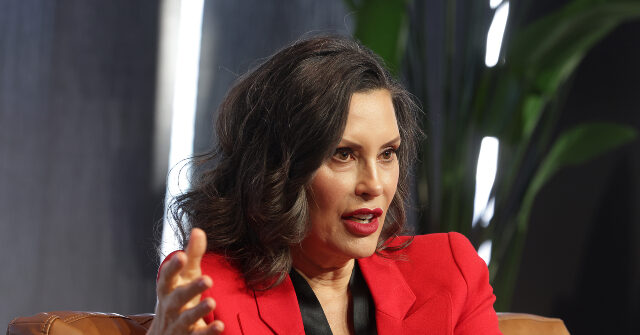
More than three quarters of a million Michiganians will face increases in their health insurance premiums next year under the new rates approved by the administration of Democrat Gov. Gretchen Whitmer.
The Department of Insurance and Financial Services (DIFS) listed the new double-digit percentage hikes for 2027, with a statewide average increase of 14.2 percent for individuals and 9.6 percent for small business plans, the Midwesterner reported Friday.
The rate increases represent a continuing trend of rapidly rising health insurance costs in the Great Lakes State, which in 2025 jumped 20.2 percent for individual policies, and 11.1 percent for small businesses, Detroit Free Press reported.
Republican lawmakers in the state House, where they hold a slim majority, have introduced measures to rein in healthcare costs but face organized opposition from a lobby group and a November election that could change the makeup of the body.
Health insurance rates in Michigan must be approved through DIFS. The state agency reviews requests from insurers, public comment, and financial details before deciding if premium requests are reasonable and comply with state and federal law.
The approved rates were announced earlier this week.
A number of carriers received hikes for individuals in the 11-percent range, but others were granted much higher increases.
According to the Midwesterner:
UnitedHealthcare Community Plan is approved for a 25.2% rate hike, while it's 24% for Meridian Health Plan of Michigan, 22.4% for Molina Healthcare, 15.7% for McLaren Health Plan Community, 14.1% for Alliance Health and Life Insurance, 12.8% for Blue Cross Blue Shield Mutual, 12.6% for Health Alliance, and 11.9% for Oscar Insurance.
With small business plans with fewer than 51 employees, DIFS approved rates of 10.7% for 133,899 Michiganders with Blue Care Network, 7% for 133,192 on Blue Cross Blue Shield Mutual, and 11.6% for 87,423 on Priority health. Others include an 11.6% hike for Alliance Health and Life Insurance, 11.6% for Health Alliance Plan, 10.7% for Priority Health Insurance Company, 14.5% for UnitedHealthcare Community Plan, and 14.8% for UnitedHealthcare Insurance Company.
Bill Tuthill, vice president of Individual Business for Blue Cross, told the Detroit Free Press that an anticipated 10 percent increase in the cost of medical care and prescription drugs next year drove the rate hike requests.
"Helping Michigan families access high-quality, affordable health coverage remains our top priority," he said in a statement. "Our rates reflect the expected cost of caring for our members in 2027, which has increased as additional medical and prescription drug data has become available this year."
The response from UnitedHealthcare was similar.
"Our requested rates reflect significant year-over-year increases in medical costs, driven by higher hospital prices, increased utilization and rising specialty drug costs," the company wrote in a statement. "We remain committed to working with state regulators to ensure rates are fair, reflect the true cost of care and maintain market stability."
Healthcare costs and Republican plans to address them in the state legislature are hot issues in the state, apparently divided along party lines.
The hikes come amid a campaign to unseat Republican state House incumbents led by a lobbying group tied to the Michigan Health & Hospital Association.
Michigan Citizens for Better Health, which favors many Democrat lawmakers and bills itself as a coalition supporting healthcare access, is spending $2.5 million targeting incumbent GOP lawmakers, according to the Midwesterner.
That effort is in response to state House Republicans unveiling a four-bill healthcare cost reduction package that would "create a hospital pricing board, limit hospital prices and price increases, restrict hospital consolidation, and prohibit certain large hospital systems from requiring physicians to sign non-compete agreements," according to the outlet.
It reportedly would also require nonprofit hospitals to reduce prices by ten percent.
The association claims the legislation would "decimate access to care across the state, especially in rural communities where hospitals already operate on thin margins."
It remains to be seen how the GOP House majority will fare in Tuesday’s election. The state Senate is currently controlled by Democrats.
Contributor Lowell Cauffiel, a former longtime Michiganian, is the best-selling author of Masquerade: A True Story of Seduction, Compulsion and Murder, the story of the sordid double life of an elite Detroit psychologist, which is revealed only after his murder and dismemberment. At the time he was also a reporter for the Detroit News. See lowellcauffiel.com for more.
Source link