
Many American Jews are uncomfortable with violence. The problem begins when every use of force is placed in the same moral category.
An attacker uses force to control, punish, or injure. A person acting in self-defense uses force to stop the attack and reach safety. The physical movement may look similar, but the intent is very different. One comes from the desire to hurt. The other comes from accepting responsibility for self-preservation.
As a lifelong martial artist and self-defense instructor, I have taught people how to protect themselves for more than two decades. I meet people who want protection without preparing to cause pain. They want to get fit without ever getting sore. They support awareness and professional security, then pull away when training requires resistance or even minimal discomfort.
Jim Rohn said, "We must all suffer one of two things: the pain of discipline or the pain of regret or disappointment."
That choice applies to self-defense. I would rather accept controlled discomfort in training than discover my first physical reaction while someone is trying to hurt me. Discomfort in training can be stopped, examined, and repeated. A real attack gives you none of that control.
A violent person does not judge our restraint by our moral standards. Instead of morality, he may see someone who keeps explaining, avoids making a scene, or waits for help. Our refusal to resist may tell him that the risk is low.
This is where some Jews misunderstand the enemy.
By enemy, I mean anyone who has chosen to harm Jews. His intent and behavior define the threat. We need to stop assuming he shares our limits.
We often project our own conscience onto other people. We expect shame because we would feel shame. We trust that witnesses, laws, or a calm explanation will influence the aggressor because they would influence us. He may care about none of them.
People who use violence often test their targets. They move closer, ignore a request to stop, block movement, or touch someone who has already stepped away. Then they watch the response. Each unanswered boundary tells them how much more they may be able to do.
Knowing the enemy means understanding what he wants, how far he will go, and what may make him stop. That requires accurate judgment.
Self-defense begins during that assessment. It includes leaving early, creating distance, moving toward other people, calling for help, and placing something between yourself and the threat. Physical force enters when the danger becomes immediate and safer options are no longer available.
The opportunity to act becomes smaller as the aggressor gets closer.
Many people wait for certainty because they fear overreacting. They want proof that the threat is real. The attack may provide that proof. By then, the aggressor may control the distance, timing, and position.
His violence already exists. Refusing to respond gives him more control over what happens next.
Self-defense allows the person under attack to influence the outcome. He may need to escape a grab, remain standing, reach an exit, protect a child, or strike hard enough to stop an immediate assault. The goal is to survive and leave.
Force still requires judgment. Fear does not give someone permission to do whatever he wants. A trained person must recognize when force becomes necessary, use what the situation requires, and stop when the threat ends. These decisions are part of the ethics of self-defense. Physical skill without moral control creates another danger.
The harder question begins when every available choice carries a cost. You may have to hurt someone to prevent him from hurting you. You may have to act before you feel emotionally ready. You may leave the situation wishing another option had existed. Real self-defense often involves choosing the action that produces the least damage under conditions created by the aggressor. I have written more about the paradox of self-defense choices.
People who reject every use of force believe they have solved the moral problem. They have only surrendered the decision to the attacker. His violence continues while they wait for an outcome that requires nothing difficult from them.
Jewish morality includes the preservation of Jewish life. There is no moral virtue in allowing yourself or another innocent person to be harmed. Concern for an aggressor cannot outweigh the duty to protect the person he has chosen to attack. When someone can stop violence and refuses to act, the victim pays the price.
Our enemies may understand our hesitation better than we understand their willingness to hurt us. They may know that we will explain, appeal to authority, and delay physical resistance because we fear appearing aggressive. That knowledge lowers the risk they believe they are taking.
Knowing the enemy means accepting what his actions reveal. Knowing ourselves means preparing for the moment when our values demand physical action. Morality must govern our use of force. It must also give us permission to survive.
We should remain moral. We should also understand what morality requires when someone tries to hurt us. It requires judgment, preparation, and the willingness to protect life.
Do something amazing.
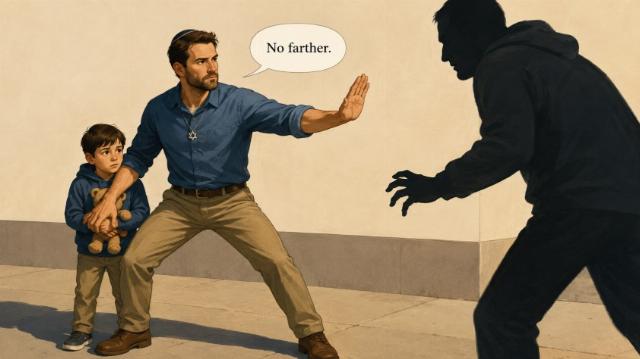
Image created using AI.
Tsahi Shemesh is an Israeli-American IDF veteran and the founder of Krav Maga Experts in NYC. A father and educator, he writes about Jewish identity, resilience, moral courage, and the ethics of strength in a time of rising antisemitism.
Source link