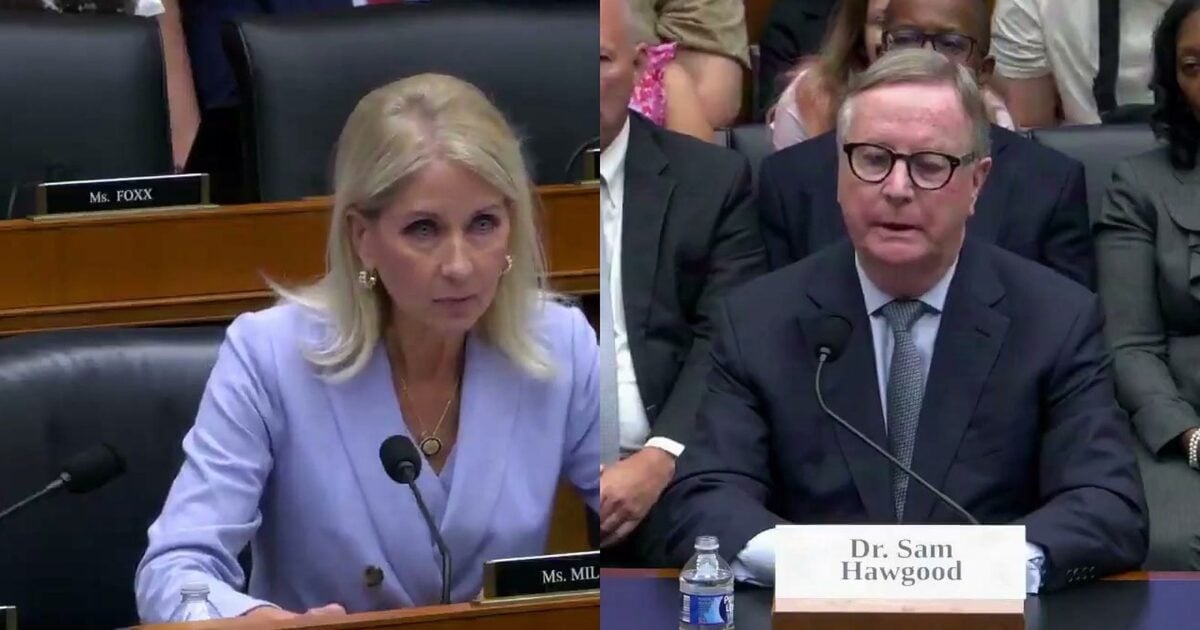
Rep. Mary Miller and 44 House Republicans are telling the Trump administration that American citizens—not foreign nationals—should determine how political power is divided in Congress.
The Illinois Republican led a letter to Commerce Secretary Howard Lutnick asking the Census Bureau to count only U.S. citizens when the 2030 Census is used to apportion seats in the House of Representatives.
That would be a major change from the long-standing practice of using total population. It would also go further than the administration's current proposal by excluding green card holders and other noncitizens who are lawfully present in the United States.
Miller announced the letter Friday and laid out exactly what the lawmakers want changed.
I'm leading 44 Members in a letter to @CommerceGov requesting a 2030 Census that counts ONLY U.S. citizens for apportionment and eliminates the unnecessary questions on race, ethnicity, and sexual orientation.
— Rep. Mary Miller (@RepMaryMiller) October 30, 2026
The sole constitutional purpose of the Census is to count citizens… pic.twitter.com/aajpKRyFe9
Miller's office reports that the letter supports parts of the Census Bureau's proposed reforms but presses the agency to go further. The lawmakers want every noncitizen removed from the apportionment base, including lawful permanent residents, temporary visa holders, refugees, asylees, DACA recipients, parolees and people with temporary protected status.
The letter also backs adding a citizenship or legal-status question and calls for the removal of questions about race, ethnicity and sexual orientation from the decennial Census and American Community Survey.
Miller argues that congressional representation should be determined by citizens because House seats and Electoral College votes are instruments of American self-government. Her office says the current system allows states with large noncitizen populations to gain political influence at the expense of citizens elsewhere.
The House Freedom Caucus quickly amplified the effort, noting that many of its members signed Miller's letter.
🚨NEW: @RepMaryMiller leads 44 lawmakers — including many HFC members — in demanding the 2030 Census count ONLY U.S. citizens for apportionment.
— House Freedom Caucus (@freedomcaucus) October 30, 2026
The Constitution is clear: the Census exists to count citizens for representation. Nothing more.
Restore it. pic.twitter.com/7tuJXUNz56
The list of signers includes Reps. Chip Roy, Lauren Boebert, Anna Paulina Luna, Andy Harris, Scott Perry, Brandon Gill, Harriet Hageman, Paul Gosar and Brian Jack.
The proposal arrives while the Census Bureau is already considering significant changes to the 2030 count.
The Federal Register notice proposes a new definition of "usual residence," new standards for demographic questions and a census enumeration period running from January 3 through April 1 instead of relying on a single reference date.
Under the administration's proposal, lawful permanent residents would remain in the population used for apportionment. Illegal aliens and foreign nationals whose legal status is less durable than permanent residency would be excluded.
The notice also asks for public comment on adding a legal-status question to the short-form census questionnaire. It proposes keeping age and sex questions while barring questions about race, ethnicity, sexual orientation and gender identity from forms used for the enumeration.
The public comment window runs through November 2 under docket USBC-2026-0628. The Bureau would have to review those comments before issuing any final regulation, meaning the proposal is not yet the rule that will govern the 2030 count.
Miller and her colleagues want Lutnick to draw the line at citizenship instead.
She sharpened that position Saturday with a blunt follow-up message.
Remove every noncitizen from the Census. pic.twitter.com/L30xFABWbQ
— Rep. Mary Miller (@RepMaryMiller) October 31, 2026
The stakes are enormous. Census apportionment determines the number of House seats each state receives for a decade, and those same numbers determine each state's Electoral College votes.
Supporters see a citizen-only count as a basic matter of representative government. If a person cannot vote in federal elections, they argue, that person should not increase a state's power in the House or Electoral College.
Opponents are certain to challenge the change in court. The Constitution's Fourteenth Amendment says House seats are apportioned according to the "whole number of persons" in each state, language critics will use to argue that citizenship cannot be the dividing line.
The University of Washington's Center for Studies in Demography and Ecology says the administration's existing proposal is already extraordinary. Its analysis notes that previous censuses generally counted foreign citizens who lived in the United States while excluding temporary visitors, and it warns that changing residence rules could affect where students, incarcerated people and other dependents are counted.
That legal fight has not deterred Miller's coalition. The lawmakers are making a straightforward political argument: American representation should belong to American citizens.
The Census Bureau's comment period closes November 2. Any final rule will have to survive both the administrative process and the litigation almost certain to follow.
But with 45 House Republicans now publicly pressing the issue, the administration is facing a clear demand from its own side: finish the citizenship question before the 2030 count begins.
This is a Guest Post from our friends over at WLTReport. View the original article here.
Source link