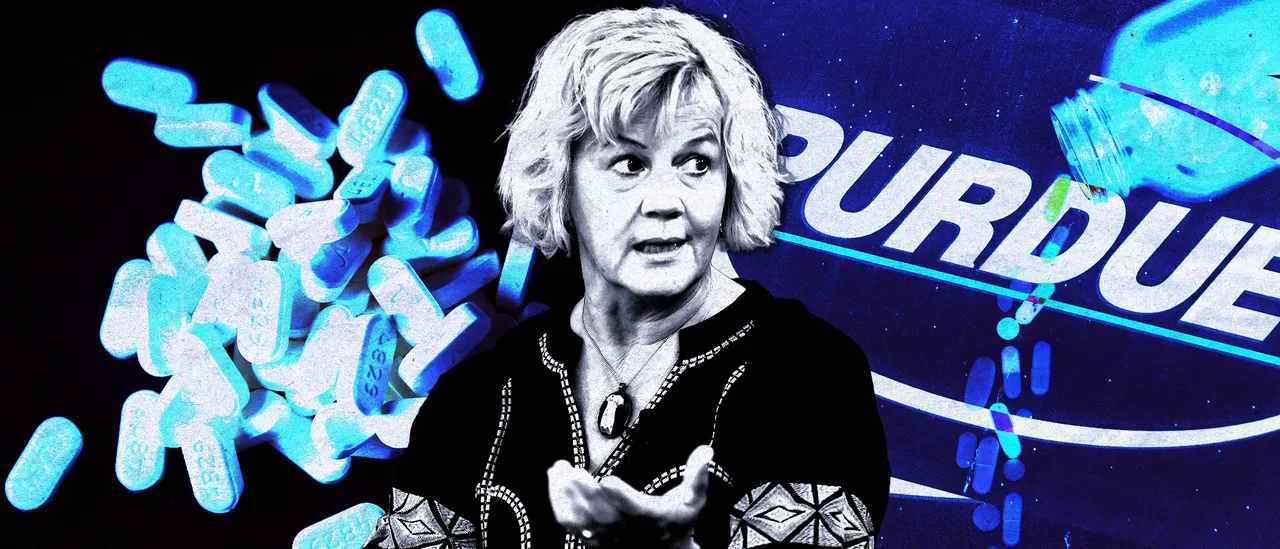
Democratic Virginia congressional candidate Beth Macy built her reputation in part by documenting the devastation of America's opioid epidemic.
But as she seeks a seat in Congress, critics are questioning whether her most famous work tells the full story of the crisis.
Macy's 2018 bestseller, Dopesick, chronicled Purdue Pharma's aggressive marketing of OxyContin and the devastating consequences of opioid addiction in American communities. The book was later adapted into an Emmy and Peabody-winning Hulu series, which Macy helped write and produce.
While Purdue Pharma's role in fueling the epidemic is well documented, the television adaptation of Dopesick has faced academic criticism over its portrayal of the crisis, including a 2024 peer-reviewed study that questioned whether the series adequately captured the epidemic's complexity.
The criticism comes as Macy, who is challenging Republican Rep. Ben Cline in Virginia's 6th Congressional District, highlights her work on the opioid epidemic as part of her congressional campaign.
This weekend, I crossed the Potomac to travel to Winchester and Front Royal in Virginia’s 6th District to praise and boost Beth Macy @papergirlmacy, who is running strong against the shrinking MAGA base. The author of Dopesick and numerous important works on how right-wing… pic.twitter.com/zjDwPIutwI
— Jamie Raskin (@jamie_raskin) October 29, 2026
Macy's campaign website credits Dopesick with helping shift America's understanding of addiction. But pain-patient advocates argue that the national response to the epidemic has also overlooked Americans who depend on prescription opioids for legitimate medical treatment.
Pain-patient advocates contend that efforts to combat prescription opioid abuse have contributed to increasingly restrictive prescribing practices, leaving some patients with chronic or acute pain struggling to obtain relief even as the overdose epidemic has evolved. (RELATED: 'Scum Of The Earth': Victims Slam Sackler Family And Purdue Pharma)
Macy's book examines how Purdue Pharma promoted OxyContin as less addictive despite its potential for abuse, misled doctors about its safety, incentivized high-dose prescriptions and prioritized profits over patients. She also explores how lax regulatory oversight, evolving medical standards emphasizing pain treatment, and widespread misinformation contributed to the expansion of opioid prescribing.
Anyone care to ask Beth Macy how she plans to undo the damage her novel Dopesick did to pain patients?
— Claudia A. Merandi (@CMerandi) October 19, 2026
For years, Americans were sold a very specific narrative about prescription opioids, reinforced by Beth Macy’s Dopesick.
What deserves a thorough investigation is how some of… pic.twitter.com/QpoHeUIB1f
Purdue executives pleaded guilty to federal misbranding charges in 2007, and the company filed for Chapter 11 bankruptcy protection in September 2019 amid thousands of opioid-related lawsuits. The Sackler family and Purdue subsequently agreed to a multibillion-dollar settlement aimed at addressing the damage caused by the epidemic. (RELATED: Purdue Pharma, Sacklers Reach $7.4 Billion National Opioid Settlement)
Macy has argued that accountability came too slowly and that resources for addiction treatment and recovery remained inadequate.
Her reporting helped bring national attention to the communities devastated by addiction, and the success of Dopesick made her a prominent voice in the national conversation over opioid abuse.
But the television adaptation has also drawn academic criticism over how it presented the causes of the epidemic.
A 2024 peer-reviewed analysis of Hulu's adaptation of Dopesick published in the peer-reviewed journal PLOS One, for example, argued that the series oversimplified the opioid epidemic by placing much of the blame on Purdue Pharma and Richard Sackler while downplaying other contributing factors.
Although the researchers acknowledged that the series attempted to portray multiple dimensions of the opioid crisis, they concluded that it offered an overly simplified explanation by giving insufficient attention to other contributing factors, including failures within the health care and regulatory systems. Their analysis focused on the television adaptation rather than Macy's original book and did not dispute Purdue's documented misconduct.
For pain-patient advocates, the debate over how the crisis is portrayed has consequences beyond public perception. (RELATED: American Cartel: Drummer Disgusted Opioids Funded His Performance)
They argue that Dopesick and similar projects helped reinforce the idea that reducing the availability of prescription opioid pain medication was a necessary response to addiction and overdose — potentially contributing to policies and prescribing practices that went too far in restricting access for patients who legitimately need pain relief.
Despite those criticisms, the Purdue-centered narrative became a widely used framework for explaining the crisis, appearing in discussions surrounding non-opioid pain relievers in Congress, state legislative hearings, medical education, hospital physician training, academic medicine, addiction medicine and broader discussions surrounding prescribing practices and opioid policy.
The concerns are not limited to patient advocates. In 2022, the Centers for Disease Control and Prevention updated its opioid prescribing guidelines, warning against inflexible prescribing restrictions and the rapid tapering or abrupt discontinuation of opioid medications.
The agency acknowledged that earlier recommendations had sometimes been misapplied, potentially exposing patients to serious harm. Its revised guidance emphasized individualized treatment decisions rather than rigid dosage limits.
The controversy underscores the challenges physicians face in treating pain and opioid addiction, as even medications intended to reduce overdose risks can carry significant side effects.
The Valley braved the rain to show support for Beth Macy!
— Abigail Spanberger (@SpanbergerForVA) September 20, 2026
As Republicans in Washington drive up the cost of gas and groceries, @papergirlmacy knows families are struggling. She is focused on delivering for them. And she has what it takes to flip this seat.
Get out and VOTE! 🗳️ pic.twitter.com/N6QFNjNujJ
The debate comes against the backdrop of a broader history of opioid misuse. Historically, an estimated 75% to 80% of people who use heroin or illicit opioids reported first misusing prescription opioids, according to a National Institute on Drug Abuse (NIDA) research report.
However, the report notes that many obtained those drugs through diversion — from friends, family members or illicit markets — rather than through their own prescriptions.
As prescribing practices became more restrictive, advocates say some patients were left searching for alternatives as doctors moved away from traditional opioids, such as OxyContin.
One alternative is buprenorphine, an opioid medication used to treat both pain and opioid use disorder. The drug generally carries a lower risk of fatal overdose than traditional opioid painkillers such as oxycodone, making it an option for physicians seeking safer approaches to pain management.
But some formulations have also raised safety concerns. In 2022, the Food and Drug Administration warned that buprenorphine medications dissolved in the mouth, including Suboxone, had been associated with serious dental problems, including tooth decay and tooth loss.
The FDA emphasized that the medications' benefits outweigh those risks, particularly for treating opioid use disorder, but required new warnings and additional guidance for patients and prescribers.
Suboxone's manufacturers also face thousands of lawsuits alleging that its dissolvable film caused severe dental injuries and that patients were not adequately warned about the risks.
The backlash illustrates the complexities of treating pain and addiction as physicians weigh the benefits and potential harms of different opioid medications.
On #AxeFiles, Dopesick author Beth Macy, who's has spent her life reporting on the erosion of small town/rural America, blisters Trump for wooing these communities w/a cocktail of false promises & hate. But she doesn't let the Dems off the hook.
— David Axelrod (@davidaxelrod) October 5, 2022
Full pod👉https://t.co/285dJOCfPq pic.twitter.com/zL4oBmBOPY
That perspective stands in contrast to the one at the center of Beth Macy's Dopesick, which told the story of the opioid epidemic largely through the experiences of addiction, overdose, and communities devastated by drug abuse.
The debate raises questions about how she would approach the competing demands of addiction prevention and access to pain treatment as a federal lawmaker.
Macy has increasingly connected her reporting on addiction and economic hardship to broader political arguments about the struggles facing working-class communities.
This weekend, I crossed the Potomac to travel to Winchester and Front Royal in Virginia's 6th District to praise and boost Beth Macy @papergirlmacy, who is running strong against the shrinking MAGA base. The author of Dopesick and numerous important works on how right-wing… pic.twitter.com/zjDwPIutwI
— Jamie Raskin (@jamie_raskin) October 29, 2026
As Macy campaigns on her experience documenting the opioid epidemic, her congressional bid raises questions about how she would approach the unintended consequences of the government's response, particularly for patients who rely on prescription opioids for legitimate medical treatment.
The Daily Caller reached out to Macy's congressional campaign for comment on those concerns but did not receive a response in time for publication.
Source link