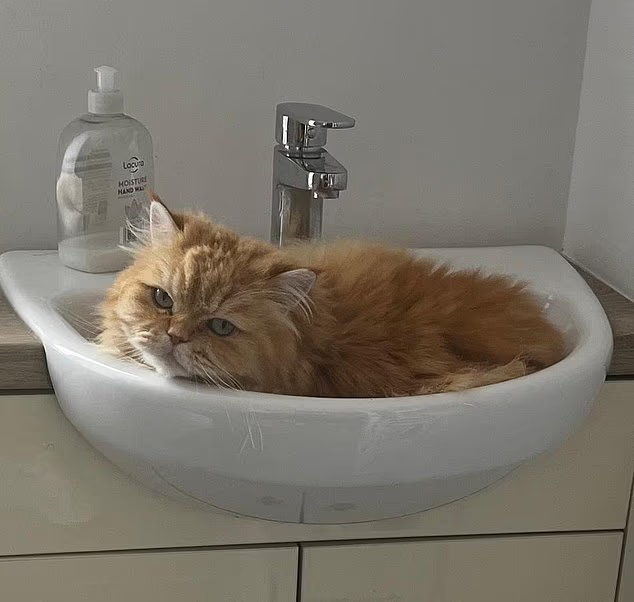
Felix was the sort of cat who trusted everyone. A beautiful Persian with a gentle nature, he was adored by his family and the neighbourhood children who invited him to their tea parties in the garden.
So when a stranger called to him outside his Cork home, the affectionate cat apparently thought he was about to receive another friendly rub.
Instead, the 12-year-old beloved pet was snatched away by the tail by two youths who made off on e-scooters; his crying heard by a concerned neighbour.
Six days later, Felix was found in a graveyard, so horrifically injured that he had to be put to sleep.
Felix was stolen by two youths and later found so beaten he had to be euthanised
His death has provoked widespread horror but it is far from the only disturbing case of animal cruelty to emerge in recent weeks.
In Carlow, gardaí have been investigating reports that youths allegedly tied a firework to a cat's tail, causing the terrified animal to run on to the road, where it was struck and killed by a car.
Meanwhile, shocking footage circulated on social media of a driver apparently deliberately running over a young deer in Co Wicklow. The badly injured animal had to be euthanised.
Such incidents have brought renewed attention to the deliberate cruelty being inflicted on animals, sometimes filmed and shared online.
Ellen McCormack, a trustee of Cork Cat Action Trust, says the violence inflicted on Felix is part of a deeply disturbing pattern she has encountered through her animal welfare work.
'This is something that's been going on for a long time,' she says. 'The week before Felix went missing, another family cat was ripped apart in front of a neighbour's eyes.'
She also describes reports of nine cats being killed in a similar grotesque way in another Cork neighbourhood – and it is not just the cats who suffer.
'These people are also being cruel to their [own] dogs, many of which are lurchers or greyhounds,' she says.
'They beat them and treat them equally appallingly, and then set those dogs on the cats. If the dogs don't kill the cat, then they beat the hell out of them again.'
This depravity is happening all over the country. McCormack cites the disturbing footage from Fethard, Co Tipperary, recently, which showed youths luring a cat from its home while their lurcher dogs waited to pounce.
The incident was caught on camera by the traumatised owner, who commented that her eight-year-old cat had suffered severe internal injuries and 'might not last the night'. The pet tragically had to be put down.
But the cruelty itself is only part of the story. McCormack says the intimidation surrounding these attacks has left families frightened to speak out even after reporting what has happened because of the fear of further retaliations.
'It's pure violence, it's pure intimidation,' she says.
Her greatest frustration is the apparent absence of consequences when a beloved pet is so brutally killed.
'Nobody will ever be brought to book, nobody will ever get punished,' she says. 'The trauma is just constant when somebody cannot get closure.'
Martina Kenny, co-founder of My Lovely Horse Rescue, believes the situation is becoming more depraved, and much of it is driven by sick social media trends.
Ms Kenny is particularly alarmed by the growing trend of animal cruelty being filmed and shared on social media, with perpetrators taking pride in fearful violence.
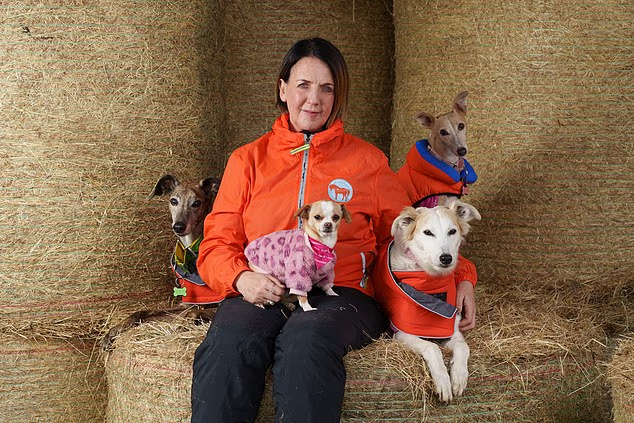
Martina Kenny at My Lovely Horse Rescue. Photo: Fran Veale
'It's up there with the ones driving cars down motorways the wrong way,' she says.
'These lads like showing off what they can do and what they can get away with. Then you have others thinking, oh sure, I'll do the same because they're getting all these likes and stuff and there's little consequence even if I'm caught.'
Ms Kenny describes people digging deep into badger setts so their dogs can attack the animals inside, sometimes leaving the dogs themselves with horrific facial injuries.
'Then they post pictures online standing up to their shoulders in a hole that they've dug so their dog can get in there but can't get out,' she says.
'We know what happens next – they tear that badger and its family apart.'
Cats and other small animals, including piglets, are also being used as bait in illegal animal fighting.
'There's a dark, ugly underbelly out there with dog fighting and cockfighting going on constantly,' she says.
'Then we are breeding, breeding, breeding. We have the biggest puppy farm problem in Europe – that's disgraceful for such a small country.
'We actually don't have a good reputation when it comes to looking after our animals. It shows that we have no morals any more. We've lost them.'
In her 16 years of work in animal rescue, she says people's actions continue to shock her.
'Is it society? I don't know,' she says.
'Is it lack of education? Maybe. Is it the lack of our Government doing something, really stepping up and saying, right, that's it, we've had enough? Is it lack of prosecutions?'
To this end, Ms Kenny is calling for a dedicated Garda animal crime unit, arguing that while many officers are committed to animal welfare, the response can vary enormously.
'We have a lot of guards that are our volunteers,' she says. 'So the want is there with the guards themselves, and they know they need it.'
The issue is that the lack of urgency and cohesiveness means there's little continuity when it comes to prosecutions.
'You'll call a Garda station and either you get great guards that want to really help, or you get guards that don't want to help, or are too busy,' she says. 'Then it's passed on and then it's lost.'
She believes a pilot scheme involving just two or three experienced officers could help gardaí nationwide pursue prosecutions.
'A lot of the guards don't seem to know the legislation when it comes to the 2013 Animal Health and Welfare Act,' she says.
'They don't understand they are actually very powerful in this area.'

Fianna Fail Minister for Justice, Home Affairs and Migration Jim O'Callaghan. Photo: Sasko Lazarov/RollingNews.ie
An Garda Síochána, however, points out that designated animal health and welfare liaison inspectors already operate within Garda divisions, working with veterinary inspectors from the Department of Agriculture.
A spokesman confirmed that gardaí have powers to search premises, seize animals and make arrests.
'Although An Garda Síochána is not the lead agency for animal welfare, we take animal welfare matters seriously,' the spokesman said.
However, they did not address how cases involving children and teenagers suspected of serious animal cruelty are handled, nor did they explain whether such incidents are routinely referred to the Garda Youth Diversion Programme, Tusla or other agencies for intervention.
Conor Dowling, director of advocacy and policy with the NSPCA, confirms that deliberately setting dogs on cats is a disturbing practice that has persisted for years.
'Young guys going around and they see a cat hanging around the front garden or on the doorstep or under a car and setting the dogs on them is something that has been an issue for a number of years unfortunately,' he says.
'People who just seem to like inflicting suffering on animals, causing pain, if they see an opportunity, they will take it.'
However, he is cautious about suggestions that family pets are being systematically stolen for baiting, for example.
'There isn't any evidence for that,' he says, adding that the vast majority of cases investigated by the NSPCA involve neglect rather than deliberate physical violence.
Nevertheless, the organisation continues to encounter shocking examples of harm. In recent months, three stray cats brought into its care were found to have been shot.
One was partially paralysed, while another required a leg amputation. There was also Chip, a puppy found with extensive burns of unknown origin, and Ghost, a dog who survived a machete attack and has since been rehomed.
Mr Dowling echoes Ms Kenny's sentiments on social media, saying videos depicting dogs attacking cats and other animals regularly circulate online. He also believes there is another compelling reason to take animal cruelty seriously.
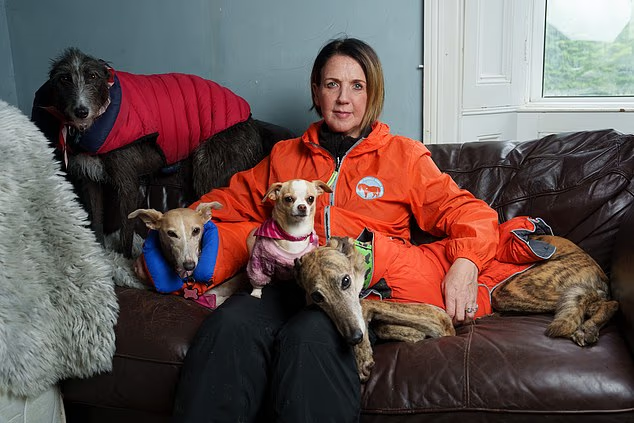
Martina Kenny at My Lovely Horse Rescue. Photo: Fran Veale
'My experience has been that there's clear links between violence towards animals and violence towards humans,' he says.
'And we're becoming even more aware nowadays of how animals can and are utilised in domestic abuse situations.'
Pets, he explains, can be used as instruments of coercive control, with perpetrators threatening to harm them to intimidate a partner or prevent them from leaving.
'If somebody's capable of being violent towards an animal, it's far more likely that they'd have that capability to do similar to people,' he says.
Beyond the cruelty itself lies another contentious issue – how seriously does the judicial system treat the theft of a family pet?
For Lisa O'Connor, the fight to have family pets recognised as more than property began with the frightening experience of losing her own dog. Thankfully, the dog was found safe, but the experience stayed with her.
In 2020, as reports of missing and stolen dogs began appearing on social media, she established Missing/Stolen Animals Ireland to help reunite pets with their families.
What began as a Facebook group has become a campaign for legislative reform. O'Connor, who has studied animal law at the University of Galway, also established Animals in Crisis Ireland and launched a petition calling for pet theft to be recognised as a distinct criminal offence.
'Our dogs and cats, which to most people would be family, are still recognised as objects according to Irish law,' she says.
The problem, she argues, extends to how these crimes are recorded. 'Say, for example, your dog is stolen and you go to a Garda station, they're logged as "other",' she says, questioning how the authorities can establish the true scale of pet theft without more accurate records.
In April 2025, Justice Minister Jim O'Callaghan confirmed in a parliamentary response that pet theft was not separately identified in a structured field on the Garda PULSE system, making comprehensive national figures difficult to produce.
O'Connor wants that changed, alongside improved microchip records, clearer Garda procedures and greater recognition of the distress experienced by families.
Last September, she took her campaign to the Oireachtas Joint Committee on Public Petitions and the Ombudsmen, supported by representatives of animal rescue group Working Animal Guardians.
Her petition has attracted thousands of signatures, but progress has been frustratingly slow.
'The committee are trying to get either the Minister for Justice or his officials in to hear what I've said, just to listen,' she says.
Her frustration is supported by the committee's own proceedings. At a meeting last month, Senator Chris Andrews criticised the failure to secure an appearance by the Minister or his officials despite repeated requests, describing the lack of engagement as disrespectful to campaigners and the public.
Other families are also struggling to obtain answers. In September, Daragh Bourke of Big Bark News and Media wrote an open letter to O'Callaghan seeking changes to pet theft legislation and investigations.
His organisation has also launched Missing Paws, a tracking platform for missing dogs.
Among the cases highlighted are Mouse, a four-year-old foxhound, and Rupert, an 18-month-old beagle, who disappeared from Co Tipperary in January.
Their owner, Maria Costello Hayes, says the dogs were handed over to a man in a white van who claimed they belonged to a relative.
Despite gardaí reportedly identifying the vehicle and questioning a man, she was informed this month that the DPP had decided not to pursue charges. Both dogs remain missing.
The Department of Justice, meanwhile, insists that existing legislation already provides substantial penalties.
In response to questions from the Irish Mail, a spokesman acknowledged the emotional distress caused by pet theft, particularly for 'older and vulnerable people'.
'The Government is very conscious of the special place that pets hold in people's lives, as companions and as a comfort to many,' the spokesman said.
The Department pointed out that theft and handling stolen pets can carry maximum prison sentences of ten years, rising to 14 years where burglary is involved. Possession of stolen property can attract up to five years.
Yet the Government itself has previously acknowledged that treating a stolen pet solely as property may be inadequate.
During a Dáil debate in December 2022, then Minister of State James Browne accepted that the loss of a companion animal went far beyond its monetary value.
The Government did not oppose proposed pet theft legislation at that stage, although it raised concerns about mandatory minimum sentences. Almost four years later, questions remain about what progress has been made.
The Department's response to this newspaper did not explain whether specific pet abduction legislation is being considered, as introduced in England and Northern Ireland, or when the Minister might engage with the Oireachtas committee.
Questions concerning serious animal cruelty and intervention for under-age offenders also went unanswered.
Instead, it pointed out that overarching animal welfare policy is the responsibility of the Department of Agriculture.
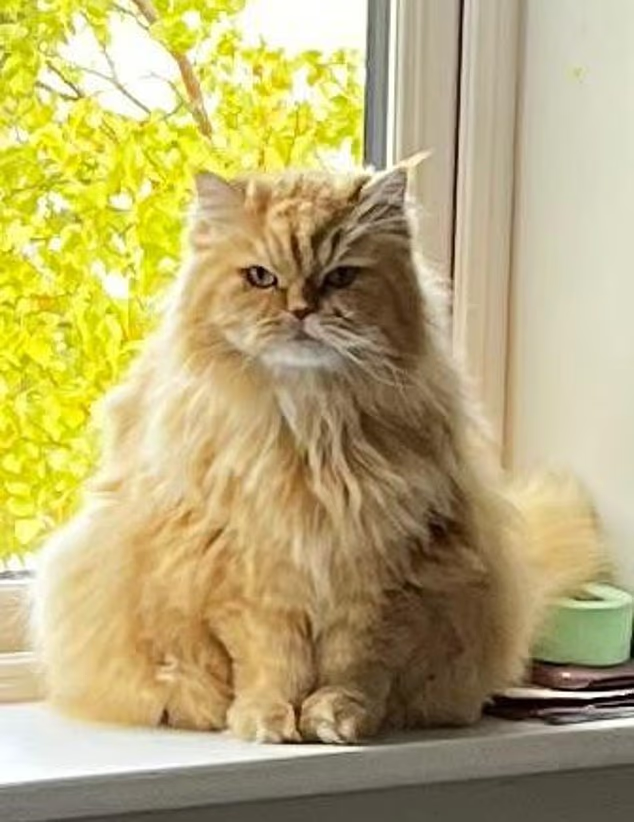
Felix's family are among many who are distraught at the manner of their pets' deaths
For O'Connor, however, the consequences of this apparent lack of urgency are deeply personal.
She has been contacted by heartbroken families devastated by the disappearance of their pets and has highlighted Felix's case to people far beyond Ireland.
'I've had so many people from around the world message and say that they can't believe something like that happened in a country like Ireland,' she says.
'The reality is, in the justice system and to the guards, animals come last on the list.'
- Sign the Justice For Felix petition at change.org and Lisa O'Connor's petition for Animal Law Reform in Ireland at my.uplift.ie
Source link