Ireland is a nation of dog lovers. Dogs are embedded in our homes, families and communities.
Yet behind the images of playful puppies lies a difficult truth; large–scale commercial dog breeding has become a systemic animal welfare problem that Ireland has yet to confront.
Dog breeding is lawful. There is consumer demand for puppies, and responsible small–scale breeders maintain high standards. But scale matters.
When breeding moves from domestic settings into industrial operations housing dozens – or hundreds – of breeding females, the risks to welfare increase dramatically.
The consequences extend beyond the sheds.
The ready availability of commercially produced dogs influences pricing, encourages impulse purchasing, fuels online sales and contributes to abandonment when expectations are unmet.
Rescue centres are under pressure daily. The problem is not just individual establishments; it shapes the wider culture of dog ownership in Ireland.
In Britain, the Breeding of Dogs Act 1973 introduced licensing requirements for breeding establishments more than 50 years ago – by contrast, Ireland did not enact comparable legislation until the Dog Breeding Establishments Act 2010 came into force.
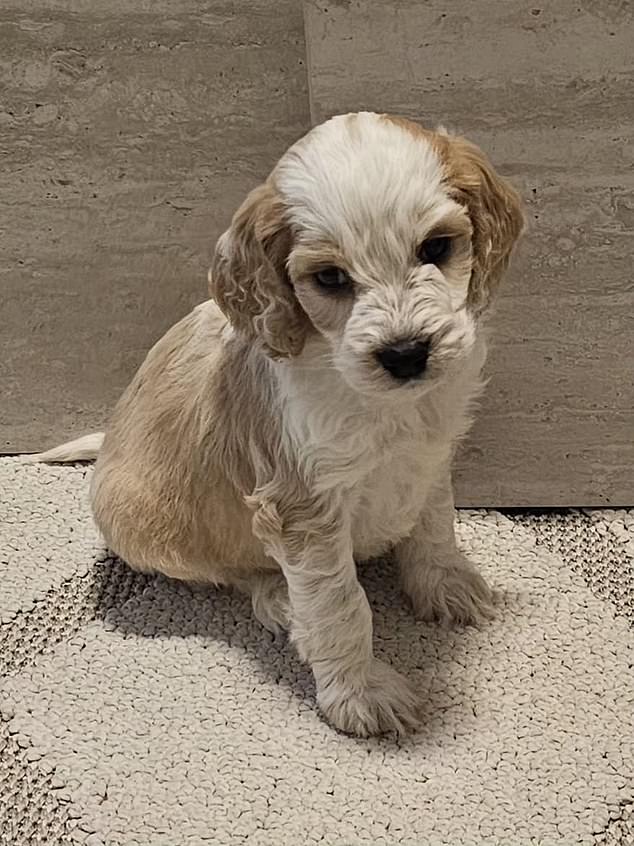
Daisy, who was bought from a puppy farm run by Five Star Paws, which is registered for 300 breeding bitches. Daisy died within 48 hours of her being brought home
By 2010, high–volume breeding was normalised. Ireland had developed a significant export trade in puppies, particularly to the UK.
The 2010 Act was intended to regulate the sector. However, because it was introduced after the industry had expanded, authorities have been playing catch–up ever since.
As of 2018, 91 commercial dog– breeding establishments were registered in Ireland. Twenty were licensed to keep up to 100 breeding females or more.
The largest remains registered for up to 300 breeding females. Whatever the legal position, serious questions must be asked about whether the physical and psychological needs of dogs can be met at that scale.
Dogs are not livestock. They are highly social animals with complex behavioural needs.
Exercise, enrichment, human interaction, early socialisation and stable environments are fundamental to their well–being.
Replicating those conditions in large, production–driven establishments is inherently challenging.
While the 2010 Act provides for inspection and enforcement, statutory tools are limited. Improvement Notices can be issued where deficiencies are identified, but they have no effect while an appeal is ongoing.
More significantly, failure to comply with an Improvement Notice is not, in itself, a criminal offence.
The Act also lacks clear seizure powers. Instead, operators may be directed to arrange rehousing at their own expense.
Even local authorities committed to raising standards found the legislation difficult to use effectively.
There has been inconsistent enforcement, but legal weaknesses are equally significant.
A 2017 study by Franklin McMillan in the United States found dogs bred in high–volume commercial establishments showed increased rates of behavioural and emotional problems, compared to dogs bred in domestic environments.
While Irish data remains limited, these findings align with long–standing concerns expressed by veterinary surgeons and welfare organisations.
So what can be done? First, the NSPCA believes a full review of the Dog Breeding Establishments Act 2010 is overdue.
Lucky puppy farmer won a car
This is Raymond Cullivan Jnr, who is registered to breed 300 bitches a year with Cavan County Council.

38–year–old Raymond Cullivan Jnr – who had to pay more than €100,000 to the taxman after he was listed a tax defaulter in 2024 – struck gold again in November of that year when he won a Range Rover Sport from an online competition
The Irish Mail on Sunday revealed last week how his puppy farm – which was accused of ‘horrific cruelty’ in the Dáil – continues to reap massive profits almost a decade after the controversial practice was exposed by BBC’s Panorama programme.
Mr Cullivan is listed as director of Five Star Paws, which recorded profits of almost half a million euro in the company’s most recent financial statement for the year ended February 2025.
The 38–year–old – who had to pay more than €100,000 to the taxman after he was listed a tax defaulter in 2024 – struck gold again in November of that year when he won a Range Rover Sport.
He was pictured picking up keys for his new top of the range car after paying just 99c to enter an online competition.
– REPORTING BY Debbie McCANN
Responsibility for the Act has recently transferred to the Department of Agriculture, Food and the Marine, creating an appropriate policy home for reform.
The Social Democrats’ Dog Welfare (Amendment) Bill, introduced by Jennifer Whitmore, received cross–party support in the Dáil.
The Government agreed to a nine–month amendment period for consultation and the development of a new Animal Welfare Strategy 2026–2030.
The NSPCA welcomed Deputy Whitmore’s Bill and supports its provisions, including a cap on the number of dogs permitted on any one premises.
Such a measure was recommended by the Joint Committee on Agriculture, Food and the Marine in its 2022 report on issues impacting dog welfare.
International precedent exists: in November 2024, New South Wales introduced a cap of 20 adult female dogs per premises.
Second, the NSPCA also advocates for a dedicated and properly resourced national inspectorate to regulate dog–breeding establishments because oversight currently rests with local authorities whose resources and enforcement priorities vary.
But, third, responsibility also rests with us as dog owners and prospective dog owners.
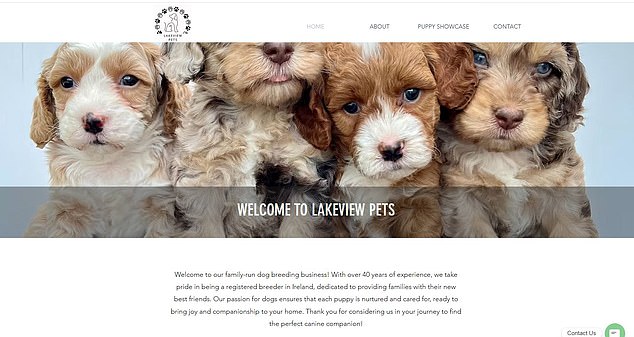
Lakeview Pets is a ‘Registered Breeder’ on the Department of Agriculture list of approved breeders. They are the puppy farm that sold Daisy, who died with 48 hours
Responsible ownership includes preventing accidental litters and reducing the number of unwanted dogs entering the system.
Prospective owners must exercise caution and ethical judgement when sourcing a puppy.
That means asking questions, seeing where and how the dog was bred, and being prepared to walk away if standards do not appear satisfactory.
Convenience and low cost should never outweigh welfare considerations.
There are thousands of dogs in rescue centres across Ireland, most are healthy, sociable and in need of permanent homes.
People should consider adoption before purchasing a puppy.
If we want to reduce the harms associated with large–scale breeding, we must also examine our own role in sustaining the market.
For a country that prides itself on its love of dogs, that responsibility belongs to all of us.
Conor Dowling is the Chief Inspector of the National Society for the Prevention of Cruelty to Animals (NSPCA)