A campaign is calling for people's last wishes to be enshrined in law so that their 'living will' becomes a human right.
In Ireland, your personal wish for what happens to your body after death can count for little more than the paper it's written on.
As a result, many families find themselves in conflict over whether or not to carry out a loved ones' last wishes.
A person can spend years deciding how they want to be laid to rest, only for relatives to make a different choice after their death.
Funeral preferences written into a will are not legally binding, leaving the door open to disagreements over everything from burial plots to the scattering of ashes.
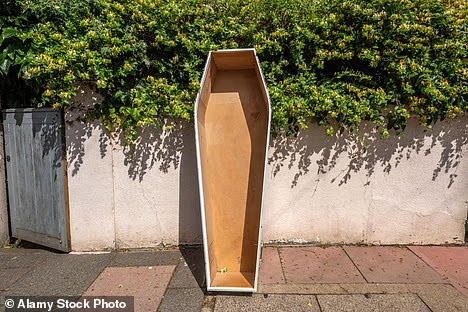
Funeral preferences written into a will are not legally binding, leaving the door open to disagreements over everything from burial plots to the scattering of ashes
Probate, wills and estate planning consultant Justin McKenna said disputes over burial arrangements have, in some cases, become so bitter that coffins have been dumped outside solicitors' offices.
He told the Irish Mail on Sunday: 'There is an argument over whether the mother should be buried with the dad or with her lover, or whether somebody should be in one very unpalatable plot or another.
'In the absence of agreement, it has been known for the coffin to be placed outside the solicitor's office.'
While relatives can disagree over what should happen to a loved one's remains, a written wish may do little to settle the matter, because as far as the law is concerned, your body is no longer your property after death.
Janie Lazar, founder and chairperson of End of Life Ireland (EOLI), knows this from personal experience.
Her mother wanted her ashes scattered over the River Thames, reflecting her connection to London, but the family ultimately did not honour her wishes.
'In my own mother's case, she was cremated, and her wishes were that they were dispersed over the River Thames, she was a London girl,' she told the MoS.
'My sister in England, who was the main carer, decided they would be scattered in the rose garden at the crematorium.'
Ms Lazar said this illustrates how grief can interfere with a person's ability to carry out another's wishes.
'When someone is caught up in emotion, then rationality goes out the window,' she said.
EOLI is calling for greater legal recognition of people's wishes after death, arguing decisions about burial and funeral arrangements should be treated as an extension of personal autonomy.
'What I would like to see, and what is part of the EU campaign that we're part of, is that the living will, become a human right,' Ms Lazar continued.
'In that eventuality, part of that should be that burial wishes are sacrosanct. That is the intention.'
She advises people to identify someone they trust to advocate for them, particularly if they anticipate disagreements among relatives.
'What I would advise anyone to do, as well as legal representatives, when it comes to advanced healthcare directives and possible end-of-life care, is think now about who is going to be your personal champion,' she said.
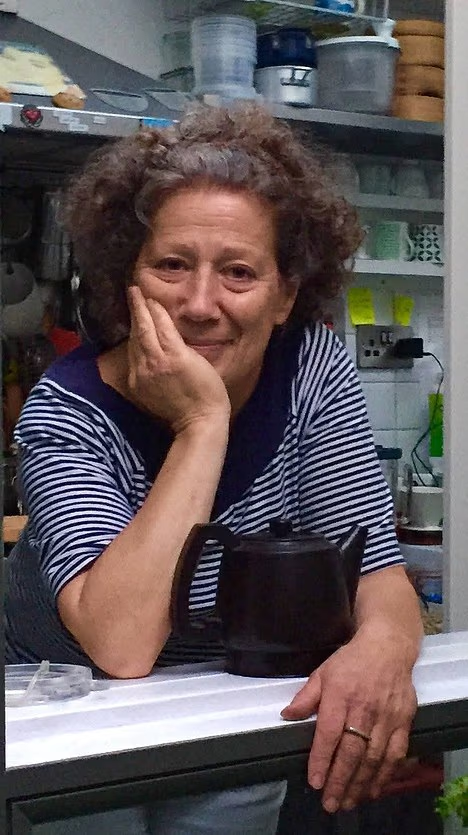
Janie Lazar, founder and chairperson of End of Life Ireland (EOLI), knows about death disputes from personal experience
'Somebody who knows you better than anyone else, it could be a best friend, it could also be somebody who is not family.'
Death doula and funeral celebrant Sarah Gardner has also seen how family dynamics can complicate decisions at the end of life.
'I think when there is doubt, or when there is family conflict, that's where things can get muddled up,' she said.
Some people assume relatives will work out what to do when the time comes, but she warns this can be precisely when disagreements emerge.
'Sometimes people think if there are family dynamics and family conflict, then if they just say nothing, they'll figure it out. Whereas actually that's a space where you really need to give your wishes.'
Ms Gardner said conversations held in advance can help prevent relatives from arguing over what a loved one would have wanted. But even when a loved one's last wishes are known, they are not always be followed.
Under Irish law, funeral preferences written into a will are not legally binding in the same way as provisions governing a person's estate.
As Mr McKenna explains, the body is not treated as property after death, and a will is generally dealt with too late to determine funeral arrangements.
'A will speaks from death. You've got to be dead before the will is opened,' he says. 'By this time, of course, you have either burnt or buried the poor guy.'
Instead, Mr McKenna recommends recording funeral preferences in a separate letter of wishes.
This informal document can set out how someone wants their remains handled, alongside personal instructions they may prefer not to include in a will.
But while such a letter can provide guidance, it is not an obligation families are legally obliged to follow.
Mr McKenna said one option is to make contractual arrangements with a funeral director in advance.
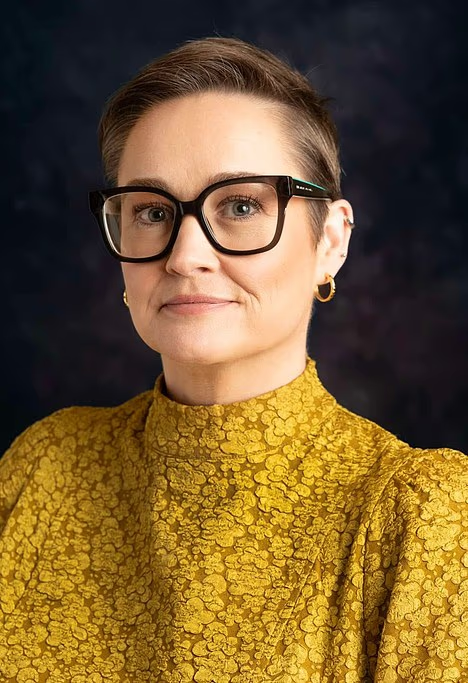
Death doula and funeral celebrant Sarah Gardner has also seen how family dynamics can complicate decisions at the end of life
Universities also operate schemes allowing people to arrange to donate their bodies to medical science.
Such arrangements are distinct from simply writing down a preference, because a contract has been signed.
For most people, however, the practical answer is to make their wishes known to those they trust to carry them out.
The stakes are not always about where someone is buried. They can also concern the way a person is remembered, from the music played at their funeral to the smallest details of the ceremony.
Mick O'Dwyer's Funeral dispute demonstrates the difficultiesThe issue of people's last wishes being disputed was starkly highlighted last year when the sons of GAA legend Mick O'Dwyer disagreed with his written funeral instructions.
Last April, the Irish Mail on Sunday reported how, just days before the Kerry coach's funeral, his sons were shocked when they received a signed letter from their father saying he did not want them to shoulder his coffin.
Instead, the honour was to be given to local people 'approved' by their father's friend, property developer Michael O'Flynn.
He also instructed his eulogy was to be given by the Cork businessman, who befriended 'Micko' while holidaying in his native Waterville. O'Flynn delievered the eulogy, but his sons carried the coffin.
The letter highlighted a bitter rift between O'Dwyer's sons and his second wife, Geraldine.
During the service, the GAA icon's sons sat separately from Geraldine, who sat alongside State and GAA dignitaries, including Taoiseach Micheál Martin.
During the service, local parish priest Fr Sean Jones asked mourners gathered for the funeral in St Finian's Church if they wanted to express their sympathies to O'Dwyer's family, which resulted in hundreds of people patiently queuing in the church's main aisle.
O'Dwyer's sons then stepped out of the pew to be closer to their father's coffin. Their stepmother remained in the front row pew – on the opposite side of the church – as one after another, men and women of all ages approached the Kerry legend's sons, John, Robbie, and Karl. Mick O'Dwyer's coffin was later carried by his sons and grandsons to his final resting place.
And as a death doula – a trained, non-medical professional who provides emotional, spiritual, and practical support to people and their families before and after dying process – Ms Gardner has seen all sorts.
One man who spent his life as a woodworker made his own coffin, which was kept at the undertaker's until his death.
Dogs attended the cremation ceremony of another man, a breeder, as a tribute to their owner.
In another case, the person who died was a 'raver' and got a rather colourful send off.
'Their final song was a brilliant rave song and everyone took out glow sticks and that was how they sent them off.'
For Ms Gardner, these personal touches demonstrate why funeral wishes matter.
They can help families celebrate the person they have lost, rather than being left to guess what would have brought them comfort.
She said relatives may have to settle arrangements within hours of a death, often while exhausted after caring for someone in hospital or hospice.
'If you were to sit down and organise a wedding in three to four days, it'd be impossible. Essentially a funeral is this huge event that your loved ones, who are just racked with grief, have to organise.'
Knowing which songs someone wanted, whether they preferred burial or cremation, and what kind of ceremony they envisaged can make an enormous difference.
'Nothing softens grief, but having to make less decisions when you're in the throes of that immediate grief is a huge gift to leave behind for your family.'
Where relatives disagree, Ms Gardner tries to find a compromise that respects the deceased while recognising that everyone grieves differently.
'I believe that there is always a compromise to be had,' she stressed.
People Before Profit councillor Gino Kelly – who championed the 'Right to Die' legislation as a TD – said he was surprised to learn funeral and burial wishes are not legally binding.
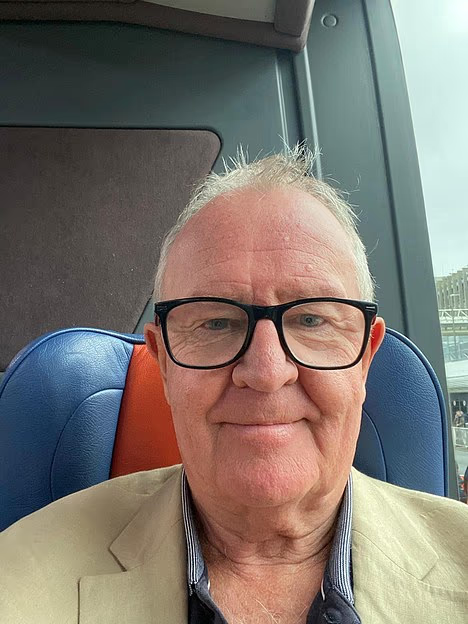
Probate expert Justin McKenna says 'In the absence of agreement, it has been known for the coffin to be placed outside the solicitor's office'
'I'm surprised, and I think people would be quite open to the idea that it should be legally binding,' he said.
'I certainly think it would be an interesting debate. In terms of bodily autonomy, I think it's certainly a consideration to be had… it would be a good thing.'
Independent Senator Ronan Mullen also believes a person's funeral wishes should be respected as a matter of ethics and good practice.
However, the trained barrister questions if legislation is necessarily the answer, saying practical circumstances can sometimes make particular wishes impossible to fulfil.
He told the MoS: 'Autonomy is an important consideration, but it is not the only consideration, because it is impossible to know the extent to which a person is able to exercise it freely. We have to consider the wider implications for other people.
'If a person states their wishes clearly in advance, as in the case of resuscitation, you would expect those wishes to be taken into account. It is not simply a matter of autonomy, but of recognising that the first say in a person's care should belong to that person.
'In that context, time passes, and a person's expression of their will at a given moment may not necessarily reflect their wishes at a later point.
'There will always be uncertainty, and family members must also be considered.'
Source link