When a landlord claims to have the oldest pub in the country, it's usually nothing more than a ploy to drum up some extra business from gullible tourists.
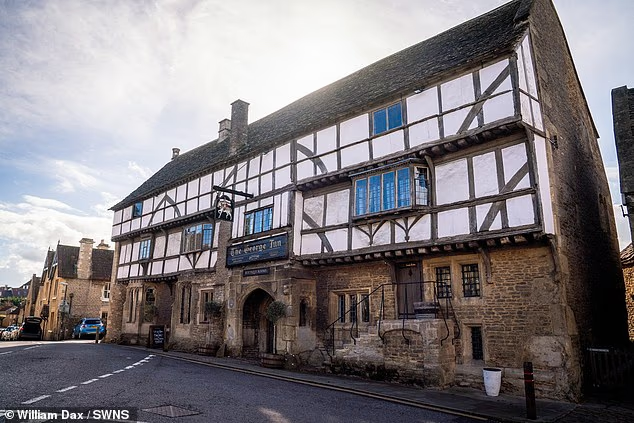
But according to experts, The George Inn in Norton St Phillip, Somerset, may have finally claimed the title after an archaeologist studied tree rings in its timber frame.
The pub has been pulling pints for more than 600 years, according to Historic England, and was built on the order of the Carthusian monks of nearby Hinton Priory.
It was intended to provide accommodation for the merchants attending the monastery's markets and fairs.
Building archaeologist Dr James Wright says many pubs claim the title of oldest – but that it's often based on 'myth'.
However, he said that documents and the timber work prove that the pub was originally built in the late 14th century and was extended at some point between 1430 and 1432.
Britain's oldest pub, The George Inn, a historic 14th-century pub in Norton St Philip, Somerset
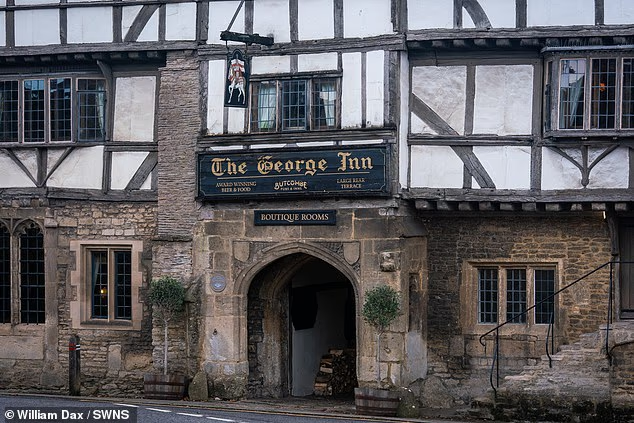
The pub was proven to be the country's most ancient boozer after an archaeologist studied tree rings in the pub's timber frame
Debate over what England's oldest pub is has been so fierce that the Guinness World Records stopped awarding the title in 2000.
However, Dr Wright is adamant that evidence points towards The George Inn as being the most ancient pub in the country.
He said: 'Most of what you've heard about the oldest pubs in England are myths.
'There are many many claims to be the oldest pub in the country and yet so few of them actually have evidence to back up those claims.
'To get to the real evidence of these buildings we have to look at the fabric, and we've got to look at the story of the people who actually built them and that all leads us to the village of Norton St Philip in Somerset.'
He said that the pub's stone and timber show that the building has been in 'continuous' service for over 600 years.
He added: 'The George Inn was set up in the 14th century by the monks of nearby Hinton Priory and they did this as a savvy money making exercise and we know this from the paperwork.
'The final piece of the puzzle at The George Inn is tree ring dating and that helps us to try and understand scientifically exactly how old the timbers are.
'And because we know Medieval carpenters didn't muck around at all and they would fell the timber when it was green and build almost immediately afterwards, the actual date of felling gives us the near date of construction.
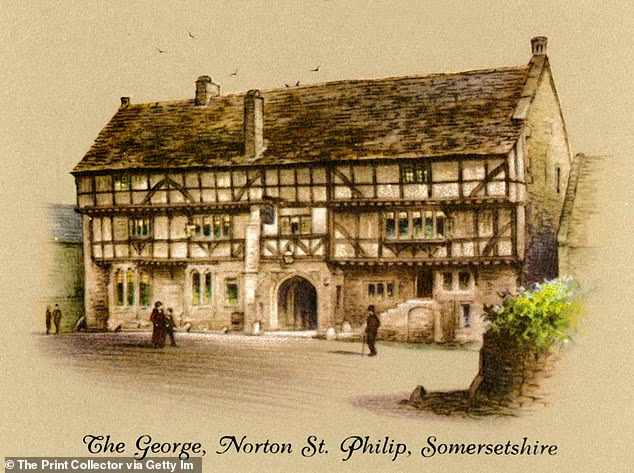
This painting by an unknown artist depicts the pub in 1936
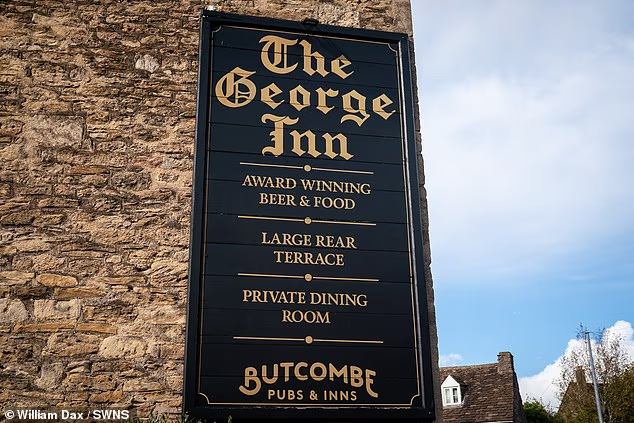
The George Inn has been providing hospitality for more than 600 years
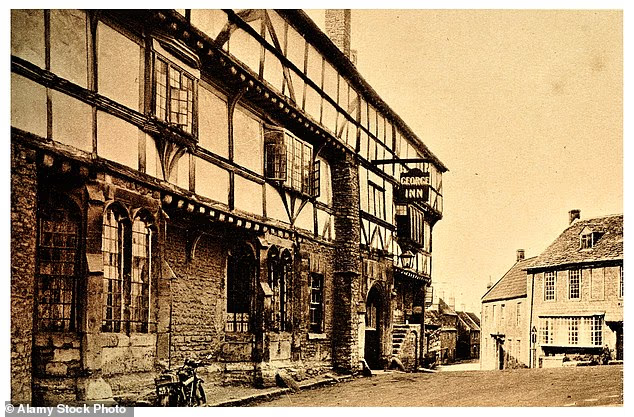
Dr James Wright said that documents and the timber work prove that the pub was originally built in the late 14th century
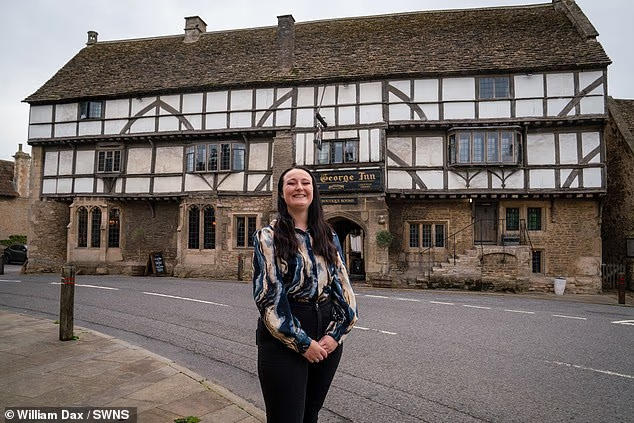
Emily Mingham, who serves as assistant manager at The George Inn in Norton St Philip, Somerset
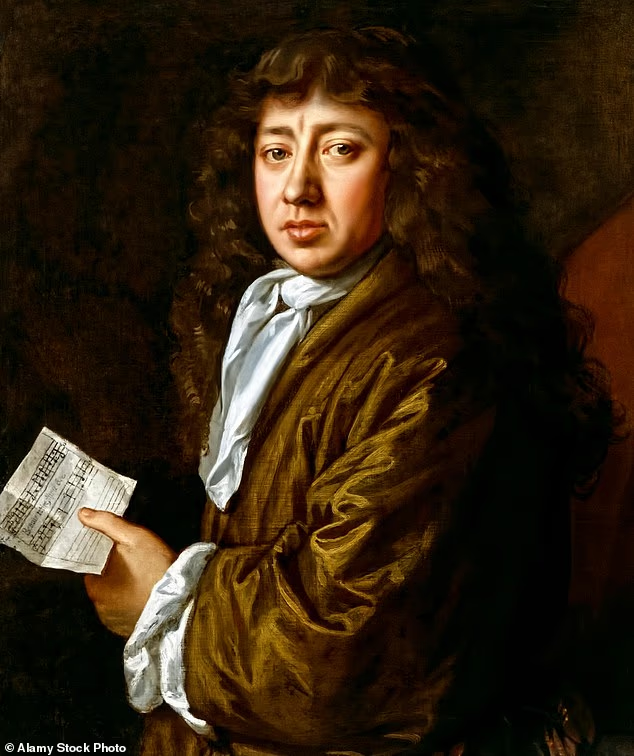
Samuel Pepys (1633-1709) visited the pub in 1668 with his wife and servants as they made their way to Bath from Salisbury
'And in terms of the timber work... we know that this dates from between 1430 and 1432.
'In history memories can fade and stories can be embellished, but the science pinpoints the archaeological development of the George Inn.
'We're not guessing at its age – now that's the difference between a local legend and a national treasure.'
A spokesman for Historic England said: 'The dates painted on pub signs can be inaccurate, and when evidence is missing, imagination often fills the gaps.
'Building archaeologist Dr James Wright believes the George Inn in Norton St Philip, Somerset, has the strongest claim to being England's earliest surviving purpose-built inn, an early type of public house.
'The George Inn – Norton St Philip was originally built in the late 14th century for the Carthusian monks of Hinton Priory to provide accommodation for merchants attending the monastery's markets and fairs.
'The inn's builders then added many structures in the 15th century, including the timber-framed front and roof, using timber felled between 1430 and 1432.'
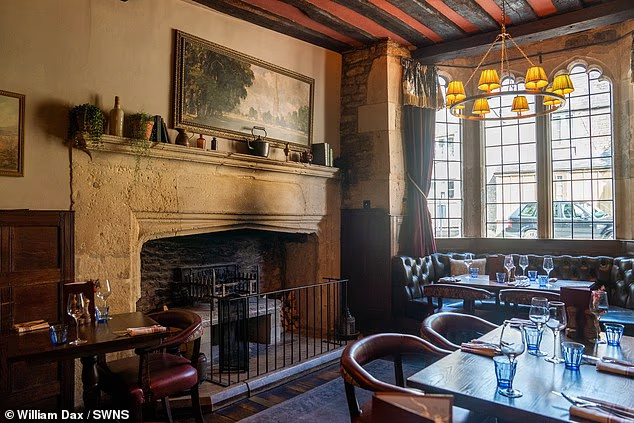
Inside Britain's oldest pub, the The George Inn
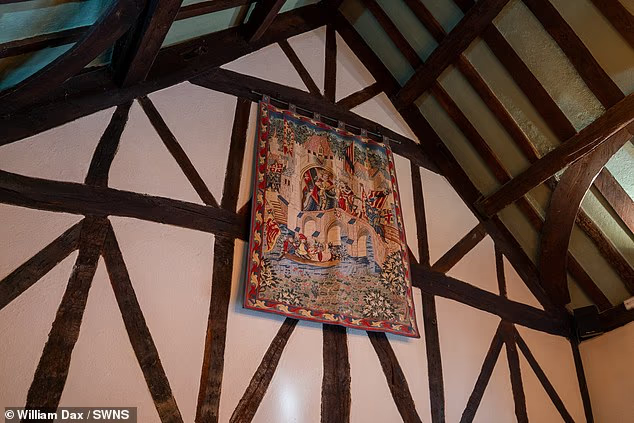
The pub was built on the order of the Carthusian monks of nearby Hinton Priory, to provide accommodation for the merchants attending the monastery's markets and fairs
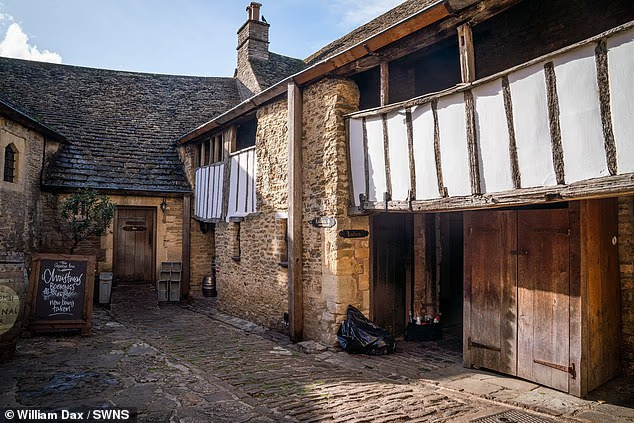
Dr James Wright said that pub's stone and timber show that the building has been in 'continuous' service for over 600 years
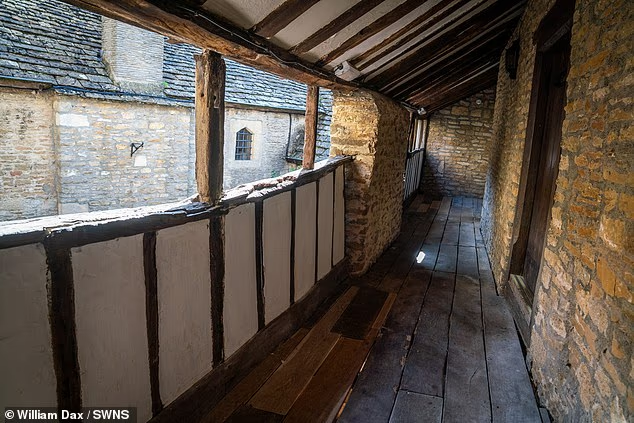
Even after 630 years, the pub is still going strong – it was named one of four finalists in this year's Bristol, Bath, Somerset and Gloucestershire Tourism Awards
Ye Olde Fighting Cocks in St Albans once held the Guinness World Record for the country's oldest boozer. But it was discovered that while the building dated to the 16th century, there was only a record of it being a pub as late as 1756.
Medieval inns differed from alehouses, which served ale, and taverns, which served wine.
Inns offered a wider range of services, including accommodation, food, drink and facilities for travellers' horses and belongings.
…and the pubs which claim to be the oldest – but are not
Many pubs around Britain claim to be the oldest in the land - but most are not. Here are some boozers that might have exaggerated their ancient history.
Ye Olde Trip to Jerusalem, Nottingham
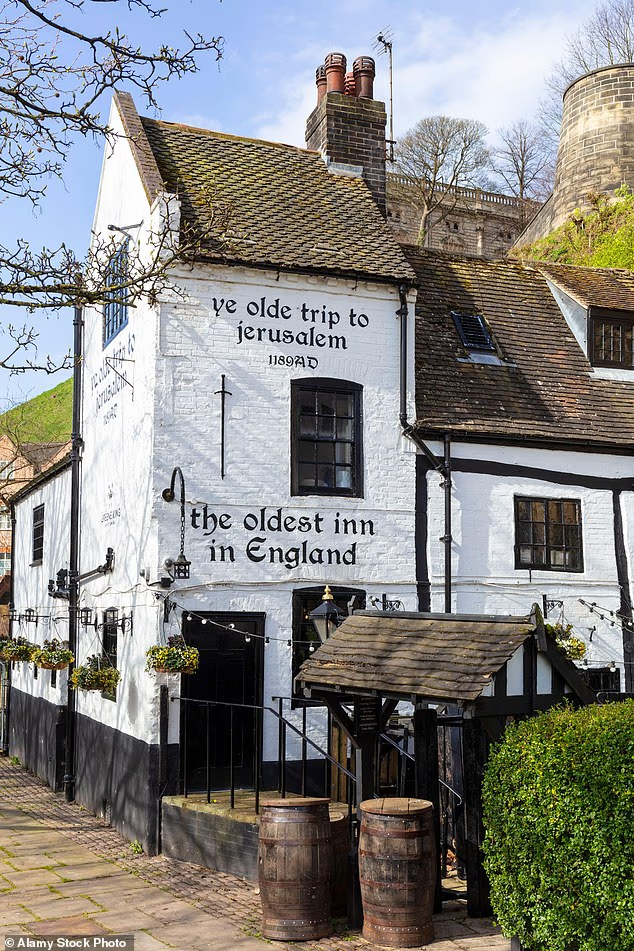
Ye Olde Trip To Jerusalem Inn Brewhouse Yard in Nottingham
This tavern claims in bold black letters that it is the 'oldest inn in England'. But in reality, it is likely not even the oldest in Nottingham. That accolade probably belongs to the Bell Inn - which was used as a pub by the 1630s. The Trip, on the other hand, was first referred to as a pub in 1751.
Ye Olde Fighting Cocks, St Albans
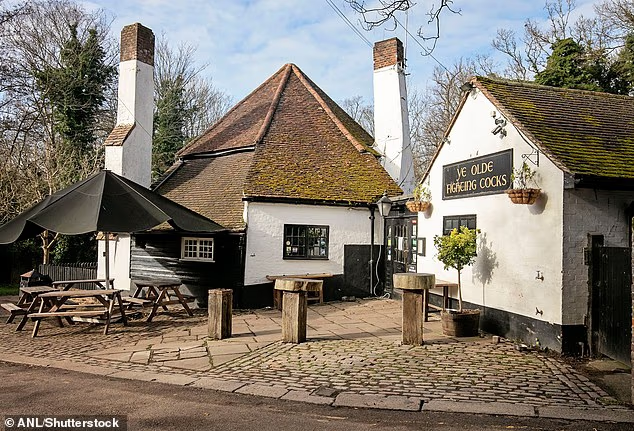
Ye Olde Fighting Cocks pub in St Albans, just outside the perimeter of Verulamium Park
This pub just outside of London is reputed to date to 793. In fact, the current site was only built on in 1600 and was only recorded as a pub known as the Three Pigeons in 1756.
The Bingley Arms, Bardsey
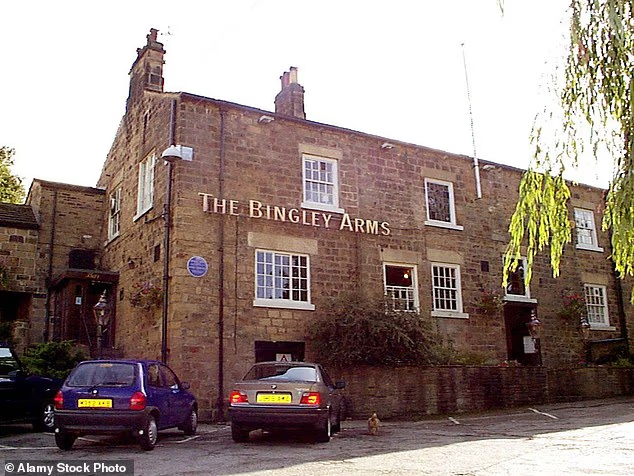
The Bingley Arms at Bardsey near Leeds
It is claimed that this boozer near Leeds was used as a pub in 953. That would make it early medieval and some even say it is mentioned in the Domesday Book of 1086.
But no evidence exists of this. It was likely built in the mid-18th century.
The Royal Standard of England, Buckinghamshire
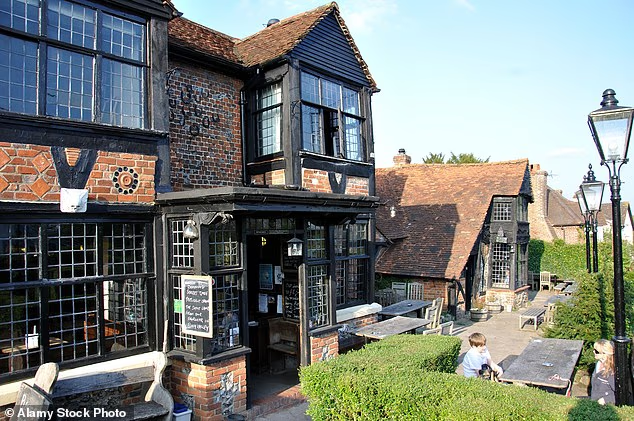
The Royal Standard of England' pub, Forty Green, Beaconsfield, Buckinghamshire
This pub strangely also claims to be mentioned in the the Domesday Book and was allegedly used as a pub in 1086. But like the Bingley Arms, no such mention of it can be found. In fact, the book doesn't mention any drinking establishment, by name or function.
The Old Man & Scythe, Bolton
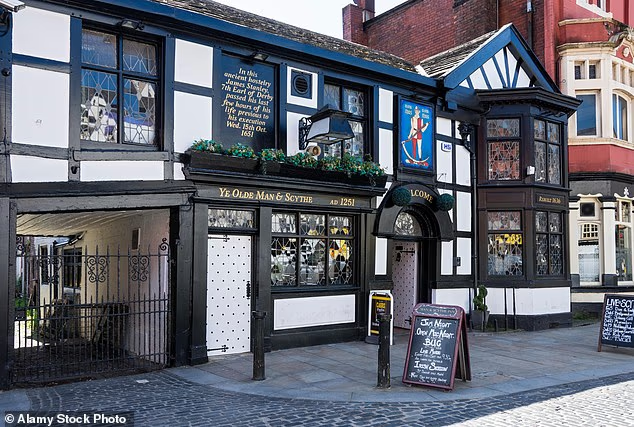
Ye Olde Man & Scythe pub, Bolton, Greater Manchester
This pub near Greater Manchester claims to date to at least the year 1251. It says that a Royal Charter from that year permitted the market to be held there.
But the building is mostly a 20th century 'mock-Tudor' design. The oldest part of the pub was apparently built in 1636.
The Old Ferryboat Inn, Cambridgeshire
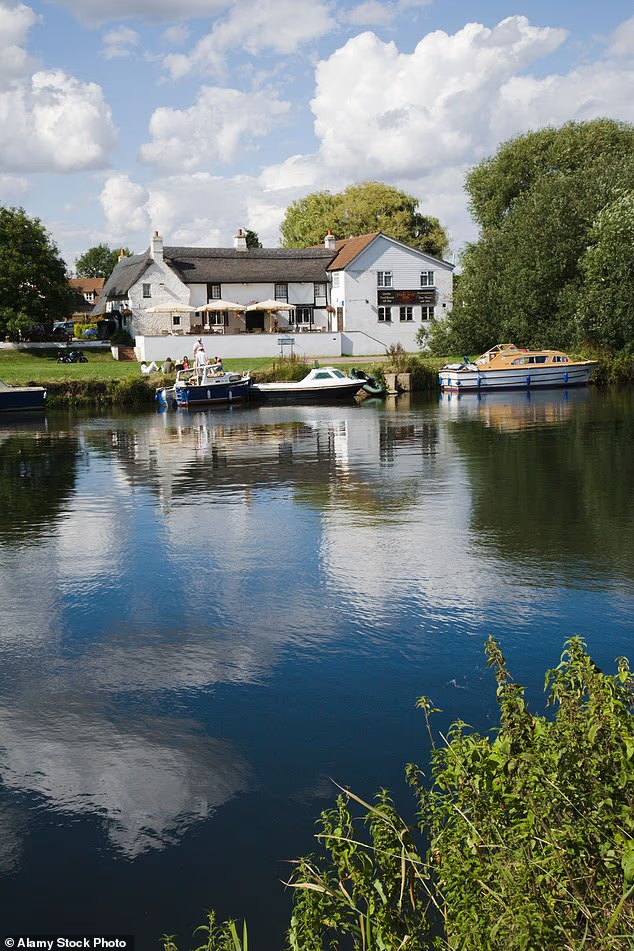
The Old Ferryboat Inn, Holywell, Cambridgeshire
The pub claims to be one of the oldest in England and dates back to an extraordinary 560 AD. Unfortunately, there is little evidence to suggest that the Anglo-Saxon's drank here. Historians have struggled to date the building to that time-period and it is unlikely that such a building could survive for that long.
Source link