Elon Musk said it plainly on the Builders podcast with Walter Isaacson this month: "I think currency will be measured in fundamental physics metrics like, you know, power, like wattage and tonnage, mass and energy." Dollars, he argued, won't be the unit of measure in the future. Energy will. Not as metaphor. As ledger.
It sounds radical. It isn't. It's a prophecy three of history's most consequential minds made over a span of a hundred and twenty-six years, each from a different angle, each missing only the final piece. Bitcoin is that piece.
Start with Nikola Tesla. In February 1892, lecturing before the Institution of Electrical Engineers in London, the inventor broke from his technical remarks into something stranger. "Ere many generations pass," he said, "our machinery will be driven by a power obtainable at any point of the universe… Throughout space there is energy… it is a mere question of time when men will succeed in attaching their machinery to the very wheelwork of nature." He spent the next decade trying to build it.
Wardenclyffe Tower on Long Island was meant to broadcast power through the Earth itself, no wires, no middlemen, energy delivered to any point on the globe. The tower fell to creditors before it ever sang. But the thesis survived: energy, freely transmissible, would reorganize civilization.
Then came Henry Ford. On December 4, 1921, the New York Tribune put his proposal on the front page under the headline "Ford Would Replace Gold With Energy Currency and Stop Wars." Ford's idea was almost embarrassingly simple. "Under the energy currency system," he told the paper, "the standard would be a certain amount of energy exerted for one hour that would be equal to one dollar." Not gold. Not paper promises from central banks. Kilowatt-hours. He wanted to finance the Muscle Shoals hydroelectric project on the Tennessee River by issuing currency against the river's power itself, arguing that a flowing river was more imperishable security than any vault of bullion. His reasoning was blunt: "The essential evil of gold in its relation to war is the fact that it can be controlled. Break the control and you stop war." Gold could be seized, hoarded, manipulated by the few. Energy could not. Energy had to be generated, continuously, by work.
Ford's proposal was ridiculed. The New York Times called it a kite. Edison, his friend and rival, tried to carry the torch with a questionnaire to bankers asking why gold should be the basis of value at all. Nothing came of it. The infrastructure didn't exist. You couldn't transmit energy globally, you couldn't verify who generated what, and you certainly couldn't stop a government from printing more.
For a century, that was the end of the story. Two dead prophets, one dead idea.
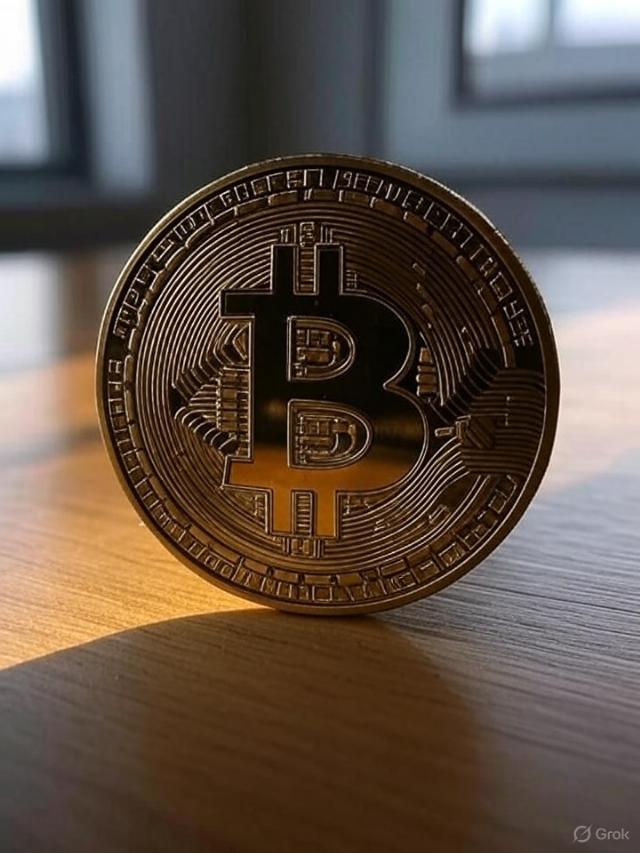
Then, in 2008, an anonymous author named Satoshi Nakamoto published a nine-page whitepaper describing a peer-to-peer electronic cash system. Buried inside was the mechanism nobody had thought to build: proof-of-work. To create a unit of Bitcoin, computers had to solve cryptographic puzzles that consumed real electrical energy. Not as a side effect. As the core security model. Every coin in existence is the receipt for energy already burned. You cannot fake it. You cannot print it. You cannot legislate it into existence. Energy cannot be regulated by law, as Musk himself has noted, because the law has no jurisdiction over physics.
This is where Jason Lowery enters, and where the story stops being about money and starts being about power. Lowery, a U.S. Space Force astronautical engineer and MIT researcher, wrote a thesis called "Softwar: A Novel Theory on Power Projection and the National Strategic Significance of Bitcoin" that reframed Bitcoin entirely. His argument: human civilization has always competed through power projection, the physical act of exerting energy over time to secure resources. Antlers. Walls. Armies. Kinetic warfare. But kinetic competition has a fatal flaw. It destroys the very wealth it fights over. Rubble is not a balance sheet.
Bitcoin, Lowery argued, transposes that competition into the electrical domain. Miners around the world burn energy in a global, permissionless contest for block rewards. The winner doesn't get rubble. The winner gets a scarce digital asset, and everyone else gets a network that grows more secure with every joule expended. He put it in a single line that deserves to be carved somewhere: "As Tesla predicted in 1900, maybe it would involve intelligent machines competing against each other in an energy competition, while humans watch peacefully from the sidelines. Just like Ford predicted in 1921, maybe it would involve turning electricity into money. The same technology could accommodate both theories simultaneously."
Read that again. Tesla saw machines competing in energy. Ford saw electricity becoming money. Lowery showed that one system does both. Bitcoin is Ford's energy dollar with Tesla's wireless ambition, executed not through copper and towers but through mathematics and thermodynamics. It is the merger the prophets couldn't see because the technology didn't exist yet.
The implications are not subtle. A monetary system anchored to energy is a system anchored to reality. Fiat currency is a claim on future labor, backed by nothing but trust in institutions that have spent a century debasing it. Gold was an improvement, scarce and physical, but it still sits in vaults controlled by the same hands Ford distrusted. Energy-backed money cannot be inflated by decree. It cannot be frozen by a bureaucrat's signature. It cannot be devalued by a central bank's printing press, because the printing press has no access to the physics.
Musk's vision of a multiplanetary economy measured in wattage and tonnage is not a fantasy. It is the logical endpoint of a chain that began with Tesla's tower, ran through Ford's river, and now runs through a distributed network of machines converting electricity into incorruptible bits. The prophets were early. The technology was late. Now the two have finally met, and the century-old question has an answer: the future currency was never going to be invented. It was going to be discovered, one proof-of-work at a time.
Kyle McClay is a Huntington Beach entrepreneur and Orange County Republican.
Source link