OAN Staff Addie Davis
10:22 AM – Sunday, August 9, 2026
The acting director of Immigration and Customs Enforcement (ICE), David Venturella, accused the Associated Press of mischaracterization and sensationalism in its article on the agency's body-worn camera (BWC) policy.
In a Saturday statement posted to X, Venturella said the news outlet conflated the broader agency policy on release of footage with expedited release in certain circumstances.
"It's disappointing, though not surprising, to see yet another misleading and sensationalized Associated Press report about ICE operations and policy," he said.
"The AP fundamentally mischaracterized ICE's body-worn camera policy by conflating the expedited release of footage following a serious bodily injury or death in custody with ICE's broader authority to release body-worn camera footage," he continued.
Acting ICE Director David J. Venturella issues statement on mischaracterization of ICE's body-worn camera policy. pic.twitter.com/fTJo8RZ9Sk
— U.S. Immigration and Customs Enforcement (@ICEgov) August 8, 2026
In its Friday article, the AP referenced the February, 2025 ICE directive on BWCs, which gave parameters for the expedited release of footage in the event of serious bodily injury or death in custody.
"If it is determined that it is in the best interests of the agency to publicly release the BWC footage, ICE will, as soon as practicable, expedite the public release of such footage," the directive stated, noting this should occur within 72 hours or when feasible.
"If there are specific and compelling circumstances justifying an objection to public release that cannot be resolved by redaction or other means, when determined by the ICE Director or his or her designee, ICE may withhold or indefinitely delay the release of the BWC footage," the document continued.
The AP framed the policy as giving the agency broad ability to protect its image while sacrificing transparency.
"That gives its director discretion to release recordings that reflect well on the agency's image while working to keep others secret, experts on body camera policies said," wrote Ryan Foley, the article's author.
Foley quoted a professor of Brandon University in Canada, Christopher Schneider, who co-authored the book "Police Body-Worn Cameras: Media and the New Discourse of Police Reform."
"In some ways, ICE is saying the quiet part out loud," Schneider said. "Body-worn cameras are being used as contemporary image-work tools to present the police to the public in the most favorable way possible."
Foley further wrote that ICE did not respond to a question from the outlet regarding the "specific and compelling circumstances" referenced in the directive.
However, Venturella in his Saturday statement elaborated on the policy over the expedited release of footage.
"ICE policy permits expedited release when appropriate–and clarifies that it's not appropriate to release footage when doing so could compromise investigations or privacy," he said.
He also asserted that this practice remains consistent with the operations of other federal agencies.
"This approach mirrors other federal law enforcement agencies' policies and is fully consistent with the Freedom of Information Act and the Privacy Act," he said.
Foley's sources noted that selective release of footage is common for some law enforcement agencies, but they emphasized its purported explicit inclusion in policy.
"It's not unheard of for agencies to delay or withhold or selectively edit footage at all, but to say that explicitly just really gives the game away," said Katherine Hawkins, the senior legal analyst at the nonprofit Project On Government Oversight.
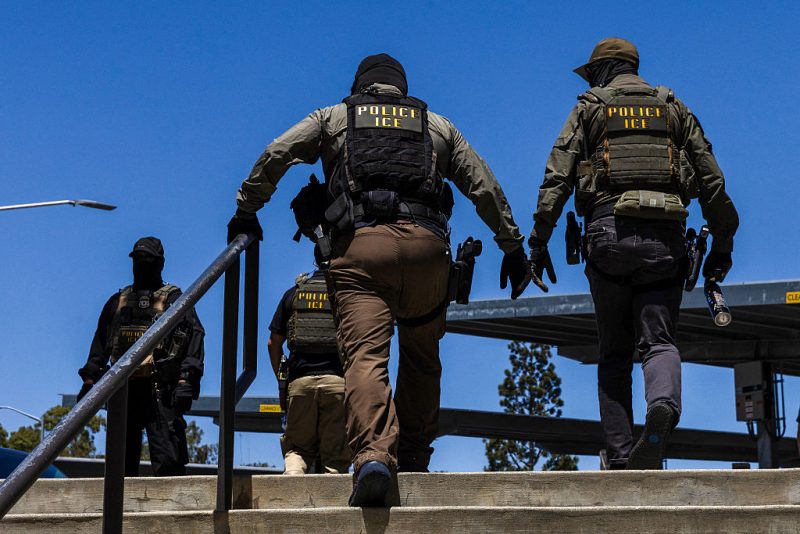
Following two recent fatal shootings by ICE agents, it was announced that ICE will be requiring officers to wear at least one body camera during vehicle stops.
White House Border Czar Tom Homan said while appearing on Fox & Friends that the cameras "exonerate more law enforcement than they convict."
"I want officers to wear body cameras because I want the American people to see what the officers saw when they took that action," he said.
Venturella said that the issuance of cameras to the agency's officers was ahead of schedule.
"At the same time, we're committed to transparency and accountability, and we're on track to equip every officer and agent in the field with body-worn cameras by the end of August, ahead of our original timeline," he concluded.
Stay informed! Receive breaking news alerts directly to your inbox for free. Subscribe here. https://www.oann.com/alerts
What do YOU think? Click here to jump to the comments!
Source link