A bird that was hit by a car is undergoing a rather curious rehabilitation procedure.
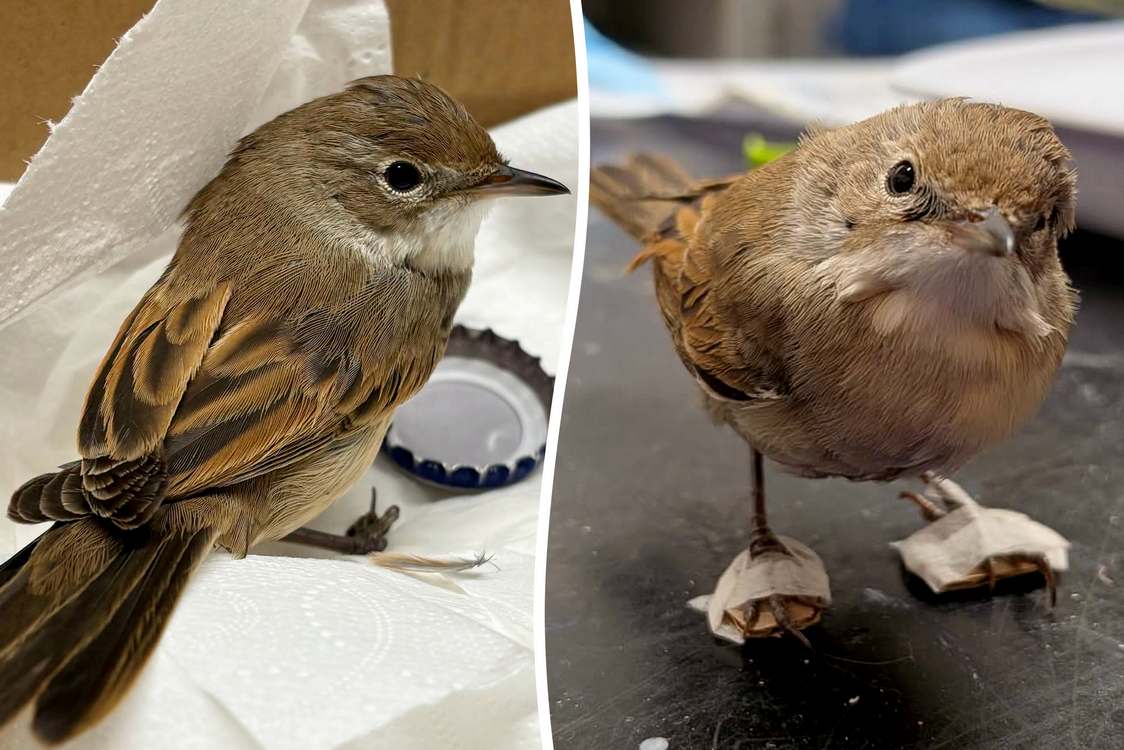
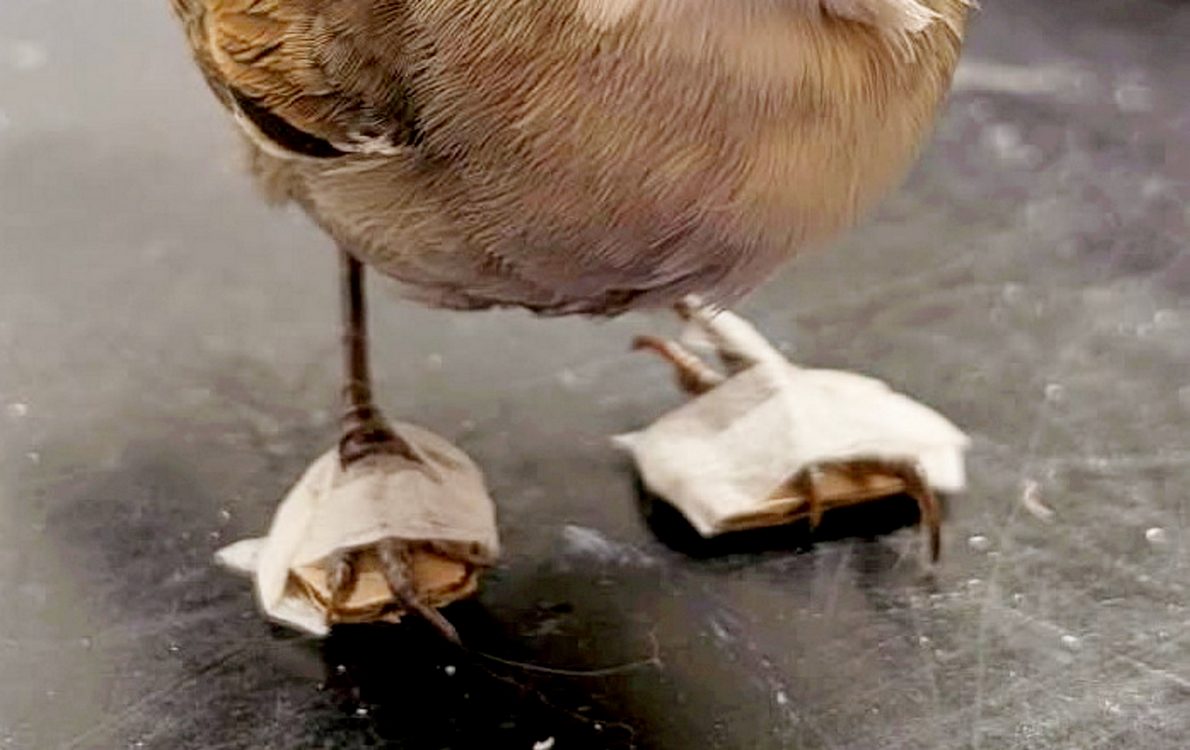
The animal hospital it was taken do designed a pair of specially-built casts made of cardboard and tape.
It’s a bit makeshift, but the bird is said to be making good progress and will be released back into the wild once he has fully recovered.
“He was found last Saturday by some people who then called us and brought him in. We have used this technique before with other baby birds—but its usually when they have nutritional deficiencies,” said Amy Blower, at the Leicestershire Wildlife Hospital.
The whitethroat was found by a couple lying stunned in the road following a collision last Saturday.
His was taken to Leicestershire Wildlife Hospital where it was found his feet were curled up and unable to grip due to nerve or ligament damage.
Staff