Thousands of Florida condominium buildings have been flagged as having structural damage according to a report issued five years on from a seaside building collapse which killed 98 people.
More than 2,500 buildings were found to have sustained substantial structural deterioration in 2024 and 2025.
Despite scores being deemed 'unsafe or uninhabitable,' just five buildings were evacuated, according to a report by Florida Legislature’s Office of Program Policy Analysis and Government Accountability (OPPAGA).
Architects and engineers identified buildings with deficiencies such as cracks in the foundation and deterioration and flagged the structures as potentially dangerous.
Last year, there were 25 buildings deemed unsafe and uninhabitable. Most were located in Miami-Dade County and remained occupied, according to the report.
The figure was a slight drop on 2024, when 30 buildings were identified as unsafe and uninhabitable, five of which were evacuated.
The report highlighted that it did not have an official definition of uninhabitable, and that it was up to the inspectors to determine it.
The damage was uncovered as part of mandated surveys which have been required for certain buildings since the tragic 2021 Champlain Towers South collapse in Surfside, which claimed nearly 100 lives.
The Office of Program Policy Analysis and Government Accountability (OPPAGA) identified more than 2,500 buildings that suffer from substantial structural deterioration in Florida
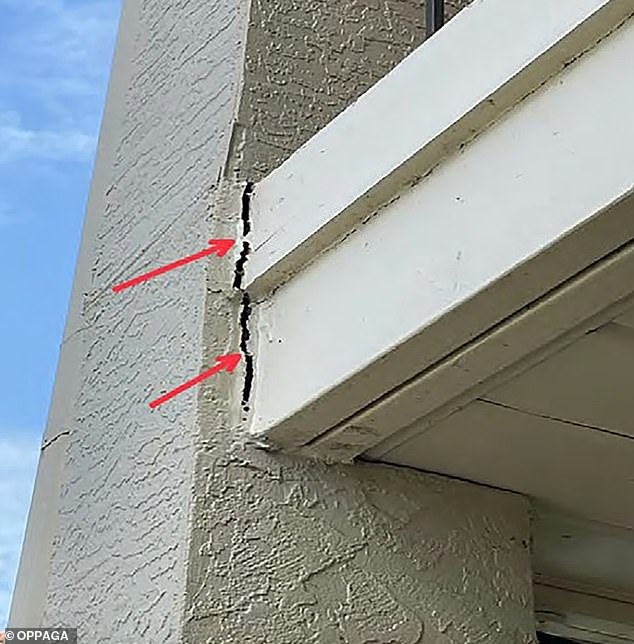
A building in Osceola County was discovered to have an adhesion failure for a sealant on a walkway for residents
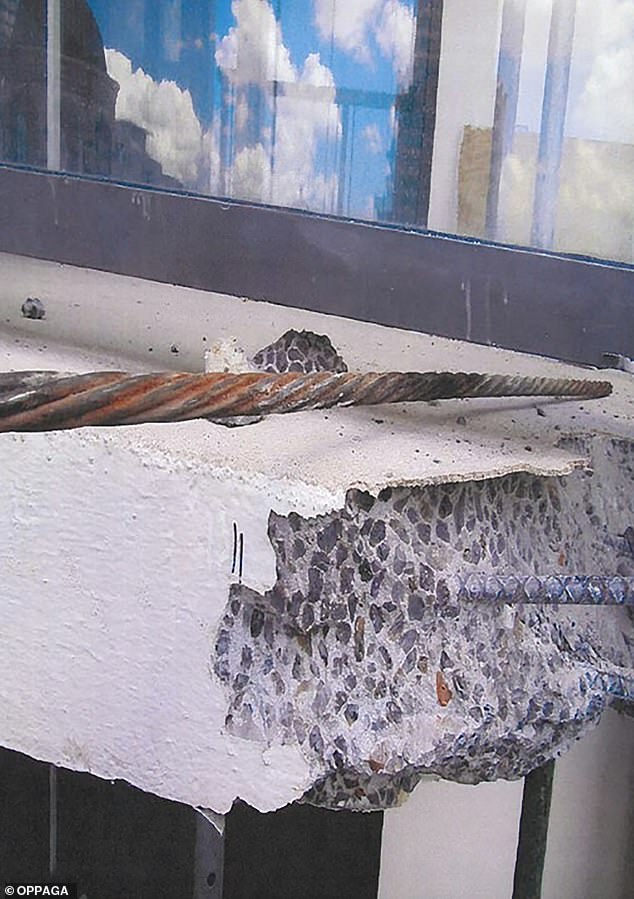
A Pinellas County building had corroded deterioration of structural elements
Florida law requires condominium buildings and cooperatives three stories or higher and of a certain age to have milestone inspections completed to evaluate building safety.
The first phase is a visual inspection followed by a phase two inspection if substantial structural deterioration is noted during the first survey.
Landlords then have one year to start making any repairs identified by the inspectors.
In 2024, 1,899 phase two inspections were ordered, however, just 1,301 were completed.
The following year, 636 phase two inspections were required and less than half were conducted.
Throughout 2024 and 2025, more than 900 permit applications for repairs were submitted, with repairs costing between $1,000 and $30 million, OPPAGA said.
The average permit cost was $337,229 in 2024 and $496,236 in 2025.
More than 80 buildings had more than $1 million in repairs between the two years, the report found, with many involving concrete, electrical and structural issues.
A building in Osceola County was discovered to have an adhesion sealant failure on a walkway for residents. A Pinellas County building had corrosion deterioration of structural elements, the report highlighted.
However, there are fears that more buildings could be at risk as not every jurisdiction fully participated.
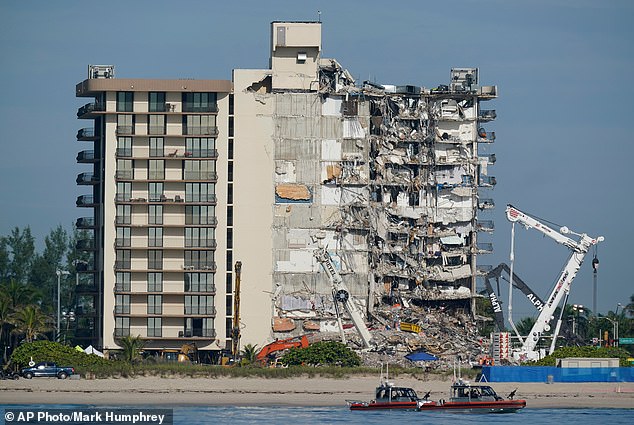
Buildings now have to be inspected after the collapse of Champlain Tower South in 2021, which killed 98 people
The inspections come after state law changed following the Champlain Towers South collapse in Surfside in 2021.
Now, all condo buildings with three stories or higher that are 30 years old are required to be inspected and undergo necessary repairs.
Investigators found that Champlain Towers South collapsed because the steel-reinforced concrete columns were not strong enough.
They have concluded that many of the columns in the doomed Champlain Towers South building were not up to scratch even in 1981 when the 12-story tower was built.
Investigators found that the pool deck was the fatal weak spot that led to the collapse, after eyewitnesses said it fell into the garage up to seven minutes before the fatal collapse on June 24, 2021.
Investigators say there is 'strong evidence' that the concrete pool deck, which was attached to the building, triggered the collapse after its failure likely destabilized the base of a support beam that ran through the tower's lower level.
When that beam failed, it caused that tower section to pancake down and a neighboring section to then fall onto it, the 2024 report found.